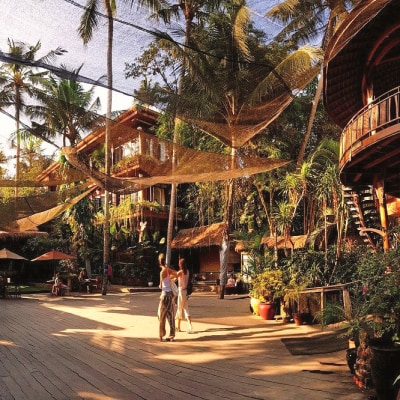
The Yoga Barn — Ubud, Indonesia
Yoga and wellness retreat center in Peliatan, Ubud, Bali
The Yoga Barn is a yoga and wellness retreat center in Ubud, Bali, Indonesia. It stands on Jalan Sukma Kesuma in Peliatan, five minutes' walk from the Sacred Monkey Forest. Its own pages describe it as one of the largest and most varied wellness centres in the world, with more than 180 classes each week across eight studios. It began small. The Yoga Barn opened its doors in 2007 with two studios, a small vegan cafe and four yoga classes a day, and it now averages over 25 classes a day. Its co-founders are Meghan Pappenheim and I Made Gunarta, known as Pak Dek. Pappenheim, originally from New York City, took her first Hatha yoga class at the New York Open Center at 13. She later spent a summer as an ashramer at the Himalayan Institute of Yoga Science and Philosophy, where she added Ayurveda and healthy veganism to her studies. She came away with a strong distaste for what she calls the guru syndrome, and says it still shapes how she runs the Barn. Gunarta is an architect. He is the vision behind the Balinese style of the buildings, which are made of reclaimed wood and hand-crafted elements. His great-grandfather headed the Sacred Monkey Forest restoration project in the early 1970s. In 2010 Gunarta launched a reforestation project there, and in 2016 he started an organic farming initiative 45 minutes north of Ubud. The two founders also created the BaliSpirit Festival. The daily program covers yoga, meditation, breathwork, Pilates, sound healing, movement and dance, on a casual drop-in basis. The yoga styles named on the pages include Vinyasa, Hatha, Power, Yin, Restorative, AcroYoga and Beginners Yoga. Private classes can be booked in yoga, meditation, mobility, breathwork, Kundalini and prenatal yoga. Ecstatic Dance, a movement the pages say was originally inspired by Gabrielle Roth's 5Rhythms, takes place on Friday nights and Sunday mornings. A visiting DJ leads each dance, which ends with a closing set, sound healing, or singing and chanting, followed by live music on the deck known as the Yoga Barn Sunday Sessions. Beyond the weekly schedule there are special classes, multi-day immersions, workshops and masterclasses, and yoga teacher trainings of 50, 100 and 200 hours. The Center for Wellness is built around hands-on and energy-based healing, offered by individual healers on the faculty. Apin Ng, an Indonesian practitioner, has worked with Access Bars, Access Body Process and Access Energetic Facelift since 2017. Punnu Wasu, from India, is a Reiki Grand Master and Kirtan Master. His listed work includes Shiatsu Anma therapy, chakra balancing, Pranic Healing and crystal healing. The Blissful retreat packages run for one, three or seven days. They pair class passes with treatments such as Abhyanga massage, bamboo massage, foot acupressure and an infrared sauna, and meals at the Garden Kafe and juices from the Juice Bar. There are also detox retreats. Guests can stay on site in the Guesthouse or the Nest. The Guesthouse has rooms inspired by Indian arches and Indonesian textiles, set in lush gardens. Room types run from double and twin rooms to a five-bunk women's dormitory, and the rooms include air conditioning, daily breakfast and access to the guesthouse swimming pool. The property also has showers and changing rooms, a Yoga Shop and parking at the main entrance. A second entrance, for pedestrians only, leads in from Jalan Pengosekan. The Yogi's Garden, a working farm and retreat center 45 minutes from Ubud, looks toward Mount Agung and offers rooms, retreats and farmstays. The pages say all levels are welcome, from beginners to experienced practitioners. One long-time visitor, writing in January 2026, describes coming for four to six weeks twice a year, often with her 86-year-old mother, and being greeted by name at reception.
Traditions: Vinyasa Yoga, Hatha Yoga, Yin Yoga, Kundalini Yoga, Sound Healing, Reiki, Ecstatic Dance, Kirtan
Programs: Daily Yoga Classes, Private Classes, Ecstatic Dance, Blissful Retreat Packages, Detox Retreat, Yoga Teacher Trainings, Workshops and Masterclasses, Immersions, Special Classes, Bali Spirit Festival
Amenities: Eight Studios, Garden Kafe, Juice Bar, Wellness Center, On-Site Accommodation, Swimming Pool, Showers, Changing Rooms, Yoga Shop, Parking
Spiritual Influences
Anti-Guru Pluralism (Ethos): Meghan Pappenheim's distaste for 'guru syndrome' shaped The Yoga Barn's commitment to community over hierarchy, offering a 'yogic buffet' of dozens of global traditions rather than adherence to a single lineage.
Balinese Hinduism and Animism (Tradition): The Yoga Barn is rooted in and blessed by the Hindu and animist spiritual traditions of Ubud (called 'Ubad,' meaning medicine), integrating local Balinese healers and ancestral modalities into its programming.
Hatha Yoga (Lineage): Co-founder Charley Patton studied Hatha with Bob Smith, Ki McGraw, and Mark Whitwell (student of T.K.V. Desikachar), providing one of the foundational yoga traditions in The Barn's diverse offerings.
Community Over Dogma (Ethos): The Barn functions as a genuine community hub where transformation trumps dogma—co-founders launched BaliSpirit Festival, run environmental NGOs, offer free staff classes, and maintain open notice boards for anyone to post events.
Ecstatic Dance (Movement): Ecstatic dance is woven into The Yoga Barn's regular programming, embodying the center's commitment to pluralistic, embodied spiritual practice beyond traditional asana.
Frequently Asked Questions
What makes The Yoga Barn different from other yoga retreats in Bali?
The Yoga Barn is less a retreat and more a wellness village—eight studios hosting 180+ classes weekly, which means you're choosing from vinyasa to Kundalini to aerial yoga to ecstatic dance on any given day rather than following a single program. Founded in 2007 by Meghan Pappenheim (a New Yorker who studied at the Himalayan Institute), her Balinese architect husband Made 'Dekgun' Gunarta, and Californian Charley Patton, it's built from reclaimed teak with studios open to the jungle canopy where you'll hear frogs and gamelan practice drifting in. The anti-guru ethos is real—Meg explicitly rejected hierarchical ashram culture, so teachers range from international names to Balinese healers with zero pretension. It's also genuinely embedded in Ubud: the founders launched BaliSpirit Festival, co-founded local environmental nonprofits, and the Garden Kafe functions as the social hub for Ubud's international yoga crowd. You're not escaping to a remote hillside here; you're dropping into the beating heart of Bali's wellness scene, which is either thrilling or overwhelming depending on what you came for.
Who will hate The Yoga Barn?
If you're seeking silent contemplation or intimate teacher attention, this place will frustrate you—the popularity that makes it viable also means queuing for classes, navigating a booking system that reviewers call 'friction-heavy,' and sharing studio space with dozens of other bodies. People allergic to Ubud's expat-hippie scene (think dreadlocks, harem pants, and endless talk of ayahuasca journeys) will find the Garden Kafe's communal tables insufferable. The setting is lush but not remote; you're still in downtown Ubud, which means scooter noise and humidity, not mountaintop silence. Yoga purists chasing a single lineage taught by one master teacher should look elsewhere—the smorgasbord approach here means teachers rotate constantly and you're responsible for curating your own experience. If you need someone to hold your hand through a structured retreat itinerary, the choose-your-own-adventure format will feel more chaotic than liberating.
What does a typical day actually look like at The Yoga Barn?
The schedule runs 6:30 AM to 9:00 PM daily, so your rhythm depends entirely on what you book—there's no single 'retreat schedule' here. A committed practitioner might start with 7 AM vinyasa in the main shala (open-air, teak floors, geckos on the rafters), grab a dragon fruit smoothie at the Garden Kafe around 9, take a mid-morning Yin class, book an afternoon craniosacral session at the healing center, then end with sunset Tibetan bowl meditation. Fridays, Charley Patton's ecstatic dance at night draws 200+ people and has been running since 2009—it's become an Ubud institution, zero talking or phones, just bodies sweating under fairy lights. The Guest House guests can roll out of bed and be in class within two minutes; everyone else navigates Ubud's chaotic streets to get here. What surprises first-timers is how much agency you have—and how that freedom can feel either exhilarating or paralyzing when you're staring at 180 weekly options.
What's the food situation really like?
The Garden Kafe serves organic vegetarian and vegan fare that's become a destination in its own right—think nourishing bowls, fresh juices, Indonesian-inflected salads, and plenty of Western comfort adaptations for homesick travelers. The communal tables are where solo travelers end up making friends (or avoiding eye contact if they're introsperted out), and the vibe skews social rather than silent or ceremonial. Reviewers consistently call the food 'notably fresh' and 'nourishing,' which in Bali wellness-speak means it won't wreck your stomach and actually tastes good. You'll spend extra here beyond class fees—budget roughly $8-12 per meal—and there's no meal plan bundled with accommodation. The cafe doubles as the social heartbeat of the whole compound, so if you want quiet digestion, grab takeaway and eat in your room or by the rice paddies.
What are the accommodation options and what are you actually trading off?
The Guest House offers 10 double-occupancy rooms steps from the studios—think simple, clean, ceiling fans, proximity as the main selling point—while The Nest includes access to Bali's largest therapeutic Watsu pool (7×17 meters, heated to 35.5°C). There's also Yogi's Garden, a second property 45 minutes north on a working organic farm with Mount Agung views, which trades convenience for altitude and quiet. Most regulars stay off-site in Ubud homestays or guesthouses and commute in, which costs less but means navigating scooter traffic and losing the roll-out-of-bed-into-class luxury. The on-site rooms aren't fancy—no one's coming here for thread count—but being able to nap between a morning vinyasa and an afternoon sound bath is worth the premium if your budget allows. Book accommodations early; the 10-room Guest House fills fast during high season and teacher training intensives.
What surprises people on their first visit?
The sheer scale surprises everyone—eight studios, a healing center with colon hydrotherapy and craniosacral therapy, a cafe, a shop, teachers from a dozen traditions cycling through daily—this is not a serene hilltop shala with one guru. The booking system requires advance planning and some patience; walk-ins are possible but reviewers consistently mention 'operational friction' and needing to queue for popular classes. The open-air architecture means you're practicing with tropical downpours hammering tin roofs, geckos dropping from rafters, and 100% humidity—bring a towel that can handle serious sweat. First-timers also underestimate how social it is: the Garden Kafe and post-class mingling create an expat-yoga-tribe energy that's either community gold or exhausting depending on your temperament. And despite the Instagram fame, it's genuinely unpretentious—Meghan Pappenheim's anti-guru DNA means no one's bowing to photos or whispering in hushed tones, which is refreshing until you realize it also means less 'holding space' and more personal responsibility for your experience.
How much should I actually budget, and what's included versus extra?
The Yoga Barn operates drop-in style, not all-inclusive packages, so you're paying per class (roughly $12-18), per healing session (widely variable), and separately for food and accommodation. A week of daily classes plus meals could run $300-500 depending on how many sessions you book and whether you're juicing or eating simply. Teacher trainings are the big-ticket items—200-hour certifications draw hundreds annually and run several thousand dollars but include more structured programming. There's no mention of scholarships in the venue data, so assume full freight unless you inquire directly about work-trade (which some Ubud centers offer but isn't advertised here). The $$ price range is accurate for Bali but not cheap by Southeast Asian standards—you're paying for the brand, the teacher quality, and the infrastructure. Budget extra for taxis if you're staying off-site, and know that the healing center treatments (Ayurvedic consultations, bodywork) add up fast if you go down that rabbit hole.
Do I need to be silent? How religious is it? Will I be the least flexible person in the room?
There's no silence requirement except during specific meditation classes and Charley's Friday ecstatic dance (which bans talking and phones but is hardly austere). The Balinese Hindu influence is ambient—you'll see offerings and hear gamelan—but Meghan Pappenheim explicitly rejected guru worship after her Himalayan Institute stint, so there's zero pressure to adopt spiritual frameworks you don't believe in. Fitness level varies wildly by class: vinyasa and Ashtanga will humble beginners, while Yin and restorative classes welcome stiff bodies. Teachers don't adjust you constantly (it's too crowded for that level of hands-on attention), so you're responsible for modifying and listening to your body. First-timers worry about being the 'worst' in class, but the democratic chaos here means someone's always struggling, someone's always showing off, and most people are too focused on their own practice to judge yours.
What does it actually feel like to be on the grounds?
You're surrounded by reclaimed teak structures open to jungle canopy, rice paddies visible from some studios, frangipani and lemongrass in the air, and the constant hum of Ubud just beyond the gates—this isn't remote wilderness, it's an oasis carved into the town's densest tourist corridor. The studios themselves feel alive: geckos on rafters, tropical rain pounding tin roofs mid-class, humidity so thick your mat becomes a slip-and-slide within 20 minutes. At dusk you'll hear gamelan practice drifting from a nearby temple, and the lighting shifts to fairy lights strung between buildings, giving the whole compound a party-in-the-jungle vibe. The Garden Kafe's communal tables and the mingling between classes create a social energy that's either buzzing or draining depending on your mood. It's simultaneously Instagram-famous and genuinely rooted—Made Gunarta's Balinese architecture and the founders' nonprofit work keep it from feeling like a wellness Disneyland, but just barely.
What are the unspoken etiquette rules I should know?
Phones are tolerated but frowned upon—don't be the person filming your handstand in a crowded vinyasa class. Talking at the Garden Kafe is expected and even encouraged (it's the social hub), but studios are quiet before and after class, with chatting reserved for outside spaces. You can leave programs or skip classes without drama; the drop-in culture means people come and go, though teacher trainings obviously expect commitment. Shoes off everywhere, and you're responsible for wiping down your mat and props—staff clean between sessions but the volume of students means everyone pitches in. The 4.3 Google rating with 2,204 reviews reflects some operational rough edges; patience with the booking process and crowded conditions is part of the deal. Tipping isn't required but appreciated for private healing sessions, and if you're staying in the Guest House, being mindful of noise (thin walls, communal jungle setting) will keep you in good standing with neighbors recovering from their own intense practices.
What should I pack that most visitors forget?
A high-quality yoga towel for your mat is non-negotiable—the humidity and heat turn every practice into a sweat lodge, and a standard towel won't cut it for vinyasa or Kundalini. Ubud's weather is tropical year-round with afternoon downpours during wet season (roughly November to March), so a light rain jacket and waterproof bag for your belongings are essential if you're commuting from off-site accommodation. Earplugs for sleeping—jungle sounds are romantic until you're trying to rest between a 7 AM class and an afternoon workshop, and roosters start at 4 AM. Bring cash in small denominations; while cards are accepted, many healing practitioners and cafe tips operate on cash. Don't bother packing a yoga mat if you're flying in—rentals are available and lugging one through Denpasar airport isn't worth it. Modest clothing for walking through Ubud's streets (this is still Bali, not Burning Man) and closed-toe shoes for navigating wet paths will serve you better than the harem pants everyone buys on arrival.
How accessible is The Yoga Barn for people with mobility limitations?
The venue data lists no accessibility features, and the reality is challenging: reclaimed teak structures mean stairs, uneven surfaces, and open-air studios without climate control or smooth flooring. The Watsu pool at The Nest (heated, therapeutic, 7×17 meters) is the most accessible amenity for people with joint issues or limited mobility, but getting there requires navigating the compound. Ubud itself is notoriously difficult—broken sidewalks, scooter traffic, stairs everywhere—so wheelchair users will struggle before even reaching the studios. Teachers offer modifications and the Yin/restorative classes are gentler entry points, but there's no dedicated accessible infrastructure or staff trained in adaptive yoga based on available information. If you have specific needs, call ahead and speak to someone directly rather than assuming; the anti-hierarchical ethos means staff are generally willing to problem-solve, but you'll need to advocate for yourself rather than expect accommodation protocols already in place.