Ascolta
Listening Journey
Sound Journey
Discography

Musician · Mali
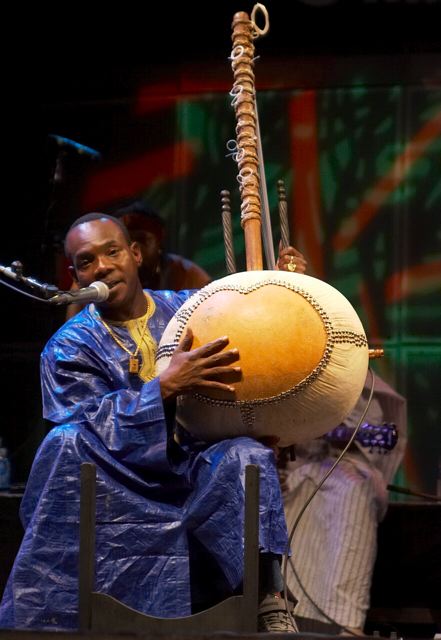
Salif Bamakora was born in Mali, a country rich in musical heritage and cultural diversity. Growing up in a family deeply rooted in the traditions of the Manding people, he was exposed to the sounds of the kora, a traditional West African string instrument, from an early age. His father, a respected musician, played a pivotal role in nurturing Salif's passion for music. This early exposure to the rhythms and melodies of Malian music laid the foundation for his future endeavors as both a musician and a teacher. Salif's upbringing in a vibrant cultural environment instilled in him a profound appreciation for the spiritual and communal aspects of music, which would later influence his artistic expression and teaching philosophy.
Salif Bamakora was born in Mali, a country rich in musical heritage and cultural diversity. Growing up in a family deeply rooted in the traditions of the Manding people, he was exposed to the sounds of the kora, a traditional West African string instrument, from an early age. His father, a respected musician, played a pivotal role in nurturing Salif's passion for music. This early exposure to the rhythms and melodies of Malian music laid the foundation for his future endeavors as both a musician and a teacher. Salif's upbringing in a vibrant cultural environment instilled in him a profound appreciation for the spiritual and communal aspects of music, which would later influence his artistic expression and teaching philosophy.
As a musician, Salif Bamakora has dedicated his life to the preservation and promotion of traditional Malian music. He is known for his virtuosic kora playing and his ability to blend traditional sounds with contemporary influences. His discography includes several albums that showcase his unique style, characterized by intricate melodies and rhythmic complexity. In addition to his recordings, Salif is a passionate educator, conducting workshops and masterclasses around the world. His teaching emphasizes the importance of cultural heritage and the role of music as a means of spiritual expression, encouraging students to connect with their roots while exploring their creativity.
Salif's musical lineage is deeply intertwined with the griot tradition, a West African oral history and storytelling practice. He draws inspiration from legendary musicians and griots who have come before him, such as Toumani Diabaté and Ballaké Sissoko. This connection to his ancestors not only informs his musical style but also reinforces his commitment to passing down the knowledge and techniques of the kora to future generations. Salif's work is a testament to the enduring legacy of the griot tradition, as he strives to keep the stories and sounds of his culture alive through his music and teaching.
Today, Salif Bamakora stands as a vital figure in the world of world music, bridging the gap between traditional and contemporary forms. His ability to engage audiences with his soulful performances and insightful teachings makes him an important ambassador for Malian culture. In an increasingly globalized world, Salif's work serves as a reminder of the power of music to transcend boundaries and foster understanding among diverse communities. His dedication to preserving his cultural heritage while embracing innovation ensures that the spirit of Malian music continues to thrive in the modern era.
Listening Journey
Discography
Lineage & Inspiration
The teachers, lineages, and practices that shape Salif Bamakora's path.
Worth Knowing
Salif Bamakora is a Malian kora virtuoso and griot tradition keeper whose work bridges ancestral West African music with contemporary global audiences. Born into a family of respected musicians rooted in Manding cultural traditions, he inherited both technical mastery of the kora and a philosophical commitment to spiritual expression through music—a lineage that traces back through legendary griots like Toumani Diabaté and Ballaké Sissoko. People follow his work because he refuses the false choice between cultural preservation and innovation; his performances and teaching demonstrate that traditional Malian music remains alive, spiritually resonant, and capable of engaging modern listeners without dilution. His discography, including the live collections Anthology, Vol. I & Vol. II and his appearance on Putumayo's Café du Monde compilation, documents his ability to engage audiences with soulful, technically intricate performances. In an era of musical homogenization, Bamakora stands as a vital ambassador for griot tradition—not as museum artifact, but as living practice.
Salif Bamakora's work is rooted in the griot tradition, a West African oral history and storytelling practice central to Manding culture in Mali. The griot role—as keeper of genealogy, historian, and spiritual guide through music—is not merely artistic but ceremonial; griots serve as custodians of collective memory, and Bamakora inherits this responsibility directly from his father, a respected musician, and through his connection to the Manding people's cultural inheritance. His musical lineage explicitly acknowledges the influence of Toumani Diabaté and Ballaké Sissoko, both transformative figures in modern kora music who elevated the instrument from village ceremonial contexts to international concert halls while maintaining spiritual integrity. The kora itself—a 21-string harp-lute—is the griot's primary instrument, and mastery of it requires understanding not just technical facility but the spiritual and communal dimensions of music as healing, teaching, and collective memory-making. Bamakora's approach emphasizes that this lineage is living and evolving; he bridges ancestral knowledge with contemporary influences, ensuring that griot tradition remains culturally vital rather than fossilized.
Salif Bamakora's music centers on the kora, a 21-string West African harp-lute with a warm, plucked tone that sits somewhere between a classical guitar and a dulcimer in terms of timbre—bright but not sharp, with natural sustain and a resonance that can feel both grounding and ethereal. His playing is characterized by intricate melodic runs and rhythmic complexity that honor griot tradition's emphasis on narrative development and emotional arc; rather than static loops or hypnotic repetition, his approach builds dynamically, layering call-and-response patterns that suggest conversation and storytelling. His live recordings, particularly through Anthology, Vol. I & Vol. II, reveal a performer comfortable with space and silence—he doesn't fill every moment with sound, allowing the listener to sit with individual phrases and absorb the kora's resonance. The pacing across his discography tends toward the meditative and contemplative, well-suited to listeners seeking spiritual expression through music rather than high-energy movement or external stimulation. His incorporation of contemporary influences maintains the kora's acoustic purity rather than electrifying or over-processing the instrument, preserving what many listeners describe as the profound, grounding quality that draws people to traditional Malian music in the first place.
A newcomer should begin with Anthology, Vol. I & Vol. II (Live), recorded in 2021, which captures Bamakora in performance and reveals the full arc of his artistic vision—these live recordings provide the most authentic entry point because they showcase the spontaneity, responsiveness, and spiritual depth that define his practice without the mediation of studio production. This collection demonstrates both his technical mastery of the kora and his capacity to engage listeners emotionally; live recordings expose the musician's intention in ways studio polish can obscure, and Bamakora's approach to live performance emphasizes presence and authenticity. Listeners should approach these recordings not as background music but as active listening—the intricate melodic and rhythmic patterns reward sustained attention and multiple listens. Second, seek out his appearance on Putumayo's Café du Monde (2024) compilation, which provides a shorter, curated introduction to his sound while situating his work alongside other contemporary world musicians. If you're curious about Bamakora's educational philosophy and teaching methodology, his ongoing masterclasses and workshops worldwide (details available through his website at tinderhearth.com/diabate-bamakora) offer direct access to his approach to cultural heritage preservation and spiritual expression through music.
Salif Bamakora's work is not suited for listeners seeking upbeat, rhythmically driving music designed for movement or dance; his aesthetic emphasizes contemplation, introspection, and narrative development over propulsive grooves or high-energy percussion. Those accustomed to electronic world music, ambient loops, or heavily produced world fusion may find his acoustic kora approach too sparse or minimal—his refusal to embellish or overdrive the instrument's sound reflects an aesthetic commitment to restraint that some listeners experience as understated rather than engaging. Casual background-music seekers should look elsewhere; Bamakora's work demands active listening and rewards repeated engagement, but it won't serve as ambient wallpaper during dinner parties or work sessions. Listeners expecting pop-oriented hooks, memorable melodies designed for immediate recall, or emotionally manipulative crescendos will find his approach more subtle and less immediately gratifying. Finally, those seeking to exoticize or consume African music as aesthetic tourism without engagement with cultural context or griot tradition's spiritual and historical significance will likely feel disappointed or unsatisfied; Bamakora's teaching emphasizes understanding the cultural roots and communal purpose of his music, not treating it as entertainment divorced from meaning.
Anthology, Vol. I & Vol. II (Live) from 2021 stands as the definitive recording in Bamakora's documented discography—a double-volume live collection that captures the full range of his artistic vision, technical facility, and spiritual intention in real-time performance. This recording is essential because live Malian music traditionally captures dimensions that studio polishing can erase; the responsiveness, the space between phrases, and the musician's presence are all integral to griot tradition, and Anthology preserves these qualities authentically. The single Through the Tunnel (Live) from 2020 offers a concentrated example of his ability to construct emotional narrative within a single extended performance, demonstrating his compositional sensibility and improvisational depth. His appearance on Putumayo's Café du Monde compilation (2024) provides a curated, shorter introduction to his sound and situates him within contemporary world music contexts; while not a solo project, it's a significant documented moment of his work reaching international listeners. Based on available discography, these three releases represent the documented archive of Bamakora's professional work; listeners seeking deeper knowledge should explore his live teaching and masterclass recordings, which may exist outside commercial distribution but contain essential insights into his pedagogical philosophy and approach to cultural heritage preservation.
Salif Bamakora's teaching philosophy centers on the inseparability of technical mastery, cultural knowledge, and spiritual practice—his masterclasses and workshops worldwide emphasize that learning the kora is not merely acquiring instrumental technique, but understanding the griot tradition's role as keeper of genealogy, history, and community memory. His approach draws explicitly from his own formation: raised by a respected musician father in a Manding cultural environment, he teaches students that the spiritual and communal aspects of music are not supplementary to musicianship but foundational to it. Bamakora encourages students to connect with their own cultural roots while exploring their creativity, suggesting that cultural preservation and artistic innovation are not opposing forces but interdependent practices. His teaching resists the extraction of African music from its cultural context, instead positioning the kora and griot tradition as living practices capable of engaging contemporary listeners without dilution or exoticization. Through his global workshops and performances, Bamakora serves as an ambassador for Malian culture, demonstrating that the transmission of cultural knowledge happens most authentically when the teacher embodies both technical excellence and genuine commitment to the material's spiritual and historical significance.
Salif Bamakora's live performances, documented most fully in Anthology, Vol. I & Vol. II, are constructed as narratives rather than songs—he builds elaborate melodic and rhythmic structures that develop over time, suggesting the griot tradition's emphasis on storytelling and communal listening rather than pop-song compression. Expect intimate, contemplative intensity; Bamakora's stage presence emphasizes presence and authenticity over visual spectacle, allowing the kora's acoustic resonance and his own musical intention to remain the focus. His live recordings reveal a performer comfortable with space and silence, creating moments of rest between phrases that invite listeners into the music rather than overwhelming them with constant sound. Live performances typically feature extended compositions that showcase both his technical mastery—intricate melodic runs, complex rhythmic patterns—and his capacity for emotional restraint, a quality that distinguishes his work from more exuberant or virtuosically showy approaches. Based on his documented approach and the griot tradition he represents, his performances function partly as teaching moments; Bamakora appears to view each live event as an opportunity to transmit not just music but cultural knowledge and spiritual understanding to audiences increasingly disconnected from traditional African musical practices.
Salif Bamakora's recorded work is primarily available through Spotify, where his discography includes Anthology, Vol. I & Vol. II (Live), Through the Tunnel (Live), and his appearance on Putumayo's Café du Monde compilation (2024)—these releases can be accessed through his Spotify artist profile at spotify.com/artist/1GmkBmW4HCSklgZ8sZQhTG. The Putumayo compilation may also be available through major music retailers and streaming platforms that carry world music collections. His professional website at tinderhearth.com/diabate-bamakora provides information about his current activities, teaching engagements, and may offer additional resources or merchandise not widely distributed through commercial channels. For deeper engagement, listeners interested in his masterclasses, workshops, and educational offerings should contact him directly through his website, as much of his teaching work likely occurs outside commercial recording distribution. Apple Music, YouTube, and other streaming platforms may eventually host his work, though availability varies by region and platform; checking multiple streaming services is advisable. Those seeking to support Bamakora most directly should explore purchasing options through his website and local music retailers specializing in world music and African recordings.
Salif Bamakora's artistic philosophy refuses the false binary between tradition and innovation; his biography explicitly emphasizes his "ability to blend traditional sounds with contemporary influences," suggesting that cultural preservation is not about freezing Malian music in a historical moment but about enabling it to remain spiritually vital and relevant to modern listeners. His approach differs from world-music fusion artists who extract African elements and recombine them with Western production—instead, Bamakora appears to work within the griot tradition's own capacity for evolution and responsiveness, a quality inherent to oral cultures that have always adapted while maintaining core values and spiritual integrity. His discography, particularly the live recordings, documents acoustic kora performances that honor the instrument's traditional voice while accessing contemporary concert-hall and recording contexts; he doesn't electrify or over-produce the kora, but neither does he present it as a historical curiosity. His global masterclasses and workshops suggest that he sees cultural transmission as an active, ongoing process where students from diverse backgrounds can engage meaningfully with griot tradition—not by pretending to be Manding, but by understanding the philosophical and spiritual dimensions that make the tradition universally resonant. Bamakora's work demonstrates that cultural heritage preservation and artistic innovation strengthen rather than diminish each other when the artist remains genuinely committed to both the tradition's spiritual roots and contemporary audiences seeking authentic connection.
Sei tu? Rivendica questa pagina ›
Continue your journey
BrightStar is the global directory of artists, teachers, and healers in the wellness and spiritual movement. Find your next experience — or add yourself.
Browse 14,000+ curated profiles across kirtan, yoga, meditation, and beyond.
Explore directory →Kirtan, retreats, sound baths, breathwork, ceremonies — happening this week.
Browse events →Are you an artist, teacher, or healer? Get listed — free, AI-assisted, live in minutes.
Get started →