BrightStar
BlogI miei biglietti
Language
BlogI miei bigliettiSaved events
RegistratiAccedi
  • Sfoglia tutti i Eventi
  • Per i ricercatori
  • Yoga
  • Meditazione
  • Breathwork
  • Musica sacra
  • World music
  • Musica medicina
  • Sound healing
  • Danza estatica
  • Cerimonia
  • Medicina delle piante
  • Ritiri
  • Workshop
  • Tutte le categorie →
  • Bali
  • Sedona
  • Los Angeles
  • Costa Rica
  • Byron Bay
  • San Francisco
  • Austin
  • New York
  • San Diego
  • Seattle
  • Tutte le città →
  • Pubblica gratis il tuo evento
  • Join the Movement
  • Why we list
  • Sell Globally
  • Per i creatori
  • Per team
  • Per gli scrittori
  • Per gli insegnanti
  • Per gli artisti kirtan
  • Per gli studi
  • Per i festival
  • Per i centri ritiro
  • Per le no-profit
  • Ambasciatore del brand
  • Biglietteria gratuita
  • Elevate
  • Amplify
  • Rete di 500K+ acquirenti
  • Recupero carrelli abbandonati
  • Categorie di biglietti
  • Eventi ricorrenti
  • Posti assegnati
  • Sistema affiliati
  • Lista d'attesa / Notifica
  • Scanner biglietti
  • Widget incorporabile
  • Distribuzione eventi
  • Centro messaggi
  • Integrazioni
  • Report
  • Tutte le funzionalità →
  • Chi siamo
  • L’ecosistema
  • Blog
  • Glossario
  • Ispirazione
  • Centro assistenza
  • Contatti
  • Documentazione API
  • Risorse del brand
  • Carriere
  • Stampa
  • Termini di servizio
  • Informativa sulla privacy

Eventi

  • Sfoglia tutti i Eventi
  • Per i ricercatori
  • Yoga
  • Meditazione
  • Breathwork
  • Musica sacra
  • World music
  • Musica medicina
  • Sound healing
  • Danza estatica
  • Cerimonia
  • Medicina delle piante
  • Ritiri
  • Workshop
  • Tutte le categorie →

Destinazioni

  • Bali
  • Sedona
  • Los Angeles
  • Costa Rica
  • Byron Bay
  • San Francisco
  • Austin
  • New York
  • San Diego
  • Seattle
  • Tutte le città →

Per i creatori

  • Pubblica gratis il tuo evento
  • Join the Movement
  • Why we list
  • Sell Globally
  • Per i creatori
  • Per team
  • Per gli scrittori
  • Per gli insegnanti
  • Per gli artisti kirtan
  • Per gli studi
  • Per i festival
  • Per i centri ritiro
  • Per le no-profit
  • Ambasciatore del brand
  • Biglietteria gratuita
  • Elevate
  • Amplify

Funzionalità

  • Rete di 500K+ acquirenti
  • Recupero carrelli abbandonati
  • Categorie di biglietti
  • Eventi ricorrenti
  • Posti assegnati
  • Sistema affiliati
  • Lista d'attesa / Notifica
  • Scanner biglietti
  • Widget incorporabile
  • Distribuzione eventi
  • Centro messaggi
  • Integrazioni
  • Report
  • Tutte le funzionalità →

Azienda

  • Chi siamo
  • L’ecosistema
  • Blog
  • Glossario
  • Ispirazione
  • Centro assistenza
  • Contatti
  • Documentazione API
  • Risorse del brand
  • Carriere
  • Stampa
  • Termini di servizio
  • Informativa sulla privacy
Scarica l'app
Scarica suApp StoreDisponibile suGoogle Play
© 2026 BrightStar. Tutti i diritti riservati. Crediti fotografici ·
✨ Sadhvi Bhagawati Saraswati’s profile is unclaimedClaim Profile
Sadhvi Bhagawati Saraswati
SB
Sadhvi Bhagawati Saraswati

Sadhvi Bhagawati Saraswati

Spiritual Leader

Chi è

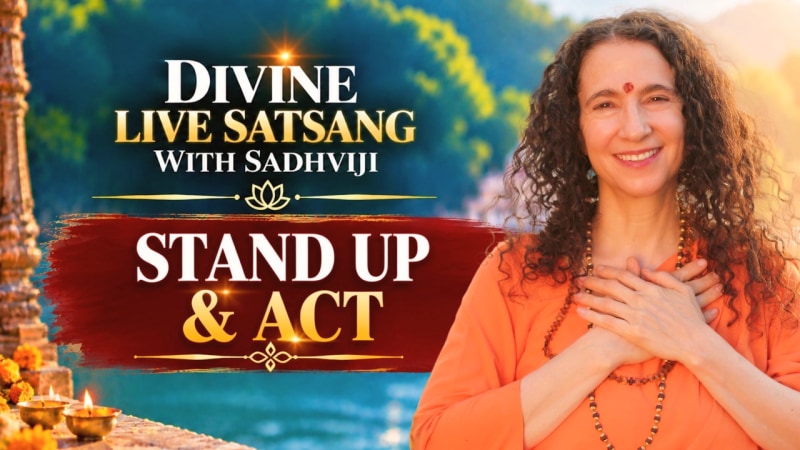
Sadhvi Bhagawati Saraswati is a Hindu spiritual leader, author, and social activist who traded a California upbringing for monastic life at Parmarth Niketan, one of the largest ashrams in Rishikesh, India. Born in Los Angeles and raised in a secular American household, she holds a PhD from Stanford University and spent her early years in what she calls the Hollywood milieu before taking sannyasa vows in the Hindu tradition under the guidance of Pujya Swami Chidanand Saraswatiji, president of Parmarth Niketan. Her work centers on making ancient Vedic philosophy accessible to contemporary global audiences, bridging Western psychological frameworks with Sanskrit scripture and yogic practice.

She is the author of two bestselling books that chronicle her spiritual path and offer practical guidance rooted in Hindu dharma. "Hollywood to the Himalayas" recounts her personal journey from Stanford academic and American suburbia to the banks of the Ganges, where she has lived for more than two decades. "Come Home to Yourself" distills teachings from the Bhagavad Gita, Upanishads, and her own ashram practice into frameworks for daily life. Both titles have been translated into multiple languages and are widely used in yoga teacher trainings and mindfulness programs worldwide.

Sadhvi Bhagawati's career arc reflects an unusual synthesis of East and West. After completing her doctorate, she traveled to India in the late 1990s for what was intended as a short visit. She remained, eventually taking formal monastic vows and becoming one of the few Western women to hold the title of sadhvi in the Dashnami order. She studied under Swami Chidanand Saraswati and immersed herself in the ritual and devotional life of Parmarth Niketan, an ashram that hosts the annual International Yoga Festival and serves as a center for Ganga Aarti ceremonies witnessed by thousands of pilgrims each year.

Beyond her writing and teaching, she co-founded the Global Interfaith WASH Alliance, an initiative addressing water, sanitation, and hygiene through faith-based networks, and serves as secretary-general of the Global Interfaith WASH Alliance. She has spoken at the United Nations, the World Economic Forum, and the Parliament of the World's Religions, representing Hindu perspectives on environmental sustainability and women's empowerment. Her activism extends to ending violence against women and children, promoting girls' education, and advocating for ecological stewardship of rivers, particularly the Ganges. She has been featured in outlets including BBC, The Guardian, and Yoga Journal for her work at the intersection of spirituality and social change.

Sadhvi Bhagawati leads satsangs, retreats, and workshops at Parmarth Niketan and travels internationally to teach. She conducts programs on meditation, mantra, karma yoga, and the application of Vedanta philosophy to modern challenges such as addiction, trauma, and burnout. Her teaching style draws on both her academic training and decades of lived ashram discipline, making her a sought-after speaker for audiences ranging from corporate wellness programs to interfaith conferences. She regularly teaches at the International Yoga Festival in Rishikesh each March, where she has presented to audiences of several thousand practitioners from more than seventy countries.

Currently, she continues her residential work at Parmarth Niketan, where she oversees educational and service programs, mentors students and aspirants, and participates in the daily rhythms of ashram life. She remains active in global interfaith dialogue and environmental advocacy, particularly campaigns to protect sacred rivers in India and raise awareness about sanitation access for marginalized communities. Her online satsangs and video teachings reach viewers across six continents, and she maintains an active presence through social media and the Parmarth Niketan digital platform.

For those encountering her work today, Sadhvi Bhagawati offers a rare combination: rigorous scholarship in Hindu texts, lived monastic commitment, and a voice that speaks directly to the practical struggles of contemporary seekers navigating anxiety, purpose, and belonging.

Spiritual LeaderMotivational SpeakerAuthorSpiritual LeadershipMotivational SpeakingSocial ActivismHindu PhilosophySelf Help
252K on Instagram1 Upcoming Show

Coming Up

Coming Up

Coming Up

RetreatFreedom from the Mind: The Ancient Yogic Path to Stillness, Clarity, and Inner Peace
Tue, Feb 16Paradise Island

Stories & Insights

All articles
One Mantra or Many? Why Japa Works Through Repetition
Video

One Mantra or Many? Why Japa Works Through Repetition

Should you chant one mantra every day or rotate through many? Sadhviji's brief answer on japa, repetition, and devotion to many forms of the…

Watch →
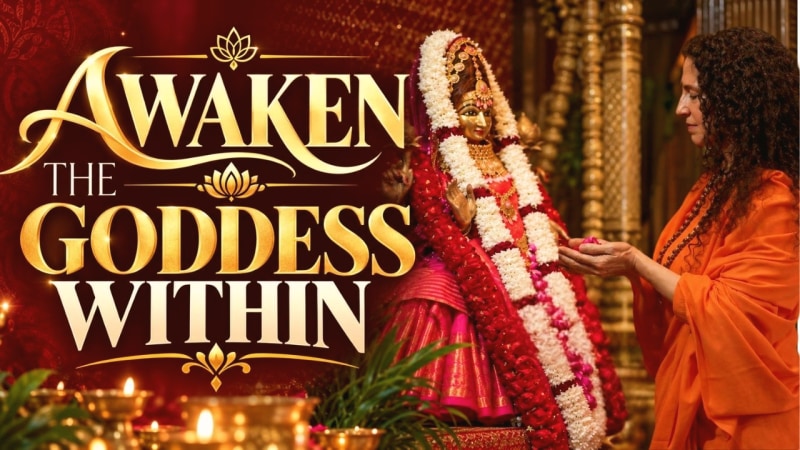
Navaratri's True Meaning: Awakening Shakti Within Yourself
Video

Navaratri's True Meaning: Awakening Shakti Within Yourself

Navaratri may be about waking ourselves, not the Divine Mother. Here is how Sadhviji's nine-night teaching moves through Durga, Lakshmi and …

Watch →
Why Being Alone With Your Own Mind Is a Prescription
Video

Why Being Alone With Your Own Mind Is a Prescription

Solitude isn't a problem to fix but a daily prescription, argues Sadhviji. Here's why sitting alone with your own thoughts shapes your value…

Watch →
Does Surrender Mean Accepting What Happens? Satsang Notes
Video

Does Surrender Mean Accepting What Happens? Satsang Notes

A Parmarth Niketan satsang takes on belief in God, heat-tested meditation, dharma, and whether karma means accepting harm. A former scientis…

Watch →
Following Divine Intuition: One Woman's 30-Year Ashram Journey
Video

Following Divine Intuition: One Woman's 30-Year Ashram Journey

A Stanford PhD student hears a divine voice and leaves California for an ashram. Thirty years later, she reflects on dharma, purpose, and li…

Watch →
Meeting Luminous Teachers: Vedantic Wisdom & Self-Discovery
Video

Meeting Luminous Teachers: Vedantic Wisdom & Self-Discovery

A rare encounter between two spiritual masters sharing Vedantic wisdom on self-discovery, inner freedom, and divine connection at Princeton …

Watch →
Vedi tuttiStories & Insights→

Connect

Instagram252K followers

Stay in Touch

Create your BrightStar account

Follow Sadhvi Bhagawati Saraswati and discover other retreats, teachers, and gatherings across the conscious wellness world. New programs, early-bird pricing, and seasonal guides — once a month.

or

Free BrightStar account. Follow venues and teachers, save events, get personalized recommendations across the conscious wellness ecosystem.

For Event Creators

Be the Change.Keep the Change!

A free ticketing platform built for retreats, kirtans, and festivals. Set up an event in minutes — no contracts, no per-ticket fees, no catch.

$0
Forever
∞
Events
0
Contracts
100%
Yours
Try the Demo→Learn more

Frequent Collaborators

Aubrey Marcus
Aubrey Marcus
Lynne Mctaggart
Lynne Mctaggart
Spiritual Teacher
Elle Macpherson
Elle Macpherson
Yoga Teacher
Charles Eisenstein
Charles Eisenstein
Author and public speaker
Anne Ornish
Anne Ornish

About Sadhvi Bhagawati Saraswati

  • For Beginners

    Where to Start with Sadhvi Bhagawati Saraswati: A Beginner's Guide

    3 min read

  • Biography

    Who Is Sadhvi Bhagawati Saraswati? Life, Work, and Legacy

    4 min read

Questions

Sadhvi Bhagawati Saraswati is a spiritual leader, motivational speaker, and bestselling author who has become known for bridging Hindu philosophy and Western consciousness in accessible, urgent ways. She operates from Parmarth Niketan, a major ashram in India, but her influence extends globally through her books, speaking engagements, and social activism focused on environmental and spiritual renewal. What distinguishes her in a crowded field of spiritual teachers is her willingness to address contemporary crises—environmental collapse, social fragmentation, loss of meaning—through the lens of ancient Hindu philosophy rather than stripped-down universalism. Her bestselling books, including "Hollywood to the Himalayas" and "Come Home to Yourself," have reached readers who might never set foot in a traditional ashram but are searching for practical spiritual grounding. She appeals to people seeking a teacher who doesn't separate spirituality from real-world responsibility, and who can speak fluently in both Sanskrit philosophy and modern psychological language.

Sadhvi Bhagawati Saraswati is rooted in Hindu philosophy and the Advaita Vedanta tradition, working from Parmarth Niketan ashram, which itself carries decades of spiritual lineage and teaching authority in the Rishikesh region. Her title—Sadhvi, the feminine form of Sadhu—indicates formal monastic ordination and spiritual renunciation within Hindu spiritual culture, a distinction that carries weight beyond mere honorific. Her work draws consistently on Hindu philosophical frameworks, particularly concepts from the Vedas, Upanishads, and Bhagavad Gita, which she interprets for contemporary audiences without diluting their depth. The fact that she is based at an established ashram rather than operating as an independent entrepreneur signals her embeddedness in traditional guru-disciple lineage, even as her teaching methods and communication strategies are thoroughly modern. Students of Hindu philosophy and Vedantic non-duality will recognize her intellectual grounding, while newcomers to these traditions should know they're encountering authentic, scholarly engagement with these texts rather than New Age reinterpretation.

For readers approaching her for the first time, "Hollywood to the Himalayas" serves as the natural entry point—it functions as both memoir and spiritual introduction, detailing her own journey from Western life into monastic practice while introducing core Hindu philosophical concepts organically through lived narrative. This book works because it doesn't assume prior knowledge of Sanskrit terms or Vedantic philosophy; instead, it demonstrates how these teachings address real psychological and spiritual crises that contemporary readers already understand. Newcomers should follow this with "Come Home to Yourself," which takes the philosophical foundations from her first book and applies them more directly to present-day challenges around identity, belonging, and purpose. The advantage of starting with her books rather than jumping into live teaching or retreat settings is that they allow readers to encounter her voice and perspective without the intensity or commitment that ashram participation requires. If someone finds resonance with her framework in the books, they're then positioned to explore her speaking engagements, recorded talks, or ashram-based programs with genuine context and appropriate expectations.

While many contemporary spiritual teachers attempt to bridge Eastern and Western worldviews, Sadhvi Bhagawati Saraswati does so while maintaining her formal commitment to monastic renunciation and ashram life—she is not a lay teacher synthesizing traditions on the side, but someone fully embedded in traditional Hindu spiritual infrastructure. Her work is notably activist-oriented; she does not confine spirituality to individual psychology or meditation practice but explicitly connects Hindu philosophy to environmental crisis, social justice, and collective responsibility in ways that challenge the individualistic spirituality of much Western teaching. Her voice carries institutional weight—Parmarth Niketan is not a small personal retreat center but a substantial ashram that hosts tens of thousands of pilgrims annually, giving her teachings the anchor of real community and continuity rather than solely authored authority. Unlike teachers who emerged from secular contexts and later embraced spirituality, or Western seekers who adopted Eastern forms, Sadhvi Bhagawati speaks from within the tradition itself, which means her framing of Hindu philosophy carries scholarly precision alongside devotional commitment. Most distinctively, she refuses the guru-as-infallible-oracle model; her speaking and writing engage contemporary neuroscience, psychology, and environmental science as legitimate conversation partners with ancient wisdom rather than subordinate to it.

Sadhvi Bhagawati Saraswati's work is not suited for readers seeking watered-down, feel-good spirituality or easy answers—her teaching demands serious intellectual engagement with Sanskrit philosophy and unflinching honesty about human suffering and collective responsibility. If someone approaches her expecting a personal life coach offering practical tips for success within existing systems, they will find instead a teacher asking whether those systems themselves need fundamental transformation based on ancient philosophical principles. Those uncomfortable with explicit Hindu philosophy and terminology will find her work less accessible than teachers who strip spiritual concepts of their cultural and religious specificity; she teaches from within tradition, not against or around it. Audiences seeking primarily emotional comfort or inspirational uplift should look elsewhere—while her work addresses profound meaning and purpose, it does not shy from the discomfort of genuine spiritual inquiry and social accountability. Additionally, her framework assumes some intellectual sophistication and willingness to sit with paradox and complexity; this work does not serve readers looking for linear self-help progression or quick psychological resolution. Finally, those uncomfortable with the monastic model of spiritual authority or seeking exclusively peer-based, non-hierarchical teaching will find her traditional ashram-based role runs counter to their philosophical preferences.

At the center of Sadhvi Bhagawati Saraswati's work sits the tension between two seemingly opposed impulses: the ancient Hindu philosophical call toward renunciation and inner transcendence on one hand, and on the other, urgent social and environmental responsibility rooted in the principle that all beings are interconnected manifestations of the divine. Her books and talks repeatedly ask how one can authentically practice non-attachment while remaining committed to healing the world's suffering, refusing to let spirituality become an escape from historical crisis. A second recurring theme is the deconstruction of false identity—her teaching extensively addresses how conditioned selfhood (what she calls the Hollywood self in contrast to authentic being) obscures our capacity for genuine connection and wisdom, using both psychological analysis and Vedantic non-duality frameworks. She consistently emphasizes the concept of "coming home" to one's true nature, not as metaphorical self-discovery but as return to what Hindu philosophy calls the Atman—the unchanging consciousness beneath personality and circumstance. Finally, her work demonstrates how Hindu philosophy addresses contemporary alienation—the loneliness, meaninglessness, and disconnection that characterize modern life—not as individual pathology but as the inevitable result of spiritual forgetting, with ancient wisdom providing practical maps for remembering.

Unlike secular motivational speakers who typically operate within the frame of helping individuals optimize their success within existing social and economic structures, Sadhvi Bhagawati Saraswati's motivational work questions the structures themselves through the lens of Hindu philosophy. Her speaking is not about confidence-building or productivity hacks, but rather about reorienting listeners toward what Hindu philosophy identifies as the actual sources of lasting fulfillment—dharma (righteous action aligned with one's nature), service, and connection to something transcendent rather than accumulation of status or wealth. What distinguishes her from other spiritually-oriented speakers is that she does not separate motivation from ethics or meaning; in her framework, motivation toward hollow goals is precisely the problem modern consciousness faces, not the solution. Her talks draw directly on Hindu philosophical texts and concepts, particularly the Bhagavad Gita's teachings about action, duty, and detachment, making her essentially a philosophy teacher who happens to address audiences in motivational speaking contexts rather than a motivational speaker who occasionally mentions spirituality. Listeners come away not feeling pumped up or energized in the conventional sense, but rather reoriented toward what she calls "coming home"—finding motivation rooted in authentic purpose rather than ego-driven ambition. This approach appeals to audiences who sense that conventional success narratives have failed them spiritually, but it demands intellectual and existential seriousness that conventional motivational speaking audiences may not be prepared for.

Sadhvi Bhagawati Saraswati's approach to social activism is rooted in the Hindu philosophical concept of Karma Yoga—the practice of selfless action without attachment to results—rather than activism based on ego-driven righteousness or political ideology. Her environmental activism, in particular, flows from the Vedantic understanding of interconnection (Advaita philosophy's recognition that all apparent separations are illusory) and the Vedic reverence for all living beings as manifestations of divine consciousness. What makes her activism spiritually grounded rather than secular is that it refuses the binary between individual and collective transformation; in her teaching, genuine spiritual practice must generate compassionate action toward environmental and social healing, while genuine social action without inner transformation becomes merely another ego project. She consistently challenges Western spiritual seekers who retreat to meditation practice while ignoring ecological collapse or human suffering, arguing that this represents a failure of authentic Hindu philosophy which has always understood liberation and social responsibility as interdependent. Her work from Parmarth Niketan specifically addresses environmental protection of the Ganges River and Himalayan ecosystems, making her activism inseparable from her location and community rather than abstract moral posturing. This integration means her spiritual students are expected to engage practical service and social consciousness, and her activist audiences encounter demands for personal spiritual inquiry—she does not allow compartmentalization between the two domains.

Sadhvi Bhagawati Saraswati's own trajectory—documented in her memoir "Hollywood to the Himalayas"—from Western secular life into monastic renunciation within Hindu tradition is itself integral to her credibility and teaching approach. Rather than positioning herself as always-already enlightened, she frames her own ongoing practice as continuous inquiry, which creates a different dynamic between teacher and student than the traditional guru model where the master has completed the journey and initiates seekers. Her Western background means she understands viscerally the specific psychological structures and belief systems that Western students bring to spiritual practice; she can articulate precisely what it means to abandon individualism, success-orientation, and identity-based selfhood because she lived those orientations before consciously deconstructing them. This biography also explains her distinctive voice—she can speak fluently in contemporary Western psychological and philosophical language not because she studied them academically after becoming monastic, but because they formed her original consciousness before her spiritual transformation. The fact that she chose renunciation rather than remaining a lay teacher in the world gives her teaching particular weight around the question of authentic commitment to transformation; she has not simply recommended spiritual practices to others while maintaining conventional life. Her journey additionally demonstrates that genuine spiritual transformation is possible for Western-born, Western-educated people, which serves as proof of concept for her audiences who might otherwise view Hindu philosophy as exotic or culturally inaccessible.

Sadhvi Bhagawati Saraswati's books, particularly "Hollywood to the Himalayas" and "Come Home to Yourself," have achieved bestseller status, indicating substantial readership and mainstream cultural visibility beyond niche spiritual circles. Her position at Parmarth Niketan, one of India's most prominent ashrams, represents institutional validation within Hindu spiritual culture and gives her teaching access to the thousands of pilgrims and students who visit annually. While specific press mentions and major media coverage are not detailed in the available data, her bestselling book status and her role leading a major ashram suggest she has received significant recognition among contemporary spiritual teachers and in publishing markets. The combination of serious books addressing both spirituality and contemporary crisis, institutional position at an established ashram, and global reach through her speaking and teaching indicates she operates at a legitimacy level above independent or self-published teachers. What matters for potential students is that her recognition comes from substantial readership and institutional grounding rather than social media metrics or celebrity endorsement, suggesting her audience consists of people genuinely engaged with her philosophical and spiritual work rather than casual followers. For those seeking verification of her teaching's legitimacy, the fact that she has maintained active presence at a traditional ashram while publishing books and speaking globally—a balance not all contemporary teachers maintain—offers credibility that she is not simply commodifying spirituality but practicing within actual community structures.

Kindred Spirits

Cathy Weber Zunker

Cathy Weber Zunker

1K listeners
Peggy Sealfon

Peggy Sealfon

605 listeners
Jetsunma Tenzin Palmo

Jetsunma Tenzin Palmo

Aaron Hugh Bach

Aaron Hugh Bach

2 listeners
Seane Corn

Seane Corn

Dr Janette Freeman

Dr Janette Freeman

167 listeners
Melanie Beckler

Melanie Beckler

553 listeners
Elizabeth Su

Elizabeth Su

33 listeners

Sei tu? Rivendica questa pagina ›

There's more where this came from.

BrightStar is the global directory of artists, teachers, and healers in the wellness and spiritual movement. Find your next experience — or add yourself.

Discover More Artists

Browse 14,000+ curated profiles across kirtan, yoga, meditation, and beyond.

Explore directory →

Find an Event Near You

Kirtan, retreats, sound baths, breathwork, ceremonies — happening this week.

Browse events →

Add Your Profile

Are you an artist, teacher, or healer? Get listed — free, AI-assisted, live in minutes.

Get started →