

Qi Qigong Center
Retreat Leader · New York
Chi è
Qi Qigong Center is a qigong and meditation studio founded by Yaniv Zohar and located at 26 West 8th Street in Greenwich Village, Manhattan, New York City. The center brings together a resident faculty and visiting master teachers to offer qigong, tai chi, and meditation in a space described as a portal for movement, breath, and awareness.
Qi Qigong Center is a qigong and meditation studio founded by Yaniv Zohar and located at 26 West 8th Street in Greenwich Village, Manhattan, New York City. The center brings together a resident faculty and visiting master teachers to offer qigong, tai chi, and meditation in a space described as a portal for movement, breath, and awareness.
The center's teaching draws on the ancient Chinese philosophical and medical tradition of Qigong — a practice the site describes as over 2,000 years old — rooted in the Daoist understanding expressed in Laozi's Daodejing: "The Dao gave birth to the One, the One gave birth to the Two, the Two gave birth to the Three, and the Three gave birth to the 10,000 things." That cosmology shapes the studio's signature framework, the Three Treasures Practice, which works with the universal energies of Heaven, Earth, and Humanity to cultivate internal Qi circulation.
The Three Treasures Practice divides into three distinct class forms. SHEN heaven spirit practice connects to Heaven Yang energy through deepened breath, postural adjustment, and visualization aimed at cultivating the spirit. QI heart mind practice moves through qigong forms, breath, and visualization drawn from the elements of rock, water, and air, building strength, flexibility, and the balance of Yin and Yang. JING body earth practice grounds the body in Earth Yin energy, drawing on fire, water, and wind to cultivate Jing — the body's essential vitality. All three classes run as in-studio sessions, live streams, and on-demand through Qi Anytime, the center's growing library of prerecorded practices and interviews.
The resident teaching team includes founder Yaniv Zohar alongside qigong teachers Michael Cooney, Lloyd Huber, Benny Spott, Eliza Factor, Jonathan Breshin, and Liam Pfeiffer; meditation teachers Camilla Bottari, Giuliano Guarneri, Marique Schimmel, Mattan Sharvit, and Tiffany Martinez; tai chi teacher Jack McKenna; and resident teacher Helena Lloveria. The center also hosts visiting master teachers for weekend workshops — among them Master Wu (listed as Root Teacher), Thomas Droge, Chris Chen, and Charles Colten — bringing practices including Shamanic Qigong and I Ching seasonal work into the studio's program.
The Greenwich Village studio space sits at the meeting point of West 8th Street and New York City's everyday intensity, and the center frames that urban context as part of its purpose: qigong is offered as a low-impact, nervous-system practice suited to city life, addressing anxiety, posture strain, chronic tension, and energy depletion without high-intensity effort. The movement is slow and controlled, making it accessible to beginners, office workers, active adults, older adults, and anyone recovering from injury or surgery.
Qi also runs a shop sharing work by community members and artists, with proceeds shared generously with the makers. The studio's guiding phrase — "Listen to Be" — runs through its teaching philosophy: that consistent, aware practice with movement, breath, and visualization is a way of being as much as a form of exercise.
Lineage & Inspiration
Spiritual Influences
The teachers, lineages, and practices that shape Qi Qigong Center's path.

Zhongxian Wu
Daoist Lineage Holder
Named root teacher and lineage holder of the Qi Center's classical Chinese qigong transmission.
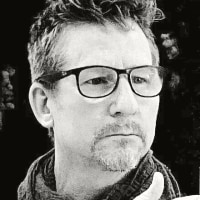
Thomas Droge
Qigong Master Teacher
Zhongxian Wu's student and founder of the Xing Ming Gong system taught at Qi.

Qigong
Practice
Described as the philosophy and practice on which all the center's teachings are based.

Daoism
Tradition
Root lineage runs through Daoist internal cultivation and the Three Treasures (jing, qi, shen) framework.

Tai Chi
Practice
Taught alongside qigong as its sibling practice for cultivating life energy and harmony.
Domande
Questions
Qi Center is a qigong studio in Greenwich Village, New York City, founded by Yaniv Zohar, and it treats qigong as both philosophy and practice rather than a set of gentle stretches. The studio builds its teaching on three elements, movement, breath and visualization, and its stated mission, 'QI energy • life force • practice,' signals that the work is meant to be felt in the body. Its approach starts with walking in awareness and moves toward feeling the Qi that is around and within us, then using that energy to move, create and heal ourselves and others while working with emotion. People follow the center because it joins a physical discipline with an inner one, drawing on both qigong and Tai Chi in a single curriculum. Practice happens in the studio and by live stream, and the center is listed under the Healer role, which reflects its focus on self-healing alongside craft. For newcomers, the center's self-description is unusually specific about method, which makes it easier to judge whether its approach suits your goals.
The available material does not name a specific lineage holder or a formal school that the center descends from, so any claim of a direct line of transmission would be invention. What the center does state clearly is that its teaching sits within qigong as a philosophy and practice, and its classes follow the Three Treasures practice. That structure ties Jing, the body and earth practice, along with Qi, the heart-mind practice, and Shen, the heaven and spirit practice, to the energies of Heaven, Earth and Humanity. Tai Chi is the second visible inherited thread, since the center's approach draws on both qigong and Tai Chi. Readers who want a traditional genealogy should look for it directly from the studio, because the public description does not supply one. The honest read is that Qi Qigong Center works within a classical Chinese cultivation framework, adapted for a Greenwich Village studio and an online audience.
A newcomer should begin with the element the center itself places first, which is walking in awareness, since the approach begins there before moving toward feeling Qi. From there, the Jing practice is the natural next step, because it is the body and earth work that grounds the rest of the Three Treasures. Students who cannot get to the Greenwich Village studio can use the live stream classes or the prerecorded practices in the Qi Anytime library, which extends the teaching beyond the room. Meditation classes are offered separately, so people who want a quieter entry point can start there rather than with movement. The studio describes its space as one where everyone can move as they are, which lowers the bar for beginners who have no prior qigong experience. Anyone with prior Tai Chi training will recognize parts of the approach faster, but the center does not require it.
The most distinctive feature is the explicit mapping of practice onto the Three Treasures, with Jing tied to earth and body, Qi tied to the heart-mind joining earth and heaven, and Shen tied to heaven and spirit. Many qigong teachers describe breath or posture in general terms, while this center assigns each element a defined job, from grounding and vitality to deepening breath and clearing the mind. Its teaching team is also structured in two layers, with resident qigong, Tai Chi and meditation teachers holding the space and visiting master teachers leading workshops through the year. The Qi Anytime library of prerecorded practices and interviews gives students a way to keep the work going between visits. The center also blends Tai Chi and meditation into the same program rather than treating them as separate disciplines. Comparisons to other teachers in the field are hard to make from the public material alone, so the clearest differentiators are these structural choices.
The work is not well suited to people who want a fast, sweat-heavy workout, because the emphasis on feeling, listening and deepening breath is slow by design. Those looking for purely secular stress relief may find the philosophical framing of qigong as both philosophy and practice more than they want, since the center talks openly about Qi energy and life force. Practitioners who prefer a single, publicly documented lineage with named patriarchs will not find that detail in the available material. People who expect an instructor to correct every posture in real time may find the approach less directive than they want, given the emphasis on moving as you are. Students who need heavily structured progression with rigid exams or certifications should ask the studio directly about what formal pathways exist. The center is best for those who are comfortable with a slower, body-first method that treats emotion and breath as part of the training.
The primary point of contact is the center's website at qi.live, which hosts the studio's class information, live stream access and the Qi Anytime library. No upcoming events were available in the material used to build this profile, so the current schedule should be checked directly on the site rather than assumed from older listings. Visiting master teacher workshops are offered through the year, and those are the events most likely to draw students from outside the Greenwich Village studio. Meditation classes and resident teacher sessions run alongside the workshops, so a regular check of the schedule is the most reliable way to track what is coming up. The center does not operate as a touring act, so expect event announcements to center on the studio and the online platform rather than on travel itself. Students who want to hear about new workshops first should follow the studio directly rather than relying on third-party aggregators.
A session begins with walking in awareness, a slow practice that asks students to notice their own bodies before adding any structured movement. The sequence then moves through the Three Treasures, grounding in Jing, working with the heart-mind in Qi, and finishing with Shen work on deepening breath, adjusting posture and clearing the mind. The studio describes its space as safe, and its stated approach invites students to learn to feel and listen rather than to copy a teacher's form exactly. Tai Chi and meditation classes sit alongside the core qigong work, so a student's week can include more than one modality. The material available does not describe a retreat format in detail, so specifics like length, location or schedule should be confirmed with the studio. What surprises many newcomers is how much of the session is spent on attention rather than on effort, which suits students who find conventional exercise classes too loud or too quick.
The most consistent theme is the relationship between Qi and the body, framed as Qi that is around us and within us, which students are invited to feel rather than only imagine. A second theme is the use of breath and visualization as the three elements, with breath and visualization working alongside movement in every practice. The Three Treasures structure recurs throughout, tying the work to Heaven, Earth and Humanity and to the balance of yin and yang. Working with emotion is also central, since the approach describes using Qi to move, create and heal ourselves and others while attending to feeling states. Peace of mind and flexibility appear as expected outcomes of the Qi practice, though the emphasis is on process rather than goals. The thread running through all of these is listening, a word the center uses repeatedly in describing what students are learning to do.
Yes, the center maintains Qi Anytime, a library of prerecorded practices and interviews that extends the studio's teaching beyond live sessions. The material is designed for students who want to continue practice between classes, or who live outside the Greenwich Village studio and cannot attend in person. The interviews are a useful entry point for understanding the philosophy behind the Three Treasures before trying the movement practices. The public material does not list individual talk titles or episode names, so students should browse the library directly to see what is available. Prerecorded practices are likely the best starting point for those who want to build a home routine around walking in awareness and the Jing practice. Because the library sits alongside live stream classes, it works well as a bridge for people moving from the studio to independent practice.
No prior background is stated as a requirement, and the center's own description emphasizes a safe space where everyone can move as they are. The early practice of walking in awareness is accessible to complete beginners, and it builds the attention skills that later practices rely on. Students with prior Tai Chi experience will recognize movement principles more quickly, since the center draws on both qigong and Tai Chi. The Three Treasures structure adds a layer of vocabulary, including Jing, Qi and Shen, which new students will need to learn over time rather than immediately. Meditation classes offer a low-movement way in for those who are unsure about physical practice. Newcomers who want more context before their first class can read the center's public description, which is unusually specific about method and terminology.




Sei tu? Rivendica questa pagina ›
There's more where this came from.
BrightStar is the global directory of artists, teachers, and healers in the wellness and spiritual movement. Find your next experience — or add yourself.
Discover More Artists
Browse 14,000+ curated profiles across kirtan, yoga, meditation, and beyond.
Explore directory →Find an Event Near You
Kirtan, retreats, sound baths, breathwork, ceremonies — happening this week.
Browse events →Add Your Profile
Are you an artist, teacher, or healer? Get listed — free, AI-assisted, live in minutes.
Get started →