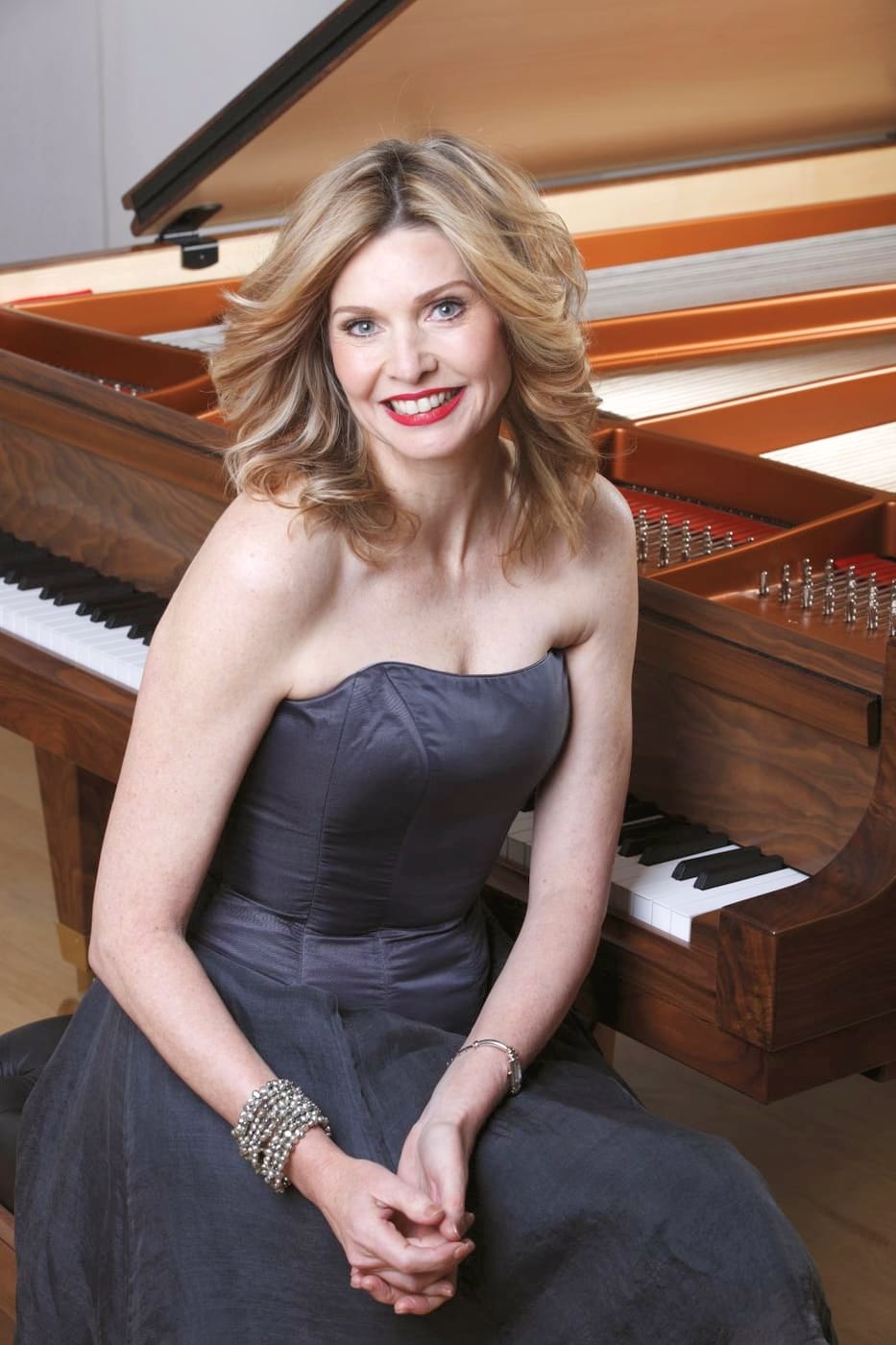

Fiona Joy Hawkins
Pianist
Chi è
Fiona Joy Hawkins is an ARIA-nominated, classically trained Australian pianist, composer and singer whose music crosses Neoclassical, New Age, Celtic and Jazz. She describes her work as original, ethereal music to soothe the soul, and says, "My greatest hope is that my music makes a difference." Her love is to work in the space of music as meditation and healing, where her piano and voice can help others find relaxation, peace, joy, gratitude and contemplation.
Fiona Joy Hawkins is an ARIA-nominated, classically trained Australian pianist, composer and singer whose music crosses Neoclassical, New Age, Celtic and Jazz. She describes her work as original, ethereal music to soothe the soul, and says, "My greatest hope is that my music makes a difference." Her love is to work in the space of music as meditation and healing, where her piano and voice can help others find relaxation, peace, joy, gratitude and contemplation.
She lives in a small village of about 1,000 people in New South Wales and has played at venues including Carnegie Hall's Weill Hall, the New Orleans Jazz Museum, the Sydney Opera House, the Grammy Museum and more than 30 concert halls in China. She has also appeared on Echoes/NPR Radio and accompanied Deepak Chopra in New York. Chopin, Mendelssohn and Michael Nyman are among her inspirations.
Her catalogue includes Portrait of a Waterfall, Angel Above My Piano, Blue Dream, 600 Years in a Moment, Signature – Synchronicity, Into the Mist, Story of Ghosts, The Lightness of Dark and Heavenly Voices. Will Ackerman, founder of Windham Hill Records, produced several of her albums. She is known for her romantic, melodic songs and lush arrangements, and for music that evokes images, emotions and stories. She also makes music videos to tell the stories of our lives and the natural world, and she paints.
Her honours include an ARIA finalist nomination in 2008, two Independent Music Awards in 2016, and ZMR awards for her piano albums. Her song "Grace" appears on a Grammy-winning album. She is a member of the contemporary instrumental group FLOW with Lawrence Blatt, Jeff Oster and Will Ackerman. She also runs her own label, Little Hartley Music.
Domande
Questions
Fiona Joy Hawkins is an ARIA-nominated Australian pianist, composer, and meditation teacher whose work sits at the intersection of classical training and contemplative practice. Unlike many new age artists, her credentials are substantial: she's performed at Carnegie Hall's Weill Hall, the Sydney Opera House, the Grammy Museum, and over 30 concert halls across China, and her song "Grace" appears on a Grammy-winning album. What draws listeners and students is her specific philosophy—that music functions as a vehicle for healing and meditation, using her piano and voice to guide people toward relaxation, peace, joy, and genuine contemplation rather than aesthetic comfort alone. She's worked alongside figures like Deepak Chopra and collaborated with Will Ackerman, the legendary Windham Hill Records founder, on several albums. Her catalogue spans neoclassical, Celtic, jazz, and new age territory, but what unites it is restraint and emotional precision: she creates sonic spaces rather than performances. For practitioners seeking music that actually deepens meditation or creates a thoughtful atmosphere for healing work, her name carries weight within the conscious music community.
Fiona Joy Hawkins draws from a classically rooted lineage—her piano technique and compositional sensibility are anchored in romantic European composers like Chopin and Mendelssohn—but deploys that foundation in service of contemporary meditation and healing practice. She belongs to the new age instrumental tradition, but specifically the more rigorous branch: artists like Michael Nyman, whom she cites as an influence, who combine minimalism with emotional precision rather than ambient-wash practitioners. Her deep alignment with figures like Deepak Chopra, combined with her focus on music as meditation and contemplation, places her within a specific contemporary lineage of musician-healers who treat sound as a healing modality rather than entertainment. She's also embedded in the neoclassical movement—original acoustic compositions with classical training, performed on traditional instruments—and has become part of the FLOW ensemble, a contemporary instrumental group that includes Will Ackerman and other musicians working in similar terrain. This lineage values craft, emotional clarity, and the belief that music can alter consciousness and support spiritual practice without relying on exotic instrumentation or New Age platitudes.
For a first listener, "600 Years in a Moment" is a natural entry point—the title itself signals her aesthetic approach, collapsing time and grand emotion into a specific sonic moment. The album showcases her dual strengths: piano-forward composition and her voice, which she uses sparingly and with restraint, never as a lead instrument but as part of the overall texture. If someone is drawn to the contemplative rather than the romantic aspects of her work, "Into the Mist" offers a more spacious, meditative listening experience. For those specifically interested in music as meditation support, her newer recordings tend to be more explicitly structured for that purpose, though even her earlier, more song-driven albums like "Angel Above My Piano" contain deeply introspective pieces. Newcomers should also understand that her work rewards active listening; these are not background albums in the traditional sense, though they can function that way. Starting with a single album through Spotify or Apple Music, then following her YouTube channel where she shares music videos that tell specific stories tied to the compositions, gives a fuller picture of how she thinks about the relationship between music, narrative, and healing.
The primary distinction is her formal classical training combined with an absence of sentimentality—Hawkins composes and performs with the precision of someone trained in romantic and neoclassical piano, but refuses the easy emotional manipulation that often characterizes new age music. Her pieces evoke specific images and emotions through restraint rather than lushness, and that restraint is deliberate: the silence between notes matters as much as the notes themselves. Where many meditation music pianists layer strings and ambient textures, Hawkins often works with piano and voice alone, creating arrangements that feel both compositionally sophisticated and uncluttered. Her production history sets her apart: Will Ackerman's involvement elevates her work into a category where sonic quality and artistic intention are treated with care usually reserved for chamber music or classical recordings. Additionally, her commitment to storytelling—both through music videos and through the titles of her works—distinguishes her from purely ambient or atmospheric practitioners. She explicitly frames music as healing and meditation, not as background, which means her albums have a shape and intention that guides the listener's inner experience rather than simply providing sonic space.
Listeners seeking high-energy, rhythmically driving music should look elsewhere; Hawkins's aesthetic is fundamentally contemplative and quiet, which means anyone drawn to upbeat new age music with steady percussion or electronic production will find her work too sparse. Fans of vocals-forward music will likely be disappointed—her voice, when it appears, is integrated into the instrumental texture rather than centered, and she doesn't sing in the way a vocalist-led artist does. Similarly, practitioners seeking culturally specific traditions—Vedic chant, Tibetan sacred music, or devotional kirtan, for instance—won't find that framework in her work; she's drawing from western classical and new age contexts rather than preserving a lineage from another tradition. Her albums are also not background music in the functional sense: they demand a kind of attention and presence that doesn't suit someone seeking purely functional ambient sound for work or daily routines. Finally, listeners who equate new age music with maximalist production, heavy orchestration, or euphoric emotional climaxes will find her aesthetic, which privileges clarity and emotional complexity over catharsis, somewhat austere or even melancholic at times.
At its core, her sound is piano-centered; that's the primary voice across her catalogue, and it reflects her classically trained technique and her choice to keep arrangements focused. The piano work spans from lyrical, singing melodies—especially evident in albums like "Angel Above My Piano"—to more sparse, minimalist explorations where single notes or phrases occupy substantial silence, a direct inheritance from composers like Michael Nyman whom she cites as an influence. When her voice enters, it's never a lead instrument but rather another piano—a secondary melodic line or harmonic layer, used strategically and with restraint, typically in the upper register. Her arrangements, when they expand beyond solo piano, incorporate strings or subtle ambient textures that Will Ackerman's production sensibility has shaped, but the overall effect remains crystalline and uncluttered, not lush. The pacing is unhurried; pieces breathe and unfold rather than propel, which is why her music functions in meditation and healing contexts. Across albums, there's a consistent emotional palette—contemplative, sometimes melancholic, often gently joyful, occasionally luminous—but always grounded in melodic clarity and compositional precision rather than atmospheric wash.
"600 Years in a Moment" stands as a signature work—the title encapsulates her aesthetic, and the album demonstrates her range across piano composition, her use of voice, and her ability to evoke specific emotional and visual landscapes within a neoclassical framework. "Portrait of a Waterfall" similarly showcases her capacity to translate visual imagery into sonic experience, a recurring interest across her work. For those drawn to her collaborative and ensemble work, "Signature – Synchronicity" offers insight into how her compositional voice functions within broader production and arrangement contexts. "Into the Mist" is essential for listeners specifically interested in her meditation and healing-focused work; it's more spacious and explicitly contemplative than some of her earlier, more song-driven albums. "Angel Above My Piano" reveals her romantic, melodic sensibility, the aspect of her work that's closest to traditional neoclassical composition. Her membership in FLOW, the contemporary instrumental ensemble with Lawrence Blatt, Jeff Oster, and Will Ackerman, is also worth exploring for a sense of how her voice functions in dialogue with other musicians. No single album contains the whole picture; her catalogue is designed for exploration, with each work offering a different angle on music as meditation and healing.
Piano is her primary instrument, both as a solo vehicle and as the foundational voice in her ensemble work; her classical training on piano is the bedrock of everything she creates. Her voice appears across her work, though not as a lead vocalist would use it—instead, it functions as a melodic and harmonic instrument, integrated into the overall texture. Will Ackerman, the founder of Windham Hill Records and a legendary figure in instrumental and new age music, has produced several of her albums, which signals the level of artistic collaboration and production quality her work receives. She's also a member of FLOW, a contemporary instrumental ensemble that includes Lawrence Blatt, Jeff Oster, and Will Ackerman himself; this group represents her engagement with peer musicians working in similar contemplative and neoclassical terrain. Beyond these primary collaborations, her arrangements incorporate strings and ambient textures when the composition calls for them, but she's notably restrained in adding instrumental layers—the philosophy seems to be that every addition should deepen the emotional or sonic intention rather than simply enrich the sound. She also paints and creates music videos, which shows how she thinks about the sensory and narrative dimensions of her work beyond the purely musical.
While Hawkins's entire catalogue is fundamentally designed with meditation and healing in mind, certain works lean more explicitly into that territory. "Into the Mist" is perhaps the most overtly meditative of her albums—it's spacious, unhurried, and creates the kind of sonic environment where contemplative practice can deepen. "The Lightness of Dark" is another work that trades the romanticism of earlier pieces for something more austere and introspective, making it particularly suited for sitting practice or ceremony work. Her song "Grace," which appears on a Grammy-winning album, carries ceremonial weight and emotional resonance that works well for opening or closing ritual moments. For yoga practice specifically, her pieces that maintain steady, gentle forward momentum without becoming rhythmically driving—most of the album "Signature – Synchronicity"—work well during slower, more introspective asana sequences or during shavasana. What distinguishes her work from purely functional meditation music is that it repays deep listening; even her most meditative pieces contain compositional and emotional complexity that reveals itself to attentive ears. This means her albums function both as genuine meditation support and as music worthy of solo, focused listening—they don't collapse into background utility in the way some dedicated meditation music does.
While specific details about her teaching sessions or retreats aren't publicly documented in the way her musical catalogue is, her philosophy is clear from her stated purpose: she positions music itself as the teaching vehicle and the healer. Her approach seems rooted in the belief that direct experience of her music in contemplative space—whether through listening, meditation, or ceremony—is the primary form of transmission; she's not primarily a teacher of technique or lineage knowledge in the traditional sense, but rather a guide through sound. Her background accompanying Deepak Chopra in New York suggests familiarity with contemporary wellness and spiritual teaching contexts, which likely shapes how she holds space around her music. The fact that she describes her work as "original, ethereal music to soothe the soul" and emphasizes healing, relaxation, and contemplation suggests a teaching approach grounded in vulnerability and emotional clarity rather than authority or technical instruction. Her practice of creating music videos and visual storytelling around her compositions indicates she thinks holistically about the student's or listener's experience, not just the sonic alone. For those seeking traditional spiritual instruction or transmission from a specific lineage, her work is oriented differently; for those seeking music-based meditation and healing guidance, her presence would likely feel welcoming, clear, and focused on facilitating direct inner experience.





Sei tu? Rivendica questa pagina ›
There's more where this came from.
BrightStar is the global directory of artists, teachers, and healers in the wellness and spiritual movement. Find your next experience — or add yourself.
Discover More Artists
Browse 14,000+ curated profiles across kirtan, yoga, meditation, and beyond.
Explore directory →Find an Event Near You
Kirtan, retreats, sound baths, breathwork, ceremonies — happening this week.
Browse events →Add Your Profile
Are you an artist, teacher, or healer? Get listed — free, AI-assisted, live in minutes.
Get started →