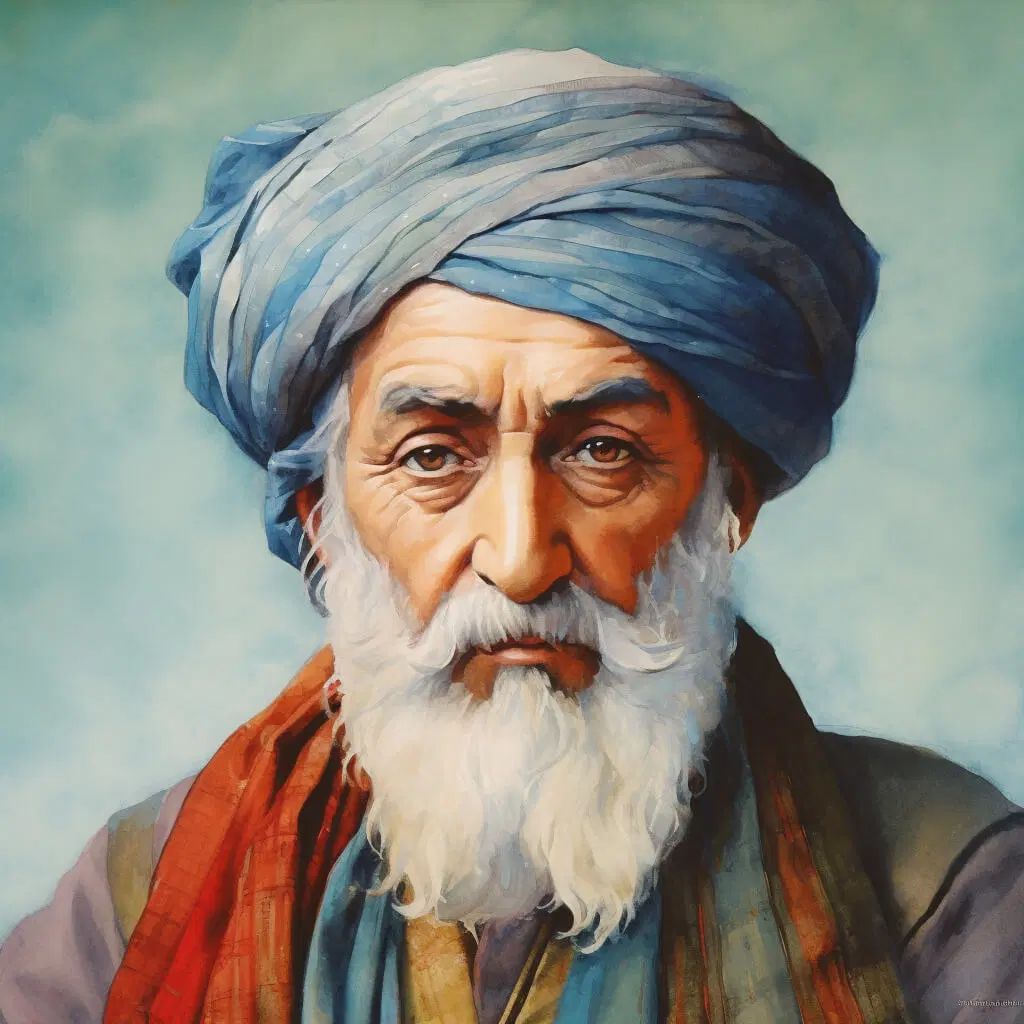
The Transformative Nature of Loss
Rumi's poignant assertion, "Don't grieve. Anything you lose comes round in another form," invites us to reconsider our relationship with loss and change. In a world where attachment often leads to sorrow, this quote serves as a gentle reminder that loss is not an end but a transformation. It challenges us to embrace the cyclical nature of existence, suggesting that what we perceive as an ending may merely be a transition into something new and perhaps even more profound.
At its core, this teaching encourages acceptance, urging us to let go of our grief and to recognize the inherent fluidity of life. Rumi, a master of Sufi thought, understood that the essence of our experiences is not fixed; rather, it is malleable and ever-evolving. This perspective is crucial, especially in times of personal upheaval, as it offers solace and hope, reminding us that every loss carries the seed of renewal.
The image / the metaphor
Rumi's words evoke a vivid imagery of transformation, where loss is not a void but a doorway to new possibilities. The phrase "comes round" suggests a cyclical motion, reminiscent of the seasons or the phases of the moon, where each ending is followed by a new beginning. The use of "form" implies that while the essence of what we lose may change, it does not disappear; it merely takes on a different shape, inviting us to perceive the world with fresh eyes.
Diving deeper into this metaphor, we can see that Rumi is inviting us to cultivate a mindset of openness and curiosity. Instead of clinging to what we have lost, we are encouraged to explore the new forms that emerge from our experiences. This perspective aligns with the Sufi understanding of the universe as a dynamic interplay of creation and dissolution, where every moment is an opportunity for rebirth and renewal.
In the speaker's tradition
Rumi's insights are deeply rooted in Sufi philosophy, which emphasizes the interconnectedness of all things and the transient nature of existence. Concepts such as fana, or the annihilation of the self, resonate with this teaching, as they highlight the importance of surrendering to the flow of life. In Sufism, acceptance of change is seen as a pathway to spiritual growth, where the soul learns to navigate the cycles of loss and renewal with grace and wisdom.
In the Masnavi, Rumi often illustrates the idea that the divine is present in every aspect of life, including our losses. This is akin to the Buddhist concept of sunyata, or emptiness, which teaches that what we perceive as loss can lead to a deeper understanding of interconnectedness. Both traditions encourage us to embrace the impermanence of life, recognizing that every ending is a precursor to a new beginning, infused with the potential for transformation.
Living the teaching
Consider a modern scenario where this teaching might resonate: the end of a significant relationship. In the immediate aftermath, one might feel engulfed by grief, perceiving the loss as a definitive end. However, Rumi's wisdom invites us to reflect on how this experience can lead to personal growth, new connections, and a deeper understanding of oneself. The relationship may have ended, but the lessons learned and the love shared can manifest in new forms, enriching future interactions and fostering resilience.
Another application of this teaching can be found in the context of career changes. Losing a job can evoke feelings of despair and uncertainty, yet Rumi's perspective encourages us to view this transition as an opportunity for reinvention. The skills and experiences gained in one role can blossom into new opportunities, leading to paths previously unimagined. By embracing change rather than resisting it, we open ourselves to the myriad forms that our lives can take, allowing us to navigate the complexities of existence with a sense of wonder and acceptance.
A reflection
As we contemplate Rumi's profound words, we are invited to reflect on our own experiences of loss and transformation. What have you lost that has later returned to you in a different form? This question encourages us to explore the richness of our life experiences, recognizing that even in our most challenging moments, there lies the potential for renewal and growth. In embracing this perspective, we can cultivate a deeper sense of acceptance and gratitude for the ever-changing tapestry of life.