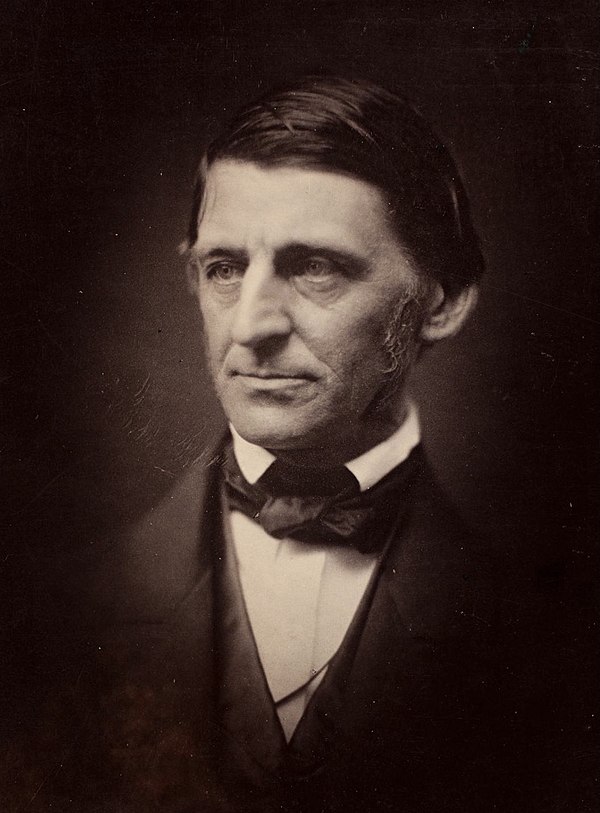
Ralph Waldo Emerson's assertion, "Whoso would be a man, must be a nonconformist," invites us to consider the profound implications of individuality and the courage required to embrace it. In a world that often values conformity over authenticity, this quote serves as a clarion call for those who seek to live genuinely. It challenges us to reflect on the societal pressures that shape our identities and to recognize that true manhood—or personhood—demands a willingness to stand apart from the crowd.
Emerson's words resonate deeply in a contemporary context, where the noise of social media and cultural expectations can drown out our inner voices. To be a nonconformist is not merely to reject societal norms; it is to engage in a courageous act of self-definition. This journey toward authenticity requires introspection and a commitment to one's own values, even when they diverge from the mainstream. In this light, Emerson's call to nonconformity becomes a pathway to personal freedom and self-realization.
The image / the metaphor
The imagery in Emerson's quote evokes a sense of strength and individuality. The term "man" here symbolizes not just gender but the essence of humanity, suggesting that to embody our fullest selves, we must break free from the constraints of conformity. The verb "must" implies necessity, indicating that this journey is not optional but essential for anyone who wishes to live authentically. The felt sense of this quote is one of empowerment, urging us to embrace our unique paths with confidence.
In the speaker's tradition
Emerson's philosophy is rooted in the transcendentalist tradition, which emphasizes the importance of the individual spirit and the inherent goodness of people. This tradition aligns closely with concepts such as dharma, which refers to one's personal duty or path, and kenosis, the idea of self-emptying to allow for greater truths to emerge. In this context, nonconformity becomes a spiritual practice, a way of aligning with one's true nature rather than succumbing to external pressures.
In his seminal work, "Self-Reliance," Emerson elaborates on the necessity of trusting oneself and the divine intuition that guides each individual. He writes, "Trust thyself: every heart vibrates to that iron string." This sentiment echoes the teachings found in various spiritual traditions, where the journey toward self-discovery is often fraught with challenges yet ultimately leads to profound liberation. Emerson's call to nonconformity is thus not merely a rejection of societal norms but an invitation to engage with the deeper truths of existence.
Living the teaching
Consider a modern scenario where this teaching resonates: an artist grappling with the decision to pursue a unique style that diverges from popular trends. The pressure to conform to commercial expectations can be overwhelming, yet the artist feels a deep calling to express their authentic vision. By choosing to embrace nonconformity, the artist not only honors their individuality but also contributes a fresh perspective to the artistic landscape, inspiring others to do the same.
In relationships, the principle of nonconformity can manifest in the courage to express one's true feelings, even when they contradict the expectations of others. For instance, in a friendship where one person feels stifled by the other's demands, speaking up about personal boundaries can be an act of nonconformity. This honesty fosters deeper connections and encourages both individuals to grow, illustrating how living authentically can transform not only our own lives but also the lives of those around us.
A reflection
As we contemplate Emerson's powerful assertion, we are invited to ask ourselves: In what areas of my life am I conforming to external expectations at the expense of my true self? This question encourages a deep exploration of our values, desires, and the courage it takes to live authentically. By reflecting on this, we can begin to identify the spaces where we might reclaim our individuality and step into the fullness of who we are meant to be.