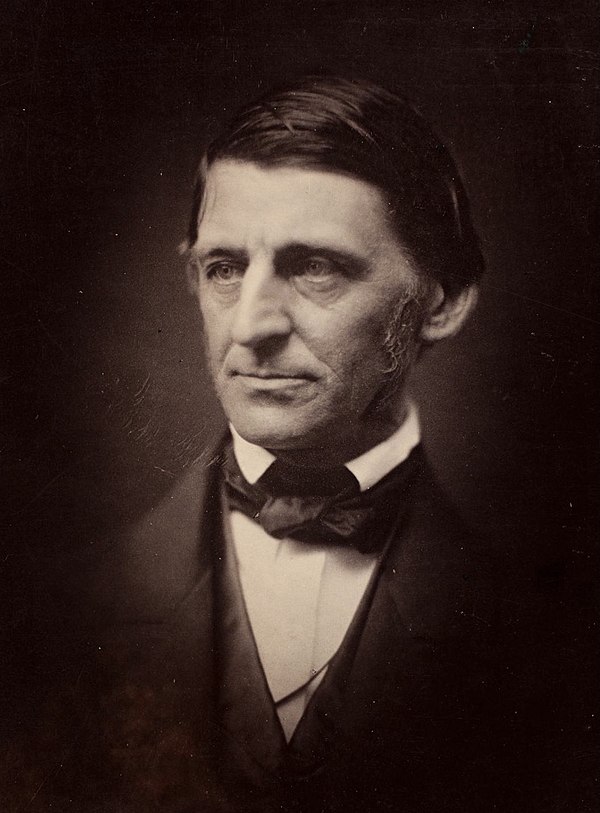
Ralph Waldo Emerson's assertion that "who has retained the spirit of infancy even into the era of manhood" speaks to the profound importance of maintaining a sense of wonder and openness as we navigate the complexities of adulthood. This sentiment suggests that the ability to perceive the world with childlike curiosity enriches our daily existence, allowing us to engage deeply with both the mundane and the sacred. In a society often characterized by cynicism and disillusionment, Emerson's words remind us of the transformative power of maintaining our innate sense of awe.
As we delve into the essence of this quote, we uncover a call to cultivate a relationship with the world that transcends mere survival or routine. Emerson invites us to consider how our interactions with nature and the cosmos can nourish our spirits, much like food sustains our bodies. This perspective challenges us to reflect on how we can integrate this childlike spirit into our daily lives, fostering a deeper connection with the universe and each other.
The image / the metaphor
At the heart of Emerson's quote lies a vivid imagery that juxtaposes the innocence of infancy with the responsibilities of manhood. The phrase "retained the spirit of infancy" evokes a sense of purity and unfiltered perception, suggesting that true wisdom lies in our ability to see the world through fresh eyes. The verbs "retained" and "intercourse" imply an active engagement with life, where one not only observes but also participates in the dance of existence, drawing sustenance from the beauty and mystery that surrounds us.
Diving deeper into the metaphor, we can interpret "intercourse with heaven and earth" as a holistic communion with all aspects of life. This interaction is not merely physical but spiritual, suggesting that our connection to the divine and the natural world is essential for our well-being. By likening this communion to "daily food," Emerson emphasizes the necessity of nurturing our souls through wonder and reverence, much like we nourish our bodies with sustenance. This metaphor invites us to consider how we can cultivate a practice of wonder that feeds our spirit and enriches our lives.
In the speaker's tradition
Emerson's philosophy is deeply rooted in the tradition of transcendentalism, which emphasizes the inherent goodness of both people and nature. This movement encourages individuals to seek truth through personal intuition and direct experience, aligning closely with concepts such as dharma, or one's path in life, and kenosis, the act of self-emptying to make space for the divine. In this context, retaining the spirit of infancy can be seen as a form of spiritual awakening, where one sheds the burdens of societal expectations and embraces the purity of existence.
In his seminal work, "Nature," Emerson articulates the idea that nature is a reflection of the divine, and through our engagement with it, we can access deeper truths about ourselves and the universe. This aligns with the notion of bhakti, or devotion, where one’s love for the divine is expressed through a profound appreciation for the natural world. By nurturing our childlike wonder, we align ourselves with the transcendentalist belief that the universe is alive with meaning, waiting to be discovered through our attentive presence.
Living the teaching
Consider a modern scenario where this teaching can be applied: a busy parent juggling work, household responsibilities, and social obligations. In the midst of this whirlwind, the parent might find moments of connection with their child, where the simple act of playing in the park or observing a butterfly becomes a sacred experience. By allowing themselves to engage fully in these moments, they can tap into the spirit of infancy, finding joy and nourishment in the present rather than being consumed by the demands of adulthood.
Another application of this teaching can be found in relationships, particularly during challenging times. Imagine a couple facing conflict; instead of approaching the situation with hardened hearts, they might choose to reconnect with their childlike wonder. By recalling the initial spark of their relationship, they can approach each other with curiosity and openness, allowing for healing and deeper understanding. This practice of wonder can transform difficult moments into opportunities for growth and connection, reminding us that the spirit of infancy can guide us even in the most trying circumstances.
A reflection
As we contemplate Emerson's profound insight, we are invited to ask ourselves: How can I cultivate a sense of wonder in my daily life, allowing it to nourish my spirit and deepen my connections with the world around me? This question serves as a gentle reminder that the essence of life is not merely in the tasks we accomplish but in the richness of our experiences and the depth of our relationships. By embracing the spirit of infancy, we open ourselves to a life filled with joy, curiosity, and sacred communion.


