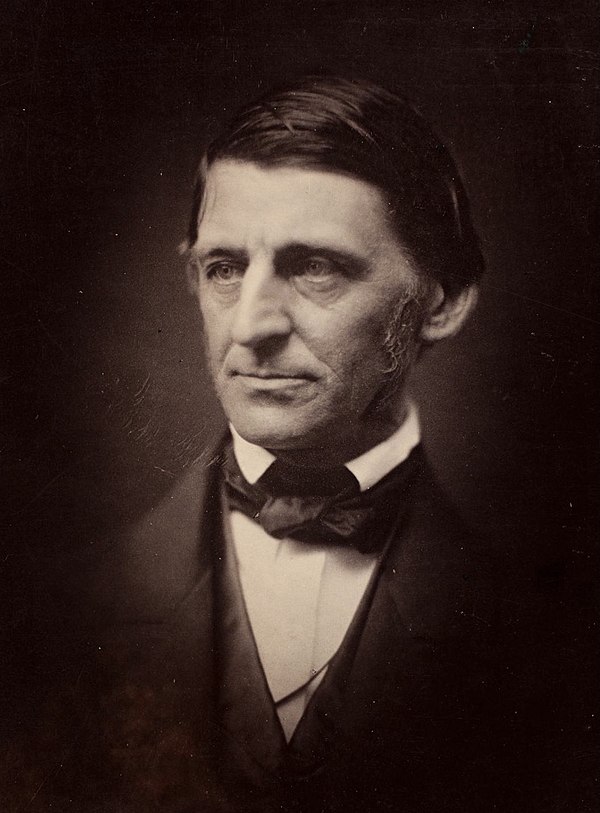
Ralph Waldo Emerson's assertion, "We would willingly know the future too, and propose to know it," speaks to a deep-seated human desire for certainty and control over our destinies. In this yearning, we often overlook the richness of the present moment, where life unfolds in its most authentic form. Emerson invites us to reflect on the implications of our longing for foresight, suggesting that our willingness to grasp the future may distract us from the beauty and lessons available in the now. This tension between present awareness and future anticipation is a central theme in our spiritual journeys.
As we navigate the complexities of existence, the allure of the future can become a seductive distraction. We often find ourselves preoccupied with what lies ahead—our aspirations, fears, and dreams—while the present slips through our fingers like sand. Emerson's words challenge us to reconsider this dynamic, urging us to cultivate a deeper appreciation for the present moment. In doing so, we may discover that true wisdom and fulfillment reside not in knowing what is to come, but in fully engaging with the life that is unfolding before us.
The image / the metaphor
The imagery in Emerson's quote evokes a sense of longing and ambition. The verbs "willingly" and "propose" suggest an active engagement with the future, as if we are not merely passive observers but eager participants in the unfolding of time. This desire to know the future reflects our innate curiosity and the human impulse to seek understanding and predictability in an uncertain world. Yet, the very act of proposing to know the future implies a certain arrogance, as if we could grasp the entirety of existence within the confines of our limited perception.
Diving deeper into the metaphor, we can see that Emerson's words illuminate a fundamental paradox of human existence: the tension between our aspirations and the reality of our experience. The future, while enticing, remains an abstraction, a realm of possibilities that can never be fully realized until it becomes the present. In this light, Emerson's quote serves as a reminder that our attempts to control or predict the future may ultimately lead us away from the richness of the present moment, where true life resides.
In the speaker's tradition
Emerson's thoughts are deeply rooted in the tradition of transcendentalism, which emphasizes the importance of individual intuition and the inherent goodness of nature. This philosophical framework encourages us to seek truth within ourselves rather than relying solely on external authorities. Concepts such as dharma, the natural order of the universe, and kenosis, the act of self-emptying, resonate with Emerson's call to embrace the present. By letting go of our fixation on the future, we can align ourselves with the flow of existence and discover our unique path.
In his essay "Experience," Emerson explores the relationship between the individual and the cosmos, suggesting that our understanding of life is shaped by our experiences in the present. He writes, "The only way to have a friend is to be one," emphasizing the importance of authentic connection and presence in our relationships. This sentiment echoes the teachings found in various spiritual traditions, where the present moment is seen as a gateway to deeper understanding and connection with the divine.
Living the teaching
Consider a modern scenario where this teaching resonates: a professional grappling with the pressures of career advancement. In their pursuit of future promotions and accolades, they may find themselves overwhelmed by anxiety and self-doubt. Emerson's insight encourages them to shift their focus from the uncertain future to the present moment, where they can cultivate their skills, build meaningful relationships with colleagues, and find joy in their work. By embracing the present, they may discover that success is not merely a destination but a journey enriched by the experiences along the way.
In the realm of personal relationships, Emerson's teaching can also illuminate the dynamics of connection. Imagine a couple navigating a challenging phase in their partnership, preoccupied with worries about the future of their relationship. Instead of fixating on potential outcomes, they can choose to engage fully with each other in the present, fostering open communication and vulnerability. By grounding themselves in the here and now, they may find that their bond strengthens, allowing them to navigate uncertainties together with greater resilience and understanding.
A reflection
As we contemplate Emerson's words, we are invited to reflect on our own relationship with time. How often do we find ourselves yearning for a glimpse into the future, at the expense of fully experiencing the present? In what ways can we cultivate a deeper awareness of the here and now, allowing ourselves to embrace the richness of our current experiences? Let this contemplation guide you as you navigate the intricate dance between present awareness and future aspirations.