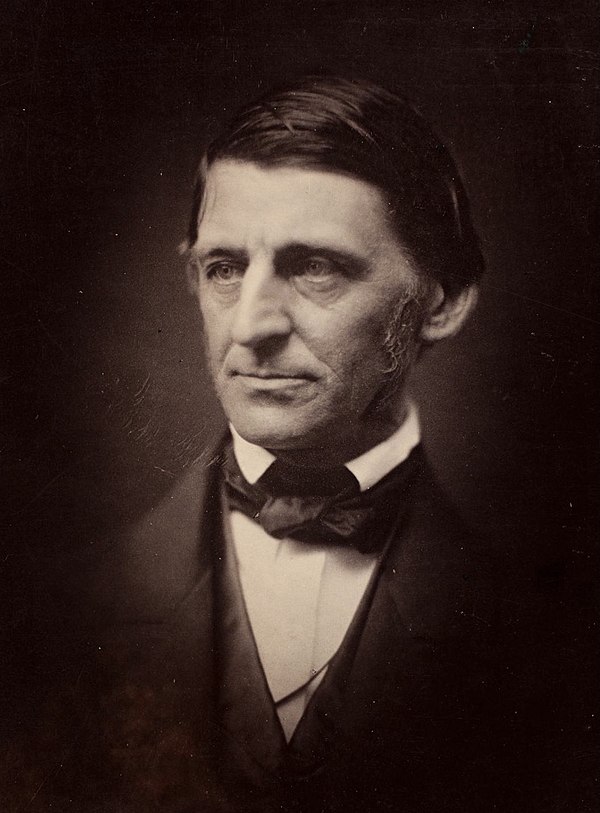
Ralph Waldo Emerson's poignant assertion, "To live a life half-dead, a living death," invites us to confront the stark reality of existence devoid of genuine engagement. This phrase encapsulates the essence of a life lived without purpose, passion, or awareness—a mere shadow of what it means to be truly alive. In a world that often prioritizes routine and conformity over authenticity, Emerson's words serve as a clarion call to awaken from our slumber and embrace the fullness of life.
In this context, the stakes are high. To live in a state of "half-deadness" is to forfeit the vibrancy of our human experience, to drift through days without connection or meaning. Emerson challenges us to reflect on our own lives: Are we merely existing, or are we actively participating in the unfolding of our own destinies? This inquiry is not just philosophical; it is deeply practical, urging us to seek a life that resonates with our innermost truths and aspirations.
The image / the metaphor
The imagery in Emerson's quote is striking, evoking a visceral sense of stagnation and decay. The phrase "half-dead" conjures images of a body that breathes but does not thrive, a spirit that exists but does not flourish. The choice of the word "death" is particularly poignant, suggesting that a lack of engagement with life is akin to a form of living death—a state where one is physically present but emotionally and spiritually absent. This stark contrast between life and death serves as a powerful metaphor for the choices we make in how we engage with the world around us.
Diving deeper into this metaphor, we can see that Emerson is not merely lamenting the absence of vitality; he is urging us to awaken to the possibilities that lie before us. The "living death" he describes is a cautionary tale about the dangers of complacency and the numbing effects of routine. It invites us to consider the richness of our experiences and the depth of our connections. In this light, the quote becomes a call to action, a reminder that we have the power to choose a life filled with passion, purpose, and profound engagement.
In the speaker's tradition
Emerson's insights are deeply rooted in the tradition of transcendentalism, a philosophical movement that emphasizes the inherent goodness of people and nature, as well as the importance of individual intuition and spirituality. Central to this tradition is the concept of awakening—an idea that resonates with various spiritual practices across cultures. Just as the Buddhist notion of "sunyata" speaks to the emptiness that can lead to enlightenment, Emerson's call to awaken from a "living death" encourages us to shed the layers of societal expectation and discover our true selves.
Moreover, Emerson's emphasis on individual experience aligns with the idea of "kenosis," or self-emptying, found in various spiritual traditions. This process of letting go allows for a deeper connection to the self and the universe. In his essay "Self-Reliance," Emerson writes about the importance of trusting oneself and following one's own path, reinforcing the notion that true awakening requires a departure from the prescribed norms of society. In this way, his work serves as a bridge between the personal and the universal, inviting us to explore our own unique journeys toward authenticity.
Living the teaching
Consider a modern scenario where this teaching resonates: a corporate employee who has settled into a monotonous routine, attending meetings and completing tasks without any sense of fulfillment. Each day blurs into the next, and while the individual may be physically present, their spirit feels stifled. Emerson's quote serves as a poignant reminder for this person to reassess their life choices. It invites them to seek out opportunities that ignite their passions, whether through creative projects, community engagement, or a career shift that aligns more closely with their values.
A reflection
As we contemplate Emerson's powerful words, we are invited to reflect on our own lives: Are we living fully, or merely existing? What steps can we take to awaken from the "living death" that may have crept into our daily routines? In this moment of introspection, consider the areas of your life where you feel disengaged or unfulfilled. What small changes can you make to infuse your existence with vitality and purpose? Allow this contemplation to guide you toward a more authentic and awakened way of being.