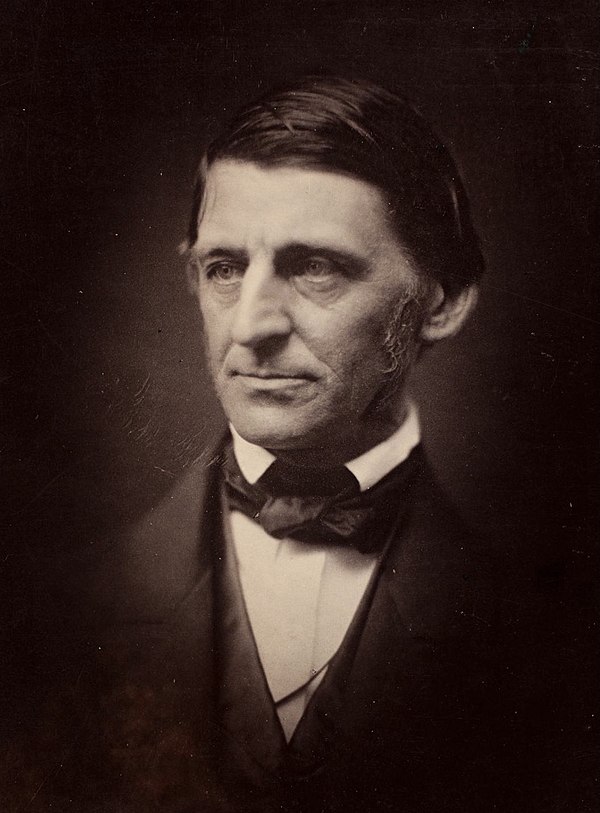
Ralph Waldo Emerson's assertion that "to finish the moment, to find the journey's end in every step of the road, to live the greatest number of good hours, is wisdom" invites us to reconsider our relationship with time and presence. In this quote, Emerson emphasizes the importance of being fully engaged in each moment, suggesting that true wisdom lies not in distant goals but in the richness of our daily experiences. This perspective challenges the modern tendency to rush through life, urging us instead to savor the journey itself.
By framing wisdom as the ability to appreciate each moment, Emerson encourages a profound shift in our understanding of fulfillment. Rather than viewing life as a series of milestones to be achieved, he invites us to recognize the inherent value in every step we take. This call to presence resonates deeply in a world often preoccupied with future aspirations and past regrets, reminding us that the essence of life is found in the here and now.
The image / the metaphor
The imagery in Emerson's quote evokes a sense of movement and progression, where each step along the road is imbued with significance. The phrase "to finish the moment" suggests a completion that is not about reaching a destination but about fully inhabiting the present. The verbs "to find" and "to live" reinforce an active engagement with life, urging us to seek out the beauty and wisdom that exists in our immediate surroundings.
Diving deeper into the metaphor, we can see that the "journey's end" is not a final destination but rather a continuous unfolding of experiences. Each step represents an opportunity for growth and understanding, where wisdom is cultivated through awareness and appreciation. This perspective transforms our approach to challenges and joys alike, inviting us to recognize that every moment holds the potential for insight and connection.
In the speaker's tradition
Emerson's thoughts are deeply rooted in the transcendentalist tradition, which emphasizes the inherent goodness of people and nature, as well as the importance of individual intuition. Concepts such as dharma, which refers to one's duty or path in life, resonate with Emerson's call to live fully in each moment. The idea of kenosis, or self-emptying, also parallels this teaching, as it encourages us to let go of distractions and preconceptions to embrace the present.
In his essay "Experience," Emerson explores the idea that true understanding comes from direct engagement with life. He writes about the necessity of experiencing life fully, suggesting that wisdom is not merely an intellectual pursuit but a lived reality. This aligns with the Buddhist concept of sunyata, or emptiness, which teaches that liberation comes from recognizing the transient nature of existence and fully engaging with each moment as it arises.
Living the teaching
Consider a modern scenario where this teaching can be applied: a busy professional navigating the demands of work and family life. In the rush to meet deadlines and fulfill responsibilities, it is easy to overlook the small joys that occur throughout the day. By consciously choosing to "finish the moment," this individual can cultivate a practice of mindfulness, taking time to appreciate the laughter of a child, the warmth of sunlight, or the satisfaction of completing a task, thereby transforming mundane moments into sources of wisdom.
In relationships, Emerson's teaching can serve as a powerful reminder to be present with loved ones. During a difficult conversation, instead of becoming preoccupied with past grievances or future outcomes, one can focus on the current exchange, listening deeply and responding with empathy. This practice not only fosters connection but also enriches the relationship, allowing both individuals to find wisdom in their shared experience.
A reflection
As we reflect on Emerson's words, we might ask ourselves: "How can I cultivate a deeper presence in my daily life?" This question invites us to explore the ways in which we can embrace each moment, recognizing the beauty and wisdom that exists in the ordinary. By committing to this practice, we open ourselves to a richer, more fulfilling experience of life, where every step along the road becomes an opportunity for growth and understanding.


