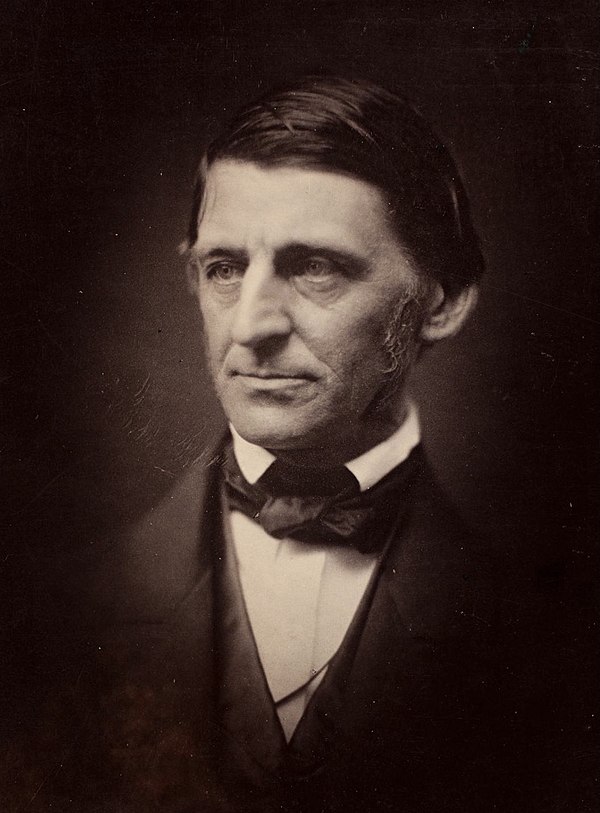
Ralph Waldo Emerson's assertion that "to be great is to be misunderstood" invites us to reconsider the nature of greatness itself. This statement suggests that true greatness often lies beyond the grasp of conventional understanding, challenging societal norms and expectations. In a world that frequently values conformity over individuality, Emerson's words resonate deeply, urging us to embrace our unique paths, even when they lead us to be misinterpreted or undervalued by others.
At its core, this quote speaks to the tension between individual authenticity and societal perception. Greatness, as Emerson defines it, is not merely a reflection of public acclaim or recognition; rather, it is an internal compass that guides one toward self-realization. The stakes are high: to pursue greatness often means to navigate the choppy waters of misunderstanding, where the voices of doubt and criticism can drown out the quiet affirmations of one's true self. In this light, Emerson's insight becomes a clarion call for those willing to tread the path of individuality, illuminating the profound connection between personal truth and the often solitary journey toward greatness.
The image / the metaphor
Emerson's quote conjures a vivid image of the misunderstood genius, standing apart from the crowd, their brilliance obscured by the fog of societal expectations. The verb "to be" suggests a state of existence, implying that greatness is not merely an achievement but an intrinsic quality of being. The word "misunderstood" carries a weight of emotional resonance, evoking feelings of isolation and the struggle for recognition. This imagery encapsulates the paradox of greatness: it is often the very qualities that set individuals apart that lead to their alienation from the mainstream.
Diving deeper into the metaphor, we see that misunderstanding is not merely a barrier but a crucible through which true greatness is forged. The act of being misunderstood can serve as a catalyst for self-discovery, prompting individuals to delve deeper into their own motivations and beliefs. In this sense, misunderstanding becomes a necessary companion on the journey toward authenticity, challenging individuals to remain steadfast in their convictions despite external pressures. Thus, Emerson's words illuminate the transformative power of embracing one's uniqueness, even when it invites skepticism or criticism.
In the speaker's tradition
Emerson's philosophy is deeply rooted in the tradition of transcendentalism, which emphasizes the inherent goodness of individuals and the importance of self-reliance. This movement champions the idea that each person possesses an inner light, or "dharma," that guides them toward their true purpose. In this context, greatness is not defined by societal accolades but by the courage to follow one's own path, even when it diverges from the expectations of others. Emerson's call to embrace individuality aligns with the concept of "kenosis," or self-emptying, where one must let go of external validation to discover their authentic self.
In his seminal work, "Self-Reliance," Emerson articulates the necessity of trusting oneself and rejecting conformity. He writes, "Whoso would be a man must be a nonconformist," emphasizing that true greatness arises from the willingness to stand apart from the crowd. This echoes the Buddhist concept of "sunyata," or emptiness, which invites individuals to transcend their attachments to identity and societal approval. By situating Emerson's quote within this rich philosophical framework, we can appreciate the profound implications of embracing misunderstanding as a pathway to self-discovery and greatness.
Living the teaching
Consider a modern scenario where this teaching resonates: an artist who creates work that challenges societal norms. Their pieces may evoke confusion or even criticism from the public, yet they remain committed to their vision, understanding that true artistry often lies in the realm of the misunderstood. This artist embodies Emerson's assertion, demonstrating that greatness is not measured by immediate acceptance but by the courage to express one's truth, regardless of how it is received. In this way, the artist's journey becomes a testament to the transformative power of embracing one's individuality.
In the realm of personal relationships, this teaching can manifest in the dynamics between friends or partners. Imagine a situation where one individual pursues a passion that others deem impractical or strange. The fear of being misunderstood may lead to tension or conflict, yet it is precisely in these moments that the opportunity for growth arises. By fostering open communication and understanding, both parties can navigate the complexities of individuality, ultimately deepening their connection. This illustrates that embracing misunderstanding can lead to richer, more authentic relationships, where each person is celebrated for their unique contributions.
A reflection
As we contemplate Emerson's profound insight, we are invited to reflect on our own lives: in what ways have we felt misunderstood in our pursuit of greatness? This question encourages us to examine the moments when we have chosen authenticity over conformity, and how those choices have shaped our paths. By embracing the discomfort of misunderstanding, we may uncover the true essence of our greatness, illuminating the unique contributions we are meant to offer to the world.