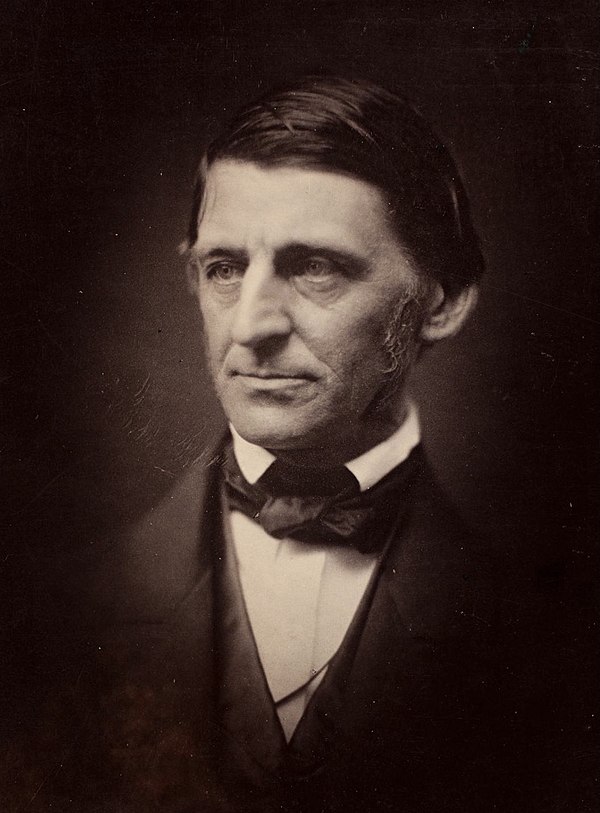
Ralph Waldo Emerson's assertion, "This is the best part of these men's farms, yet to this their warranty deeds give no title," invites us to reflect on the intangible qualities of life that cannot be owned or legally claimed. In this statement, Emerson highlights the essence of existence that transcends material ownership, suggesting that the most valuable aspects of life—such as beauty, truth, and connection—are often beyond the reach of formal titles or deeds. This notion challenges our conventional understanding of possession and urges us to seek deeper truths that lie beneath the surface of our everyday experiences.
As we delve into Emerson's words, we uncover a profound commentary on the nature of reality and the limitations of human constructs. The "best part" of the farms symbolizes the richness of life that is often overlooked in our pursuit of material wealth and security. By emphasizing that these qualities are not captured by warranty deeds, Emerson prompts us to consider what it truly means to own something and to recognize the inherent value of experiences and relationships that cannot be quantified or legally defined.
The image / the metaphor
The imagery in Emerson's quote evokes a pastoral landscape, where farms represent not just physical land but the lives and labor of those who cultivate it. The phrase "best part" suggests a hidden treasure, an essence that enriches the land beyond its agricultural yield. The verbs chosen—"give" and "title"—imply a transactional nature, contrasting the tangible act of ownership with the intangible qualities that truly nourish the spirit. This juxtaposition invites us to consider what we value most in our lives and how often we overlook the profound beauty that exists outside the realm of ownership.
Diving deeper into the metaphor, we recognize that the "warranty deeds" symbolize societal constructs that attempt to define and confine our experiences. Emerson's assertion challenges us to question the validity of these constructs, suggesting that the essence of life cannot be captured by legal documents or material possessions. Instead, it resides in the connections we forge, the beauty we appreciate, and the truths we uncover in our journey through existence. This metaphor serves as a reminder that the most meaningful aspects of life often lie beyond the grasp of conventional understanding.
In the speaker's tradition
Emerson's philosophy is deeply rooted in the tradition of transcendentalism, which emphasizes the inherent goodness of people and nature, as well as the importance of individual intuition and experience. This perspective aligns with concepts such as dharma, which speaks to one's purpose and duty in life, and kenosis, the idea of self-emptying to make space for deeper truths. In this light, Emerson's quote invites us to embrace the essence of our existence, recognizing that true fulfillment comes not from ownership but from living in harmony with the world around us.
In his seminal work, "Nature," Emerson articulates the idea that nature is a reflection of the divine and that our connection to it can lead to profound insights about ourselves and our place in the universe. He writes, "In the presence of nature, a wild delight runs through the man, in spite of real sorrows." This sentiment echoes the essence of his quote, as it underscores the notion that the most valuable experiences—those that bring us joy and understanding—are often found in the natural world and our interactions with it, rather than in material possessions.
Living the teaching
Consider a modern scenario where this teaching resonates: a family gathers for a picnic in a local park, surrounded by nature's beauty. As they share laughter and stories, the essence of their connection becomes the highlight of the day, far surpassing any material possessions they may have. In this moment, the joy derived from their shared experience exemplifies Emerson's assertion that the best parts of life cannot be owned or titled; they are felt and lived. This scenario illustrates how the richness of life is often found in the moments we cherish, rather than in the things we possess.
In a different application, imagine a challenging moment in a relationship where misunderstandings arise. Instead of focusing on who is right or wrong—an ownership mentality—one partner chooses to embrace empathy and understanding. By prioritizing the essence of their connection over the need to claim victory, they cultivate a deeper bond that transcends the conflict. This approach reflects Emerson's teaching, reminding us that the most valuable aspects of our relationships are often found in the love and understanding we share, rather than in the titles we hold.
A reflection
As we contemplate Emerson's profound words, we are invited to reflect on the essence of our own lives. What are the "best parts" of your existence that remain unclaimed by titles or deeds? In what ways can you cultivate a deeper appreciation for the intangible qualities that enrich your life, such as love, beauty, and connection? Allow these questions to guide your exploration of what it means to truly own your experience, beyond the confines of material possession.