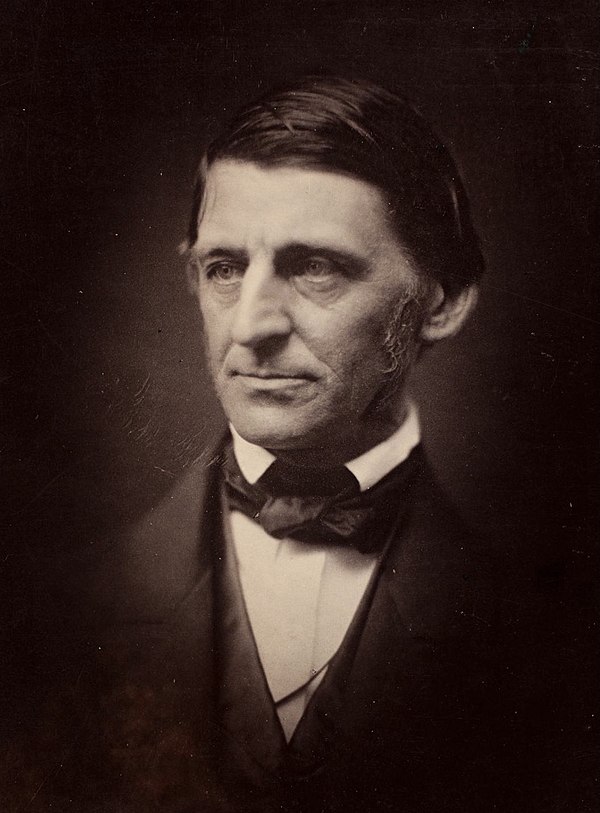
Ralph Waldo Emerson's assertion that "There can be no excess to love, none to knowledge, none to beauty, when these attributes are considered in the purest sense" invites us to contemplate the infinite nature of these virtues. In a world often marked by scarcity and competition, this perspective challenges us to recognize that true love, knowledge, and beauty are not commodities to be hoarded or measured. Instead, they are boundless qualities that enrich our lives and the lives of those around us. Understanding this can transform our approach to relationships, learning, and the appreciation of the world.
Emerson's words resonate deeply in a society that frequently equates value with limitation. The idea that love, knowledge, and beauty can be experienced without bounds encourages us to cultivate these virtues in their purest forms. This perspective not only liberates us from the constraints of comparison and envy but also invites us to engage with the world in a more profound and meaningful way. By embracing the limitless nature of these attributes, we can foster a deeper connection with ourselves and others, ultimately leading to a more harmonious existence.
The image / the metaphor
At the heart of Emerson's quote lies a vivid imagery that evokes a sense of abundance and openness. The verbs "can be" suggest a state of being that is not contingent upon external factors, but rather an intrinsic quality of existence. The phrase "no excess" implies that love, knowledge, and beauty are not finite resources, but rather infinite wells from which we can draw endlessly. This imagery invites us to envision a world where these virtues flow freely, unencumbered by the limitations we often impose upon ourselves.
Diving deeper into the metaphor, we can see that Emerson is urging us to transcend the conventional understanding of these attributes. Love, knowledge, and beauty are often viewed through the lens of possession or achievement, yet Emerson invites us to experience them as states of being. In this light, love becomes a force that connects us to one another, knowledge transforms into a shared journey of discovery, and beauty manifests as an appreciation for the world in all its forms. This reframing allows us to engage with these virtues in a way that is expansive and enriching.
In the speaker's tradition
Emerson's philosophy is deeply rooted in the tradition of transcendentalism, which emphasizes the inherent goodness of people and nature. This worldview aligns closely with concepts such as dharma, which denotes the moral order of the universe, and kenosis, the idea of self-emptying to allow for greater love and understanding. By recognizing that love, knowledge, and beauty are limitless, Emerson echoes the transcendental belief that we are all interconnected and that our individual growth contributes to the collective well-being of humanity.
In his essay "Nature," Emerson explores the relationship between the individual and the universe, suggesting that true understanding comes from a deep connection with the natural world. This notion parallels the idea of sunyata, or emptiness, in Buddhist thought, which teaches that the essence of reality is boundless and interconnected. By embracing the limitless nature of love, knowledge, and beauty, we align ourselves with the fundamental truths that transcendentalism seeks to illuminate, fostering a deeper appreciation for the interconnectedness of all life.
Living the teaching
Consider a modern scenario where this teaching can be applied: a workplace environment where collaboration is key. In such a setting, the recognition that there is no excess to knowledge can foster a culture of sharing and learning. When team members approach their work with the understanding that their insights and experiences contribute to a collective pool of knowledge, they are more likely to support one another, leading to innovative solutions and a more cohesive team dynamic. This shift in perspective transforms competition into collaboration, enriching the workplace experience for everyone involved.
In the realm of personal relationships, Emerson's teaching can be particularly transformative. Imagine a moment of conflict between friends or partners, where misunderstandings arise. By embracing the idea that love is boundless, individuals can approach the situation with compassion and a willingness to listen. This perspective encourages open communication and a deeper understanding of one another's feelings, allowing for healing and growth. In daily practice, cultivating gratitude for the beauty in our relationships—acknowledging the unique qualities each person brings—can further enhance our connections and foster a sense of abundance in our lives.
A reflection
As we reflect on Emerson's profound insight, we are invited to consider how we perceive and engage with love, knowledge, and beauty in our own lives. Are there areas where we impose limits on these virtues, perhaps out of fear or insecurity? By contemplating this question, we can begin to identify the barriers we create and explore ways to embrace the boundless nature of these attributes. In doing so, we open ourselves to a richer, more fulfilling experience of life and connection with others.