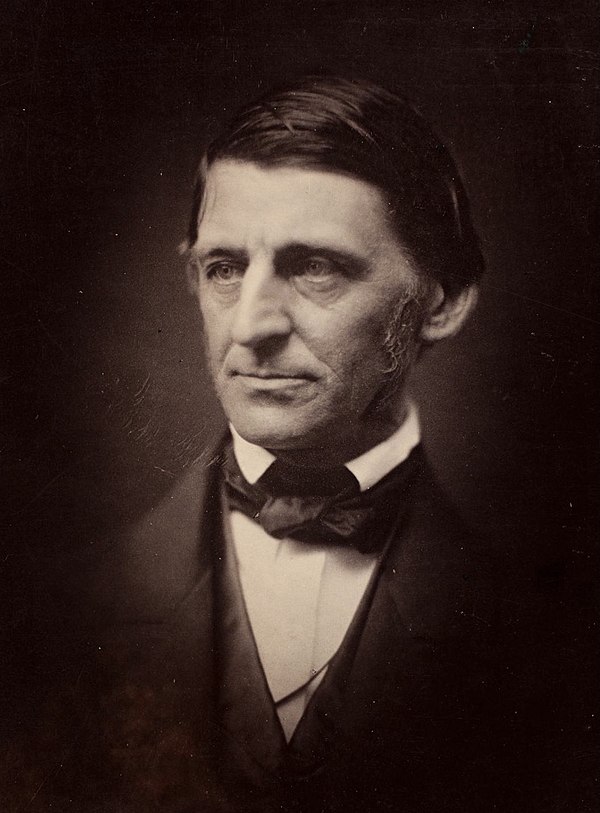
Ralph Waldo Emerson's assertion that "the world looks like a multiplication table, or a mathematical equation, which, turn it how you will, balances itself" invites us to contemplate the inherent equilibrium within the universe. At first glance, this metaphor suggests a world governed by rationality and order, where every action has a corresponding reaction, echoing the principles of mathematics. Yet, Emerson's words beckon us to explore a deeper understanding of balance, one that transcends mere calculation and touches upon the spiritual essence of existence. In a time when chaos often reigns, recognizing this balance can offer solace and insight.
Delving further, we find that Emerson's perspective is not merely about the mechanics of the universe but rather a profound reflection on the interconnectedness of all things. The imagery of a multiplication table evokes a sense of symmetry and harmony, suggesting that every element in life, whether joyful or sorrowful, contributes to a greater whole. This balance is not static; it is dynamic, constantly shifting yet always returning to a state of equilibrium. By embracing this understanding, we can cultivate a deeper awareness of our place within the cosmos and the intricate dance of existence.
The image / the metaphor
The metaphor of the world as a multiplication table conjures images of order and predictability, where numbers interact in a structured manner to yield results. The verbs "looks" and "balances" imply a perception that is both subjective and objective, inviting us to consider how we interpret our surroundings. This imagery evokes a sense of clarity, suggesting that beneath the surface of life's complexities lies a fundamental simplicity—a mathematical truth that governs our experiences. The felt sense of this metaphor is one of reassurance; it reminds us that, despite the apparent chaos, there is an underlying order that we can trust.
In the speaker's tradition
Emerson's insights are deeply rooted in the tradition of transcendentalism, which emphasizes the inherent goodness of people and nature, as well as the importance of individual intuition and experience. This philosophy resonates with concepts such as dharma, the moral order of the universe, and kenosis, the idea of self-emptying to allow for greater connection with the divine. In recognizing the balance within the world, Emerson aligns with the transcendental belief that each individual has a role in the cosmic equation, contributing to the greater good through their unique experiences and insights.
A relevant text that echoes this sentiment is Emerson's own essay "Self-Reliance," where he advocates for the importance of trusting oneself and recognizing the interconnectedness of all beings. In this work, he posits that each person's intuition is a reflection of the universal spirit, suggesting that by embracing our individuality, we contribute to the balance of the whole. This interconnectedness is not merely a philosophical abstraction; it is a lived reality that invites us to engage with the world around us in a meaningful way.
Living the teaching
Consider a modern scenario where this teaching manifests: a workplace filled with diverse personalities and perspectives. Each individual brings their unique strengths and challenges, creating a complex environment that can sometimes feel chaotic. However, by recognizing that this diversity contributes to the overall balance of the team, we can shift our perspective from frustration to appreciation. Embracing the idea that every voice matters allows us to cultivate a harmonious workplace where collaboration thrives, ultimately leading to greater creativity and innovation.
In a different context, think about a personal relationship that has faced challenges. When conflicts arise, it is easy to focus solely on the discord, losing sight of the balance that exists within the relationship. By applying Emerson's teaching, we can approach these moments with a sense of curiosity, seeking to understand the underlying dynamics at play. This shift in perspective encourages us to engage in open dialogue, fostering a deeper connection and allowing the relationship to evolve into a more balanced and fulfilling partnership.
A reflection
As we reflect on Emerson's assertion, we are invited to consider the balance within our own lives. What areas feel out of equilibrium, and how might we embrace the lessons inherent in those experiences? By contemplating this question, we can begin to cultivate a deeper awareness of the interconnectedness of our lives and the world around us, ultimately leading us toward a more harmonious existence.


