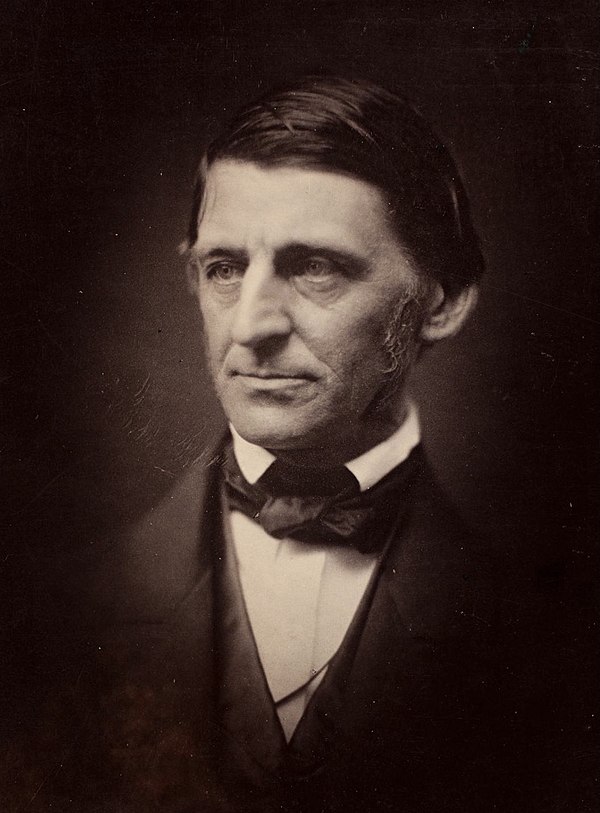
Ralph Waldo Emerson's poignant observation, "The sun illuminates only the eye of the man, but shines into the eye and the heart of the child," invites us to reflect on the nature of perception and the purity of experience. In this quote, Emerson contrasts the adult's often superficial engagement with the world against the profound, heartfelt awareness of a child. This distinction is not merely a commentary on age but a deeper exploration of how wonder and innocence shape our understanding of reality. The stakes are high: in a world that often prioritizes rationality and cynicism, Emerson beckons us to reclaim the childlike capacity for awe and connection.
Delving deeper, we find that Emerson's words resonate with the transcendentalist belief in the inherent goodness of both humanity and nature. The sun, a universal symbol of enlightenment and truth, serves as a metaphor for the illumination of consciousness. Yet, the adult's eye, hardened by experience and societal conditioning, only receives this light superficially. In contrast, the child, unencumbered by the weight of expectation and judgment, allows the sun's rays to penetrate not just the eye but the heart, fostering a holistic experience of life. This distinction compels us to examine our own perceptions and the ways in which we might have dulled our innate sense of wonder.
The image / the metaphor
Emerson's imagery is rich and evocative, contrasting the stark difference between the adult and the child. The "eye of the man" suggests a narrowed focus, one that is often preoccupied with the mundane and the practical. In contrast, the "eye and the heart of the child" evokes a sense of openness and receptivity, where the light of the sun is not merely seen but felt deeply. The verbs chosen—"illuminates" and "shines into"—further emphasize this disparity; illumination suggests a passive reception, while shining into implies an active engagement that transforms perception into a heartfelt experience.
Going deeper, the metaphor extends beyond mere observation to encompass the essence of being. The sun represents not just physical light but also spiritual insight and understanding. For the child, the world is a canvas of possibilities, where every ray of sunlight can spark joy and curiosity. This metaphor invites us to consider how we might cultivate a similar openness in our own lives, allowing the light of experience to penetrate our hearts and inspire a sense of wonder. It challenges us to reflect on the barriers we have constructed that prevent us from seeing the world with the same clarity and enthusiasm as a child.
In the speaker's tradition
Emerson's insights are deeply rooted in the tradition of transcendentalism, which emphasizes the importance of individual intuition and the inherent goodness of nature. This philosophy aligns with concepts such as dharma, which speaks to one's true path or purpose, and kenosis, the idea of self-emptying to allow for greater spiritual fulfillment. In this context, the child's ability to perceive the world with an open heart can be seen as a form of spiritual practice, one that invites us to shed our preconceived notions and embrace the present moment with curiosity and love.
In Emerson's essay "Nature," he articulates the idea that nature is a reflection of the divine, and that our connection to it can lead to profound insights. He writes about the importance of experiencing nature not just through the intellect but through the senses and emotions. This aligns beautifully with the quote at hand, as it underscores the necessity of engaging with the world in a way that transcends mere observation. By embracing the childlike wonder that Emerson champions, we can begin to see the world anew, recognizing the sacredness that permeates our everyday experiences.
Living the teaching
Consider a modern scenario where this teaching might resonate: a parent taking their child to a park. While the adult may be preoccupied with thoughts of work or responsibilities, the child is fully immersed in the experience—the feel of grass beneath their feet, the sound of laughter, the colors of flowers. In this moment, the child embodies Emerson's vision, allowing the sun's light to shine into both their eye and heart. This simple act of being present can serve as a reminder for the adult to pause, breathe, and engage with the world in a more profound way.
Another application of this teaching can be found in relationships, particularly during moments of conflict or misunderstanding. When we approach a disagreement with the openness of a child, we may find ourselves more willing to listen and empathize. Instead of reacting defensively, we can allow the light of understanding to shine into our hearts, fostering connection rather than division. This practice of seeing through the eyes of a child can transform our interactions, encouraging us to approach each other with curiosity and compassion, rather than judgment.
A reflection
As we contemplate Emerson's words, we are invited to ask ourselves: "In what ways have I allowed the weight of adulthood to dull my sense of wonder?" This question encourages us to reflect on our own perceptions and the barriers we may have erected that prevent us from experiencing life fully. By engaging with this inquiry, we can begin to cultivate a deeper awareness of the beauty and mystery that surrounds us, reigniting the childlike spirit that resides within each of us.


