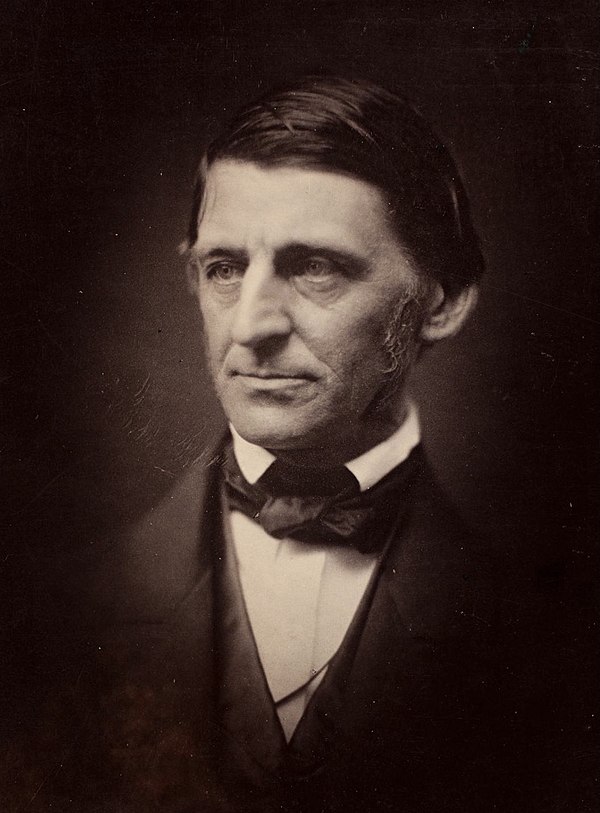
Ralph Waldo Emerson's succinct declaration, "The soul is," invites us into a profound exploration of existence itself. In these three words, Emerson encapsulates the essence of being, urging us to recognize the soul's intrinsic nature as the foundation of our experience. This statement serves as a reminder that beyond the complexities of life, there lies a fundamental truth about our existence that is both simple and profound. Understanding this truth can lead to a deeper connection with ourselves and the world around us.
To delve into the significance of Emerson's assertion, we must consider the implications of recognizing the soul as a constant, unchanging presence amidst the flux of life. In a world often dominated by external distractions and ephemeral concerns, this acknowledgment of the soul's existence invites us to turn inward. It challenges us to reflect on our true essence, encouraging a journey of self-discovery that transcends the superficial layers of identity. By affirming that "the soul is," we are called to embrace our authentic selves and to seek a deeper understanding of our place in the universe.
The image / the metaphor
At its core, Emerson's quote presents a stark yet profound image of the soul as a fundamental aspect of our being. The verb "is" suggests a state of existence that is immediate and undeniable, emphasizing the soul's role as the essence of who we are. This simplicity in language belies the depth of meaning contained within; it evokes a sense of permanence and stability in a world that often feels chaotic and transient. The soul, in this context, is not merely an abstract concept but a living reality that underpins our experiences and perceptions.
Diving deeper into the metaphor, we can see that Emerson's assertion serves as an invitation to explore the nature of existence itself. The soul, as he presents it, is not just a passive observer of life but an active participant in the unfolding of our personal narratives. This perspective encourages us to consider how our understanding of the soul shapes our interactions with the world. By recognizing the soul's presence, we can cultivate a sense of awareness that allows us to engage more fully with our experiences, fostering a deeper connection to ourselves and others.
In the speaker's tradition
Emerson's philosophy is deeply rooted in the tradition of transcendentalism, which emphasizes the inherent goodness of people and nature, as well as the importance of individual intuition and spirituality. Within this framework, the concept of the soul aligns closely with ideas such as dharma, which refers to one's true purpose or duty in life. Just as dharma guides individuals toward their authentic paths, Emerson's assertion that "the soul is" encourages us to seek our true essence and align our actions with that understanding. This connection to the soul serves as a compass, guiding us toward a life of authenticity and fulfillment.
In his essay "Compensation," where this quote is sourced, Emerson elaborates on the interplay between the individual and the universe, suggesting that the soul's existence is intertwined with the greater cosmic order. He posits that understanding our soul's nature allows us to navigate the complexities of life with grace and purpose. This idea resonates with the Buddhist concept of sunyata, or emptiness, which teaches that recognizing the true nature of existence can lead to liberation from suffering. Both Emerson and the Buddhist tradition invite us to explore the depths of our being, urging us to uncover the profound truths that lie within.
Living the teaching
Consider a modern scenario where the teaching of "the soul is" can be applied: a busy professional grappling with the demands of work and personal life. In the midst of deadlines and responsibilities, this individual may feel disconnected from their true self, lost in the whirlwind of external expectations. By pausing to reflect on Emerson's assertion, they can begin to reconnect with their inner essence, recognizing that their worth is not defined by their productivity but by the inherent value of their soul. This realization can lead to a more balanced approach to life, where self-care and authenticity take precedence over societal pressures.
In a different context, imagine a relationship strained by misunderstandings and unmet expectations. By embracing the idea that "the soul is," both partners can cultivate a deeper understanding of each other's true selves, moving beyond surface-level conflicts. This perspective encourages empathy and compassion, allowing them to see one another as whole beings rather than mere roles or labels. In this way, Emerson's teaching can transform relationships, fostering a sense of connection that honors the soul's essence in each individual.
A reflection
As we contemplate Emerson's profound declaration, we are invited to ask ourselves: What does it mean for me to recognize that "the soul is"? This question encourages us to explore our own understanding of being and essence, prompting a journey inward to uncover the truths that reside within. By engaging with this inquiry, we can deepen our connection to ourselves and the world, ultimately leading to a more authentic and fulfilling existence.


