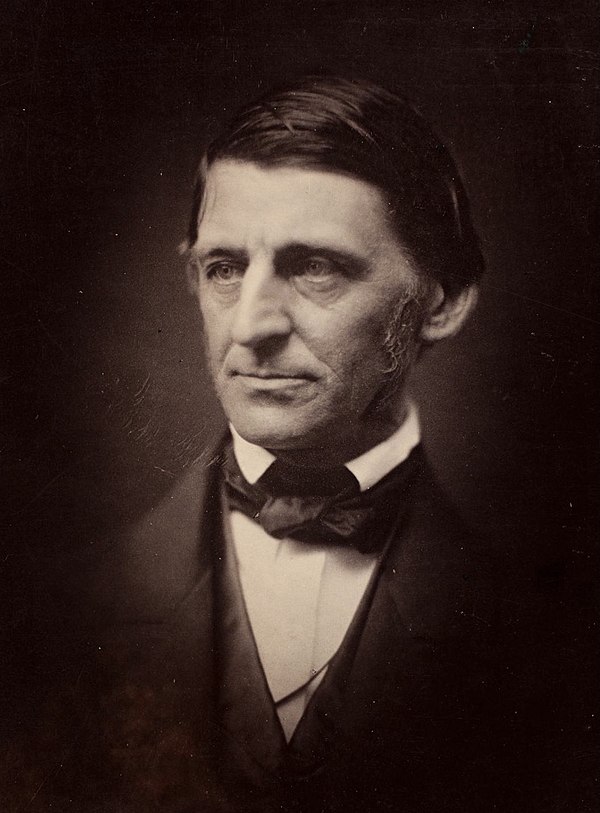
Ralph Waldo Emerson's assertion that "the power which resides in him is new in nature, and none but he knows what that is which he can do, nor does he know until he has tried" invites us to explore the depths of our own potential. This statement emphasizes the unique power each individual holds, a power that is often undiscovered until we dare to venture into the unknown. The stakes are high: recognizing and harnessing this potential can lead to profound personal transformation and a deeper understanding of our place in the world.
At its core, Emerson's quote speaks to the essence of self-discovery and the necessity of action in realizing one's capabilities. It challenges us to confront the limitations we impose on ourselves and to embrace the uncertainty that accompanies new endeavors. In a society that often values certainty and predictability, Emerson's words remind us that true growth lies in the willingness to experiment, to try, and to learn from the outcomes, however unexpected they may be.
The image / the metaphor
The imagery in Emerson's quote is rich and evocative, suggesting a latent power that resides within each person, waiting to be awakened. The phrase "new in nature" implies that this power is not merely a repetition of past abilities or experiences; it is something fresh, unique, and inherently tied to the individual. The verbs "knows" and "tries" highlight the dynamic relationship between self-awareness and action, suggesting that knowledge of one's potential is not a static state but rather a process that unfolds through experience.
Diving deeper into the metaphor, we can see that Emerson is not merely speaking of power in a conventional sense; he is referring to a transformative force that can reshape our understanding of ourselves and our capabilities. This power is akin to a seed that, when nurtured through the act of trying, can blossom into something extraordinary. The act of trying becomes a sacred journey, a pathway to uncovering the depths of our own being, where the unknown becomes a canvas for our potential to manifest.
In the speaker's tradition
Emerson's philosophy is deeply rooted in the tradition of transcendentalism, which emphasizes the inherent goodness of people and nature, as well as the importance of individual intuition and self-reliance. This aligns closely with concepts such as dharma in Eastern traditions, which speaks to the unique path each individual must walk, and kenosis, the idea of self-emptying to allow for divine potential to emerge. Emerson's assertion that we do not know our capabilities until we try resonates with the notion of sunyata, or emptiness, where the potential for new experiences and insights exists in the space of not knowing.
In his seminal work, "Self-Reliance," Emerson encourages readers to trust their intuition and to embrace their individuality. He writes, "Trust thyself: every heart vibrates to that iron string." This call to self-trust is a reminder that the journey of self-discovery is inherently personal and that the power we seek is often hidden beneath layers of societal expectation and self-doubt. By engaging with our inner selves and taking the leap into the unknown, we can uncover the unique gifts we possess.
Living the teaching
Consider a modern scenario where this teaching resonates: a young professional contemplating a career change. Despite feeling unfulfilled in their current role, they hesitate to take the leap due to fear of the unknown. Emerson's words serve as a gentle nudge, encouraging them to explore their latent potential. By taking small steps—perhaps enrolling in a course or networking with others in a desired field—they begin to uncover abilities and passions they never knew existed, illustrating the transformative power of trying.
This teaching can also apply to relationships, particularly during challenging moments. Imagine a couple facing a communication breakdown; both partners may feel stuck, unsure of how to bridge the gap. Emerson's insight encourages them to engage in open dialogue, to express their vulnerabilities, and to try new approaches to understanding one another. In doing so, they may discover deeper layers of connection and empathy, revealing the hidden power of their relationship that was previously obscured by fear and misunderstanding.
A reflection
As we contemplate Emerson's profound statement, we are invited to reflect on our own lives: What latent powers reside within us, waiting to be discovered? In what areas have we held back, fearing the unknown? This contemplation encourages us to embrace the journey of trying, to step into the uncertainty with courage, and to trust that within us lies the potential for transformation and growth. As you ponder these questions, consider how you might take a small step today toward uncovering your own unique power.