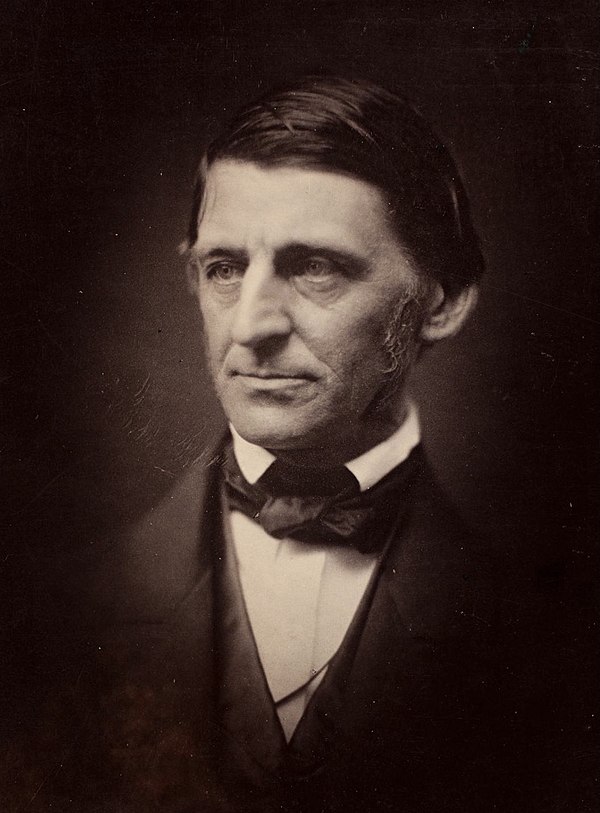
Harmony Between Inner and Outer Worlds
Ralph Waldo Emerson's assertion that "the lover of nature is he whose inward and outward senses are still truly adjusted to each other" invites us to explore the profound relationship between our internal experiences and the external world. This alignment is not merely a poetic notion but a vital aspect of our existence, suggesting that true appreciation of nature arises when our perceptions and feelings resonate harmoniously with the environment around us. In a world often characterized by distraction and disconnection, this quote serves as a reminder of the importance of cultivating a balanced relationship with both our inner selves and the natural world.
Emerson's words challenge us to consider how our senses—both physical and emotional—interact with the beauty of nature. The quote implies that a genuine lover of nature possesses a sensitivity that allows them to perceive the world not just through sight or sound, but through a deeper, more intuitive understanding. This alignment fosters a sense of belonging and interconnectedness, urging us to reflect on how we can nurture this relationship in our own lives. In doing so, we may find that our appreciation for nature enhances our overall well-being and spiritual growth.
The image / the metaphor
At first glance, Emerson's quote evokes a vivid image of a person fully immersed in the natural world, where the beauty of the landscape resonates with their inner emotional landscape. The phrase "inward and outward senses" suggests a duality that is essential for experiencing nature in its fullness. The use of "adjusted" implies a delicate balance, as if our senses must be finely tuned to perceive the subtleties of the environment. This imagery invites us to imagine a harmonious dance between our perceptions and the world, where each element enhances the other.
Diving deeper into the metaphor, we can see that this alignment is not merely about sensory perception but also about emotional and spiritual resonance. The "lover of nature" embodies a state of being where the heart and mind are open, allowing for a profound connection with the earth. This connection transcends mere observation; it invites us to engage with nature on a level that is both intimate and transformative. In this light, Emerson's quote becomes a call to cultivate a deeper awareness of our surroundings, encouraging us to listen not just with our ears, but with our hearts.
In the speaker's tradition
Emerson's philosophy is deeply rooted in the transcendentalist tradition, which emphasizes the inherent goodness of both people and nature. This perspective aligns with concepts such as *sunyata* (emptiness) in Buddhism, which suggests that true understanding arises from a direct experience of reality, free from preconceived notions. Similarly, the idea of *kenosis*, or self-emptying, resonates with Emerson's call for alignment, as it encourages individuals to let go of their ego and immerse themselves in the natural world. In this way, transcendentalism invites us to recognize the interconnectedness of all beings and the importance of nurturing our relationship with nature.
In his seminal work, "Nature," Emerson articulates the idea that nature is a reflection of the divine, urging readers to seek a deeper understanding of themselves through their experiences in the natural world. He writes, "In the presence of nature, a wild delight runs through the man, in spite of real sorrows." This sentiment echoes the essence of his quote, suggesting that when we align our inner and outer senses, we can transcend our individual struggles and connect with a greater sense of purpose and joy. Through this lens, Emerson's teachings encourage us to embrace the beauty of nature as a pathway to self-discovery and spiritual awakening.
Living the teaching
Consider a modern scenario where someone feels overwhelmed by the demands of daily life—perhaps a busy professional who spends long hours in front of a computer screen. In this context, Emerson's teaching becomes particularly relevant. By taking time to step outside into a natural setting, whether it be a park, a forest, or even a garden, this individual can begin to recalibrate their senses. The fresh air, the rustling leaves, and the vibrant colors of flowers can serve as a reminder of the beauty that exists beyond the confines of their routine. This simple act of immersing oneself in nature can foster a sense of peace and clarity, allowing for a renewed appreciation of both the external world and one's internal state.
In relationships, the concept of aligning inward and outward senses can manifest in the way we connect with others. Imagine a moment of conflict between partners, where emotions run high and communication breaks down. By taking a step back and engaging with nature together—perhaps through a walk in the woods or sitting by a river—couples can create a space for reflection and reconnection. This shared experience allows them to tune into their feelings and perceptions, fostering empathy and understanding. In this way, Emerson's teaching becomes a guiding principle for nurturing relationships, reminding us that harmony with nature can lead to harmony with one another.
A reflection
As we contemplate Emerson's profound insight, we are invited to ask ourselves: How can I cultivate a deeper alignment between my inner experiences and the natural world around me? This question encourages us to explore the ways in which we engage with nature and how those interactions reflect our emotional and spiritual states. By reflecting on this inquiry, we may uncover new pathways to enhance our appreciation for both the beauty of the earth and the richness of our inner lives, ultimately leading to a more harmonious existence.


