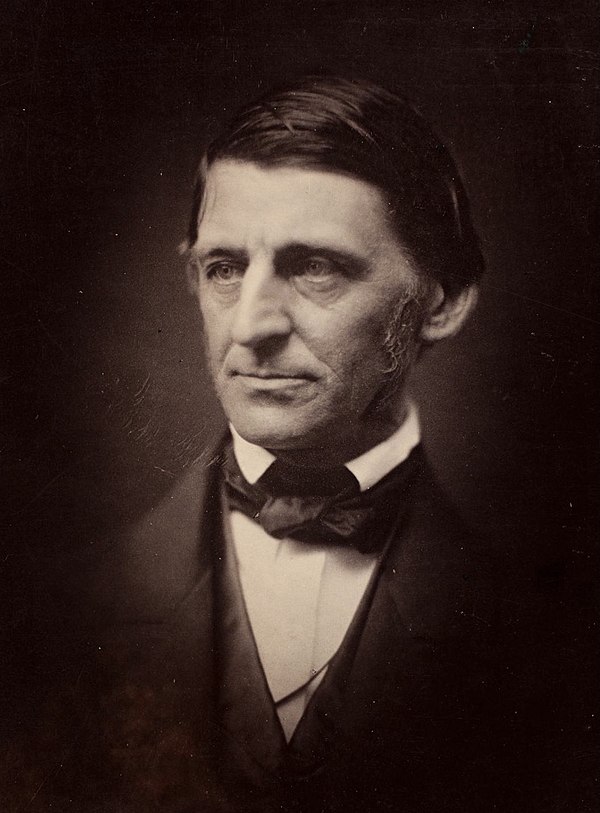
Ralph Waldo Emerson's assertion that "the eye is the best of artists" invites us to consider the profound relationship between perception and creativity. In this statement, Emerson elevates the act of seeing to an art form, suggesting that our ability to observe the world around us is not merely a passive experience but an active engagement that shapes our understanding and expression. This perspective matters deeply in a world often dominated by noise and distraction, where the subtleties of life can be overlooked, and the beauty of existence can fade into the background.
Emerson's words challenge us to cultivate a deeper awareness of our surroundings, to recognize that the eye, as a metaphor for perception, holds the power to transform ordinary moments into extraordinary insights. This teaching resonates with the core tenets of transcendentalism, which emphasizes the inherent connection between humanity and nature, urging us to see beyond the surface and engage with the essence of life. By embracing this perspective, we open ourselves to a richer, more vibrant experience of the world, one that invites creativity and fosters a deeper appreciation for the artistry inherent in existence.
The image / the metaphor
At first glance, Emerson's metaphor of the eye as an artist conjures images of a painter poised before a canvas, capturing the nuances of light and shadow, color and form. The choice of the word "best" implies a hierarchy of artistry, suggesting that the act of seeing—of truly perceiving—is the highest form of creative expression. This imagery evokes a sense of intimacy with the world, as if the eye, in its role as an artist, is not merely an observer but a participant in the unfolding drama of life. The verbs "is" and "best" imbue the statement with a sense of immediacy and authority, inviting us to consider how our own perceptions shape our experiences.
Diving deeper into the metaphor, we can explore the notion that seeing is not just a physical act but a spiritual practice. The eye, in this context, becomes a symbol of insight and awareness, representing the capacity to discern truth and beauty in the mundane. Emerson's assertion encourages us to cultivate a vision that transcends mere observation, urging us to engage with the world in a way that reveals its deeper meanings. This perspective aligns with the idea that art is not confined to traditional forms of expression but is found in the way we perceive and interact with our environment, transforming our everyday experiences into a canvas of possibility.
In the speaker's tradition
Emerson's thought is deeply rooted in the transcendentalist tradition, which emphasizes the interconnectedness of all life and the importance of individual intuition. This philosophy resonates with concepts such as dharma, which speaks to one's path or duty in life, and prajna, the wisdom that arises from direct experience. In this light, the eye as an artist becomes a metaphor for the inner vision that guides us toward our true purpose, inviting us to see not just with our physical eyes but with the eyes of the heart and spirit. This holistic approach to perception aligns with the transcendentalist belief that nature is a reflection of the divine, and that through careful observation, we can uncover profound truths about ourselves and the universe.
In Emerson's essay "Nature," he articulates the idea that the natural world serves as a mirror for our inner lives, suggesting that the beauty we perceive outside is a reflection of our own inner state. This connection between external observation and internal understanding underscores the importance of cultivating a discerning eye, one that can appreciate the artistry of life in all its forms. By recognizing the eye as an artist, we are reminded of our capacity to create meaning and beauty through our perceptions, transforming our experiences into a tapestry of insight and inspiration.
Living the teaching
Consider a modern scenario where this teaching might resonate: a busy urban environment filled with the hustle and bustle of daily life. In such a setting, it is easy to become overwhelmed by the noise and distractions that surround us, often leading to a superficial engagement with our surroundings. However, if we embrace Emerson's perspective, we can transform our experience by consciously choosing to observe the details—the way sunlight filters through the leaves of a tree, the laughter of children playing in a park, or the intricate patterns of a cityscape. By practicing this mindful observation, we can cultivate a deeper appreciation for the artistry of life, allowing our perceptions to enrich our daily experiences.
In a different context, consider how this teaching might apply to relationships. Often, we may find ourselves caught in the routine of daily interactions, failing to truly see the people we love. By adopting the mindset that the eye is the best of artists, we can approach our relationships with renewed curiosity and openness. This might involve taking the time to truly listen to a partner's thoughts, noticing the subtle changes in their expressions, or appreciating the small gestures that convey love and care. In doing so, we not only deepen our connections but also honor the artistry inherent in the human experience, transforming our relationships into a canvas of mutual understanding and compassion.
A reflection
As we contemplate Emerson's assertion that "the eye is the best of artists," we are invited to reflect on our own capacity for perception and creativity. How often do we allow ourselves to truly see the world around us, to engage with it in a way that reveals its beauty and complexity? In moments of stillness, consider this question: What might shift in your life if you approached each day with the intention to see as an artist, to perceive not just with your eyes but with your heart? This inquiry invites us to explore the transformative power of vision, encouraging us to embrace the artistry of existence in all its forms.