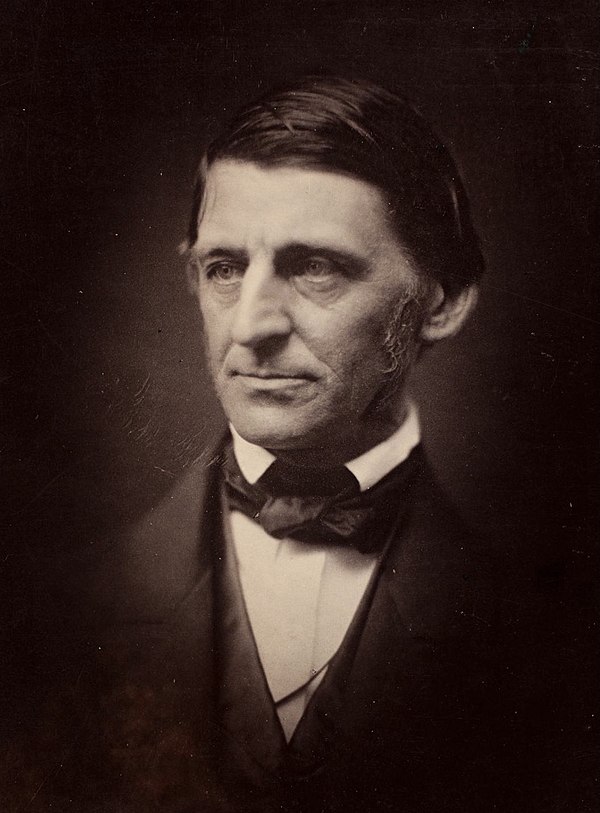
Ralph Waldo Emerson's assertion, "The currents of the Universal Being circulate through me; I am part or particle of God," invites us to contemplate our intrinsic connection to the divine and the universe at large. In this profound statement, Emerson articulates a vision of unity that transcends the boundaries of individual existence, suggesting that each person is not merely a separate entity but rather a vital component of a greater whole. This understanding is essential in a world often marked by division and isolation, as it encourages us to recognize our shared essence and purpose.
Delving deeper into Emerson's words reveals a rich tapestry of meaning that speaks to the heart of transcendentalism. The notion that we are "part or particle of God" challenges conventional views of spirituality that often place the divine outside of ourselves. Instead, Emerson invites us to explore the idea that the divine is not only present in the vastness of the cosmos but also intimately woven into the fabric of our being. This perspective fosters a sense of belonging and interconnectedness, urging us to embrace our role within the universal flow of existence.
The image / the metaphor
The imagery in Emerson's quote evokes a powerful sense of movement and vitality. The phrase "currents of the Universal Being" conjures images of flowing water, suggesting that life is dynamic and ever-changing. The use of the word "circulate" implies a continuous exchange, a rhythm that connects all living things. This metaphor of circulation emphasizes that we are not static beings but rather participants in a larger dance of existence, where the divine energy flows through us, shaping our thoughts, actions, and experiences.
Going deeper into the metaphor, we can consider the implications of being a "particle of God." This phrase suggests that each individual carries within them a fragment of the divine essence, a spark that connects us to the infinite. It invites us to reflect on the sacredness of our existence and the potential we hold to manifest divine qualities in our lives. By recognizing ourselves as integral parts of a greater whole, we can cultivate a sense of responsibility and reverence for the interconnected web of life that surrounds us.
In the speaker's tradition
Emerson's thoughts are firmly rooted in the tradition of transcendentalism, a philosophical movement that emphasizes the inherent goodness of people and nature. Central to this tradition is the belief in the unity of all existence, echoing concepts found in various spiritual teachings, such as dharma in Hinduism, which signifies one's duty within the cosmic order, or the idea of kenosis in Christian mysticism, which speaks to the self-emptying of one's ego to allow the divine to flow through. Emerson's assertion resonates with these ideas, as it emphasizes the importance of recognizing our place within the universal tapestry.
In his essay "Nature," Emerson elaborates on the relationship between humanity and the divine, suggesting that nature serves as a reflection of the spiritual truths that govern our existence. He writes about the importance of intuition and the inner voice, which guide us toward understanding our connection to the universal spirit. This aligns with the Buddhist concept of sunyata, or emptiness, which teaches that recognizing the interconnectedness of all things can lead to a profound understanding of reality and self. Emerson's insights encourage us to seek this deeper awareness and embrace our role in the unfolding of the universe.
Living the teaching
Consider a modern scenario where this teaching might resonate: a person grappling with feelings of loneliness in a bustling city. In moments of solitude, they might reflect on Emerson's words and recognize that even in isolation, they are part of a larger community of beings, all connected by the currents of the Universal Being. This realization can transform their experience, allowing them to find solace in the knowledge that they are never truly alone, but rather an integral part of the vibrant tapestry of life that surrounds them.
Another application of this teaching could emerge in the context of a challenging relationship. When faced with conflict, one might recall Emerson's assertion and strive to see the divine spark in the other person, recognizing that they too are a particle of God. This perspective can foster empathy and compassion, encouraging a shift from judgment to understanding. By embracing the interconnectedness of all beings, we can navigate difficult moments with grace, allowing the currents of love and unity to guide our interactions.
A reflection
As we contemplate Emerson's profound statement, we are invited to explore the depths of our own connection to the divine and the universe. How might recognizing ourselves as "part or particle of God" transform our understanding of our place in the world? In what ways can we cultivate a deeper awareness of the currents of the Universal Being flowing through us, and how might this awareness influence our relationships with ourselves and others?