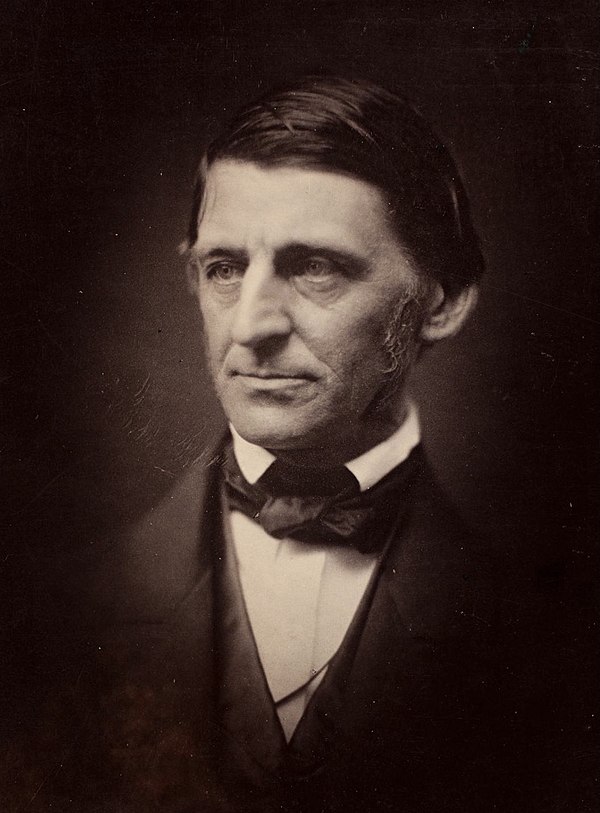
Ralph Waldo Emerson's assertion, "Make the most of yourself, for that is all there is of you," invites us to engage deeply with our own potential and essence. In a world that often distracts us with external validations and societal expectations, this quote serves as a clarion call to turn inward and cultivate our true selves. The stakes are high; to neglect this inner journey is to forfeit the richness of our own existence, leaving us adrift in a sea of unfulfilled possibilities.
Emerson's words resonate with a profound urgency, urging us to recognize that the only resource we truly possess is our own being. This call to self-actualization is not merely about achieving success or recognition; it is about embracing the fullness of our identity and potential. In doing so, we not only honor ourselves but also contribute authentically to the world around us, creating a ripple effect of genuine expression and connection.
The image / the metaphor
At the heart of Emerson's quote lies a vivid imagery that evokes the essence of selfhood. The phrase "make the most of yourself" suggests an active engagement, a dynamic process of cultivation and growth. The use of the verb "make" implies that self-development is not a passive endeavor; it requires intention, effort, and a willingness to explore the depths of our being. The phrase "all there is of you" underscores the singularity and completeness of the self, reminding us that our true worth is found within, not in external accolades or possessions.
Diving deeper into the metaphor, we can see that Emerson is inviting us to view ourselves as a garden that requires tending. Just as a gardener nurtures plants to flourish, we must cultivate our inner landscape, nurturing our talents, passions, and values. This metaphor extends to the idea of wholeness; to "make the most" of ourselves is to embrace every facet of our identity, including our flaws and vulnerabilities. In this way, Emerson encourages us to engage in a holistic self-development that honors the entirety of our being.
In the speaker's tradition
Emerson's philosophy is deeply rooted in the tradition of transcendentalism, which emphasizes the inherent goodness of people and nature, as well as the importance of self-reliance and individual intuition. This aligns with concepts such as dharma, which refers to one's personal duty or path in life, and kenosis, the idea of self-emptying to allow for greater fulfillment. In this context, Emerson's call to "make the most of yourself" can be seen as an invitation to discover and fulfill our unique purpose in the world, a journey that requires both introspection and action.
In his essay "Self-Reliance," Emerson elaborates on the importance of trusting oneself and embracing individuality. He writes, "Trust thyself: every heart vibrates to that iron string." This sentiment echoes the essence of his quote, emphasizing that true fulfillment comes from within and that we must honor our own instincts and insights. By situating ourselves within this tradition, we can appreciate the depth of Emerson's message and its relevance to our own journeys of self-discovery.
Living the teaching
Consider a modern scenario where this teaching resonates: a young professional grappling with the pressures of societal expectations in their career. They may feel compelled to conform to a particular path, chasing promotions or accolades that do not align with their true passions. Emerson's call to "make the most of yourself" encourages this individual to pause and reflect on their own values and aspirations, urging them to carve out a career that resonates with their authentic self rather than merely following a prescribed trajectory.
Another application of this teaching can be found in relationships. Imagine a person who struggles to express their needs and desires, often prioritizing the expectations of others over their own well-being. Emerson's wisdom serves as a reminder that to fully engage in relationships, one must first embrace and honor their own identity. By making the most of themselves, they can foster deeper connections that are rooted in authenticity, leading to more fulfilling and meaningful interactions.
A reflection
As we contemplate Emerson's profound insight, we are invited to reflect on our own lives: Are we truly making the most of ourselves? In what ways do we hold back from embracing our full potential? This contemplation can serve as a guiding question, encouraging us to explore the areas of our lives where we may be settling for less than we are capable of achieving. In this journey of self-discovery, may we find the courage to honor our true selves and share our unique gifts with the world.