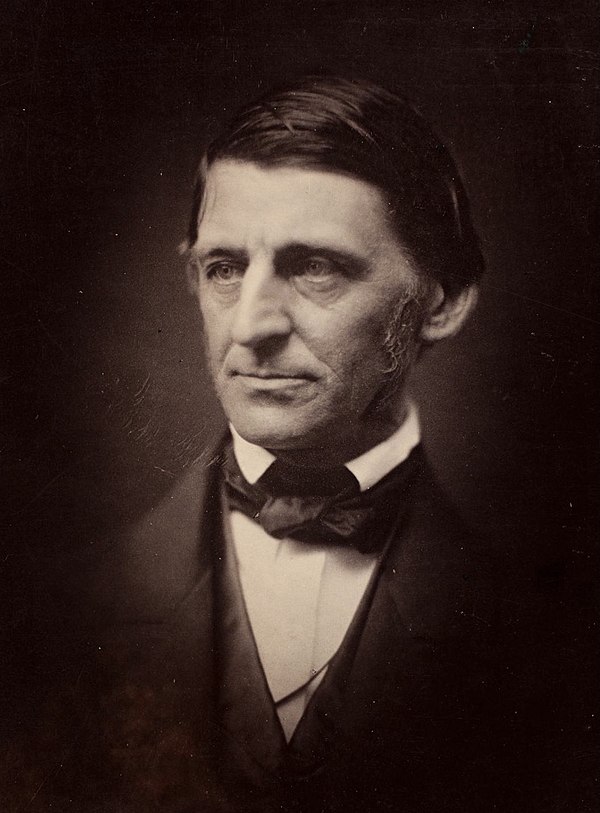
Ralph Waldo Emerson's assertion that it is not the domain of ordinary individuals but rather of fanatics or mathematicians to dismiss the significance of our experiences due to the brevity of life invites us to reconsider our engagement with existence. He suggests that the quality of our lives—whether we are languishing in want or thriving in abundance—holds intrinsic value, regardless of its fleeting nature. This perspective challenges us to embrace our circumstances fully, recognizing that every moment, no matter how short, is worthy of our care and attention.
In a world often preoccupied with the relentless pursuit of success and material gain, Emerson's words serve as a poignant reminder of the importance of presence and engagement. The dichotomy he presents between the mundane and the extraordinary urges us to reflect on how we allocate our energies and focus. Are we merely existing, or are we actively participating in the tapestry of life? This contemplation is essential, as it shapes our understanding of what it means to live meaningfully amidst the transience of our earthly journey.
The image / the metaphor
Emerson's quote evokes a vivid imagery of two contrasting states of being: one of "sprawling in want" and the other of "sitting high." The verbs "sprawling" and "sitting" suggest a physicality to our experiences, illustrating the stark differences in how we might inhabit our lives. To sprawl implies a lack of control, a surrender to circumstances that may leave us feeling vulnerable and exposed. In contrast, to sit high connotes a sense of achievement, stability, and perhaps even privilege. Yet, Emerson's insight lies in the recognition that both states are transient and that the essence of our existence transcends these superficial distinctions.
Diving deeper into the metaphor, we uncover the notion that our societal constructs often dictate our perceptions of worth and success. The "fanatics" and "mathematicians" represent those who might rigidly adhere to a binary understanding of life, reducing it to mere calculations of value based on wealth or status. Emerson invites us to reject this reductionist view, suggesting instead that the richness of life is found in our engagement with it, regardless of our circumstances. This engagement is not merely a passive acceptance but an active participation in the unfolding of our experiences, where every moment is infused with meaning.
In the speaker's tradition
Emerson's philosophy is deeply rooted in the transcendentalist tradition, which emphasizes the inherent goodness of people and nature, as well as the importance of individual intuition and experience. This perspective resonates with concepts such as dharma, which speaks to the intrinsic duty and purpose each individual holds, and kenosis, the idea of self-emptying to allow for greater engagement with the world. In this light, Emerson's call to care for our experiences, regardless of their brevity, aligns with the transcendentalist belief that every moment is an opportunity for growth and understanding.
In his essay "Nature," Emerson articulates the profound connection between humanity and the natural world, suggesting that our experiences are enriched by our interactions with the environment around us. This interconnectedness echoes the Buddhist concept of sunyata, or emptiness, which teaches that our perceptions and experiences are shaped by our engagement with the world. By recognizing the value of our experiences, we can cultivate a deeper understanding of our place within the larger tapestry of existence, allowing us to transcend the limitations imposed by societal expectations.
Living the teaching
Consider a modern scenario where this teaching resonates: a young professional feeling overwhelmed by the demands of their job. They may find themselves caught in a cycle of striving for promotions and accolades, often neglecting the richness of their daily interactions and experiences. Emerson's wisdom encourages them to pause and reflect on the value of their current situation, urging them to engage fully with their colleagues, the challenges they face, and the lessons to be learned from each moment. By doing so, they can transform their experience from one of mere survival to one of meaningful participation.
In a different context, think about a relationship that has grown stale over time. Partners may find themselves drifting apart, consumed by the routines of daily life. Emerson's call to care for our experiences can serve as a catalyst for renewal. By consciously engaging with one another—sharing thoughts, dreams, and vulnerabilities—they can breathe new life into their connection. This active participation in the relationship not only deepens their bond but also enriches their individual experiences, reminding them that love, like life, is a dynamic and evolving journey.
A reflection
As we contemplate Emerson's profound insight, we are invited to consider the nature of our own engagement with life. Are we merely existing, or are we actively participating in the richness of our experiences? In what ways can we cultivate a deeper care for our circumstances, regardless of their perceived value? Reflecting on these questions can illuminate our path toward a more meaningful existence, encouraging us to embrace each moment with intention and presence.