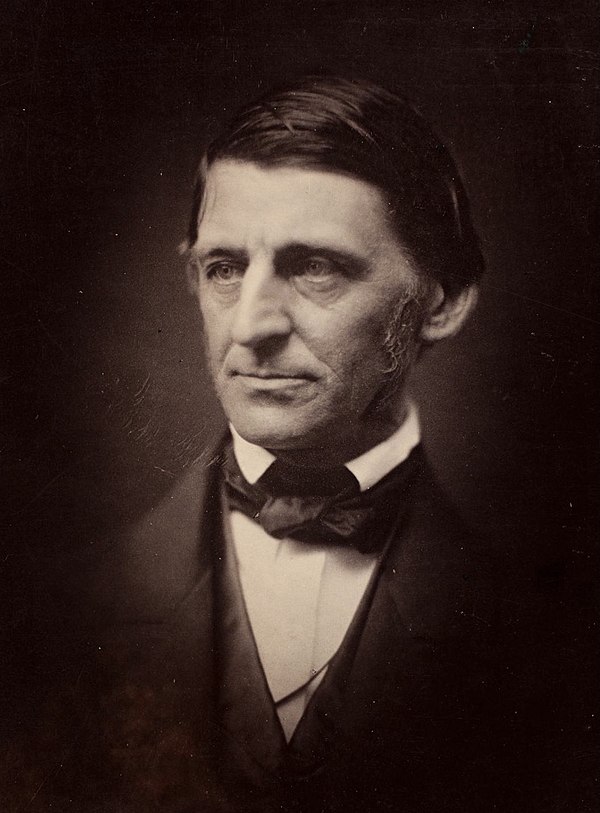
Ralph Waldo Emerson's assertion, "In the woods, we return to reason and faith," invites us to explore the profound relationship between nature and our inner lives. In this statement, Emerson suggests that the natural world serves as a sanctuary where we can reconnect with our rational selves and nurture our spiritual beliefs. This idea resonates deeply in a time when many feel disconnected from both the earth and their own inner truths, emphasizing the importance of nature as a source of wisdom and grounding.
Emerson's words challenge us to consider how our modern lives often pull us away from the simplicity and clarity that nature provides. In the woods, we are not merely surrounded by trees and wildlife; we are enveloped in a space that encourages reflection and introspection. This return to nature is not just a physical journey but a spiritual pilgrimage that can lead us back to our core values and beliefs, reminding us of the interconnectedness of all life and the importance of nurturing both reason and faith in our daily existence.
The image / the metaphor
The imagery of "the woods" conjures a rich tapestry of sensations and experiences. Woods are often seen as places of mystery and tranquility, where the noise of the world fades away, allowing for deeper contemplation. The choice of the verbs "return" suggests that this is not merely a journey to a physical location but a reconnection with something intrinsic to our being. In this space, we can shed the complexities of modern life and rediscover the clarity of thought and belief that may have become obscured.
Diving deeper into the metaphor, the woods symbolize a sanctuary for the soul, a realm where the distractions of society fall away, revealing the essence of who we are. Emerson implies that within this natural setting, we can access a form of wisdom that transcends the chaos of everyday life. The act of returning to nature becomes a transformative experience, allowing us to align our reason with our faith, fostering a holistic understanding of our existence that is often lost in urban environments.
In the speaker's tradition
Emerson's philosophy is rooted in transcendentalism, a movement that emphasizes the inherent goodness of people and nature. This tradition encourages individuals to trust their intuition and seek truth through personal experience rather than through established doctrines. Concepts such as dharma, which refers to one's duty or path in life, resonate with Emerson's call to return to nature, as both advocate for a deep understanding of oneself in relation to the world. The transcendentalist belief in the interconnectedness of all beings aligns with the idea that nature can guide us back to our true selves.
In his seminal work, "Nature," Emerson articulates the idea that the natural world is a reflection of the divine, suggesting that by immersing ourselves in nature, we can access deeper truths about existence. This notion parallels the Buddhist concept of sunyata, or emptiness, which invites individuals to let go of preconceived notions and embrace the present moment. Just as Emerson finds clarity in the woods, so too does the practice of mindfulness in nature allow individuals to experience a profound sense of peace and understanding.
Living the teaching
Consider a modern scenario where an individual feels overwhelmed by the demands of work and life. In this context, taking a walk in the woods can serve as a powerful antidote to stress. As one steps into the embrace of nature, the cacophony of thoughts and worries begins to quiet, allowing for a moment of clarity. This simple act of returning to the woods can facilitate a reconnection with one's inner self, fostering a renewed sense of purpose and direction that aligns with both reason and faith.
In a different application, imagine a relationship strained by misunderstandings and unspoken grievances. Taking time to walk together in a natural setting can create a space for open dialogue and reflection. The tranquility of the woods encourages vulnerability and honesty, allowing both individuals to express their thoughts and feelings more freely. In this way, nature becomes a catalyst for healing, enabling a return to the foundational principles of trust and faith in one another.
A reflection
As we contemplate Emerson's profound statement, we are invited to consider how often we allow ourselves to return to nature in our busy lives. What does it mean for you to reconnect with both reason and faith in the natural world? In what ways can you create space for this return, allowing the wisdom of the woods to guide you back to your true self?