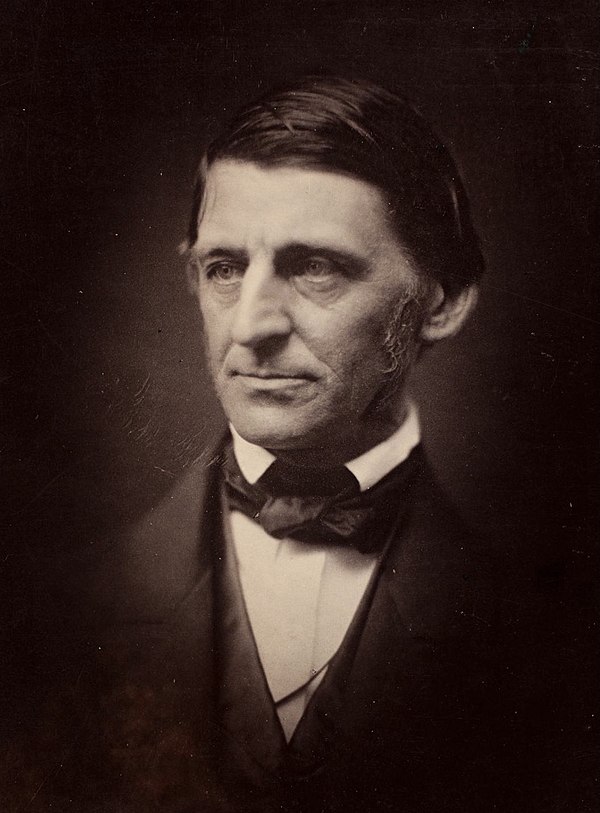
Ralph Waldo Emerson's assertion, "Give and it shall be given you," invites us into a profound exploration of generosity and reciprocity. This simple yet powerful statement encapsulates a fundamental truth about the interconnectedness of human experience. It suggests that the act of giving is not merely a transaction but a transformative process that enriches both the giver and the receiver. In a world often marked by scarcity and self-interest, Emerson's words remind us of the abundance that arises from selfless acts of kindness and the deep bonds they create.
At its core, this quote challenges us to reconsider our relationship with giving. It urges us to recognize that generosity is not a one-way street; rather, it is a dynamic exchange that fosters community and nurtures the spirit. By embracing the idea that what we offer to others will eventually return to us, we cultivate a mindset of abundance rather than lack. This perspective not only enhances our personal relationships but also contributes to a more compassionate and interconnected society, where the act of giving becomes a source of joy and fulfillment.
The image / the metaphor
Emerson's quote employs vivid imagery that evokes a sense of flow and reciprocity. The verb "give" is an active, dynamic word that implies movement and intention. It suggests that generosity is not a passive state but an active engagement with the world around us. The phrase "it shall be given you" completes this cycle, indicating that the universe responds to our acts of kindness. This interplay between giving and receiving creates a felt sense of harmony, where our actions resonate beyond ourselves and ripple through the lives of others.
Diving deeper into the metaphor, we can see that Emerson's words reflect a universal principle of reciprocity that transcends individual acts. The act of giving is akin to planting seeds in a garden; the more we nurture and share, the more we cultivate a flourishing environment. This metaphor extends beyond material gifts to encompass emotional and spiritual offerings, suggesting that our kindness, compassion, and love are equally potent forms of giving. In this light, Emerson's quote becomes a call to cultivate a generous spirit, recognizing that our contributions to the world create a tapestry of interconnected lives.
In the speaker's tradition
Emerson's philosophy is deeply rooted in the tradition of transcendentalism, which emphasizes the inherent goodness of people and nature. This movement encourages individuals to trust their intuition and seek a deeper connection with the universe. The concept of dharma, or one's duty to act in accordance with the greater good, resonates with Emerson's call to give. By aligning our actions with this principle, we not only fulfill our own potential but also contribute to the collective well-being of humanity.
In his essay "Compensation," where this quote originates, Emerson elaborates on the idea that every action has a corresponding reaction. This mirrors the Eastern philosophical concept of karma, where the energy we put into the world returns to us in various forms. Just as the sun radiates light and warmth, inviting life to flourish, our acts of generosity can illuminate the lives of others, creating a cycle of positivity and growth. Emerson's insights encourage us to embrace this interconnectedness, recognizing that our contributions to the world are both a reflection of our inner selves and a catalyst for collective transformation.
Living the teaching
Consider a modern scenario where this teaching can take root: a community food bank that relies on volunteers and donations. Each time someone donates food or time, they are not just providing sustenance; they are also fostering a sense of community and belonging. The act of giving creates a ripple effect, inspiring others to contribute and reinforcing the idea that we are all part of a larger whole. In this context, Emerson's quote becomes a guiding principle, illustrating how acts of generosity can uplift an entire community, creating a cycle of support and care.
In personal relationships, the teaching of reciprocity can manifest in moments of vulnerability and openness. For instance, when one partner expresses their feelings and needs, it invites the other to do the same, deepening their connection. This exchange of emotional honesty is a form of giving that strengthens the bond between them. By embodying Emerson's principle, we can transform our interactions into opportunities for growth and understanding, recognizing that the more we give of ourselves, the more we receive in return, both in love and in trust.
A reflection
As we contemplate Emerson's profound statement, we might ask ourselves: "In what ways can I cultivate a spirit of generosity in my daily life?" This question invites us to reflect on our actions and intentions, encouraging us to seek opportunities for giving that resonate with our values and passions. By embracing this inquiry, we open ourselves to the transformative power of generosity, allowing it to shape our relationships and our understanding of our place within the larger tapestry of existence.


