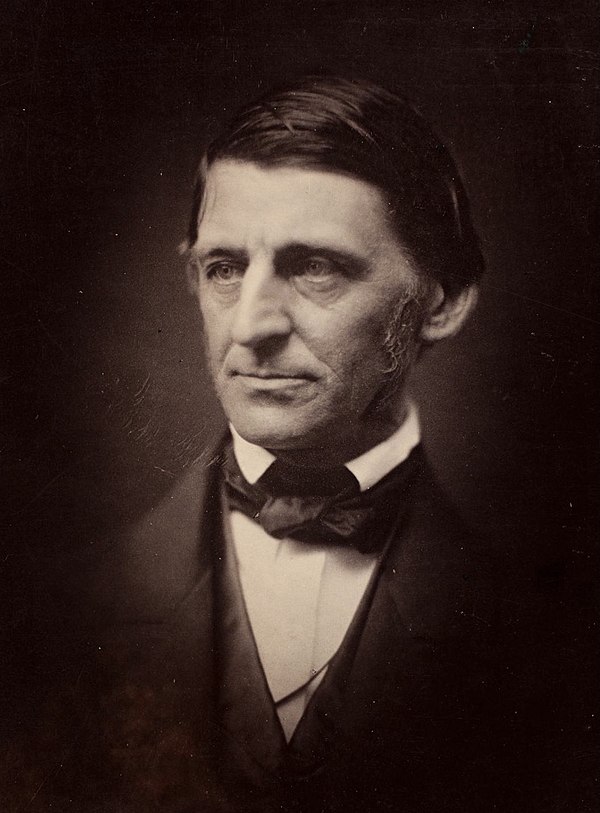
Ralph Waldo Emerson's poignant observation, "For every minute you are angry you lose sixty seconds of happiness," invites us to reflect on the profound relationship between our emotions and our experience of time. In this simple yet powerful statement, Emerson highlights the fleeting nature of happiness and the heavy toll that anger exacts on our well-being. This insight matters deeply in a world where emotional turbulence can easily overshadow our moments of joy, urging us to consider how we allocate our emotional resources and the impact of our choices on our overall happiness.
As we delve deeper into Emerson's words, we uncover a fundamental truth about the human experience: time is a precious commodity, and how we choose to spend it shapes the quality of our lives. Anger, often perceived as a justified response to perceived wrongs, can become a thief of our happiness, robbing us of the present moment. Emerson's quote serves as a gentle reminder that every moment spent in anger is a moment we could have embraced joy, connection, and peace. This realization beckons us to cultivate a more mindful approach to our emotions, recognizing that the choice between anger and happiness is not merely a matter of temperament but a profound decision that influences our very existence.
The image / the metaphor
At its core, Emerson's quote presents a vivid image of time slipping away, akin to grains of sand falling through our fingers. The juxtaposition of anger and happiness creates a stark contrast, evoking a sense of urgency and loss. The verbs "lose" and "are" convey a sense of immediacy, suggesting that anger is not a passive state but an active choice that directly impacts our experience of happiness. This imagery compels us to visualize each moment of anger as a tangible loss, a subtraction from our reservoir of joy that we can never reclaim.
Diving deeper into the metaphor, we can see that Emerson's words resonate with the idea that our emotional states are not isolated but interconnected with the flow of time. Anger, often a reaction to external circumstances, can entrap us in a cycle of negativity, while happiness represents a state of being that is inherently liberating. The metaphor of losing happiness to anger serves as a call to mindfulness, urging us to recognize the transient nature of both emotions and the importance of choosing wisely how we engage with them. In this light, Emerson invites us to consider the broader implications of our emotional choices on our life’s narrative.
In the speaker's tradition
Emerson's insights are deeply rooted in the transcendentalist tradition, which emphasizes the inherent goodness of people and nature, as well as the importance of individual intuition and experience. Within this framework, the concept of dharma—one's duty or path—can be seen as a guiding principle that encourages individuals to seek harmony and fulfillment. Just as dharma calls for alignment with one's true self, Emerson's quote urges us to align our emotional responses with our deeper aspirations for happiness and peace, suggesting that anger is a deviation from our authentic path.
Moreover, Emerson's thoughts resonate with the Buddhist concept of sunyata, or emptiness, which teaches that attachment to negative emotions can lead to suffering. By recognizing the impermanence of both anger and happiness, we can cultivate a sense of detachment that allows us to navigate our emotional landscape with greater ease. In his essay "Self-Reliance," Emerson emphasizes the importance of trusting oneself and one's intuition, which can be seen as a call to recognize when anger arises and to choose a different response—one that fosters happiness and connection instead.
Living the teaching
Consider a modern scenario where this teaching might resonate: imagine a workplace conflict where a colleague's actions provoke feelings of anger. In the heat of the moment, it can be easy to dwell on the perceived injustice, allowing anger to cloud judgment and diminish overall happiness. However, by recognizing that each minute spent in anger equates to a loss of happiness, one might choose to pause, breathe, and respond with understanding rather than reactivity. This conscious choice not only preserves personal happiness but also fosters a more harmonious work environment.
In the context of relationships, Emerson's wisdom can be particularly transformative. Picture a moment of disagreement with a loved one, where anger threatens to escalate the situation. By recalling Emerson's insight, one might choose to step back and reflect on the value of happiness over the fleeting satisfaction of being right. This shift in perspective can lead to deeper understanding and connection, allowing both individuals to navigate their emotions with compassion and grace. In daily practice, cultivating mindfulness through meditation or reflective journaling can support this teaching, helping us to recognize and release anger before it takes hold.
A reflection
As we contemplate Emerson's profound statement, we are invited to consider the ways in which we engage with our emotions. How often do we allow anger to overshadow our moments of happiness? In what ways can we cultivate a greater awareness of our emotional choices, recognizing the preciousness of each moment? Reflecting on these questions can illuminate our path toward a more joyful existence, encouraging us to embrace happiness as a conscious choice rather than a fleeting experience.