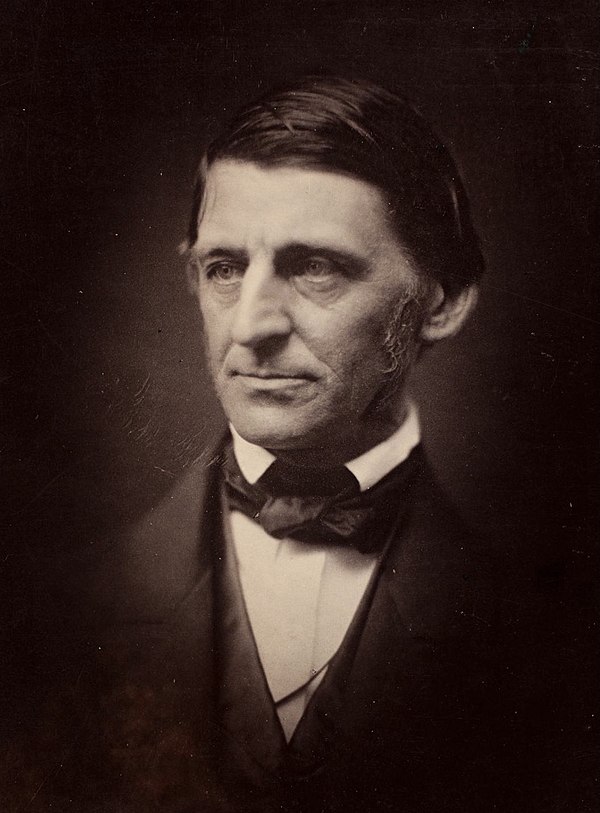
Ralph Waldo Emerson's assertion that "Five minutes of today are worth as much to me, as five minutes in the next millennium" invites us to reconsider our relationship with time and presence. In a world often preoccupied with future aspirations or past regrets, Emerson's words remind us of the intrinsic value of the present moment. This perspective is not merely a philosophical musing; it is a call to engage deeply with the here and now, recognizing that each fleeting moment holds its own unique worth.
Emerson's insight challenges the conventional understanding of time as a linear progression, urging us to cultivate a sense of immediacy and appreciation for our current experiences. The weight of the future, with its endless possibilities, can often overshadow the richness of the present. By valuing the present as highly as we might value a distant future, we are encouraged to live fully, embracing the immediacy of our existence. This teaching resonates with the core tenets of transcendentalism, which emphasize individual experience and the profound significance of the present.
The image / the metaphor
At first glance, Emerson's quote presents a striking juxtaposition between the immediacy of today and the vastness of the next millennium. The imagery evokes a sense of urgency, as if each moment is a precious gem that should not be overlooked. The verbs "are worth" suggest a valuation system that transcends conventional measures of time, inviting us to consider how we assign worth to our experiences. In this light, the present becomes a treasure trove of potential, rich with opportunities for connection, reflection, and growth.
Diving deeper into the metaphor, we can see that Emerson is not merely advocating for mindfulness; he is proposing a radical reorientation of our priorities. By equating the value of five minutes today with five minutes in the distant future, he invites us to confront the illusion of time as a commodity. This perspective encourages us to engage with our lives authentically, recognizing that the present moment is not just a stepping stone to something greater, but a vital part of our spiritual journey.
In the speaker's tradition
Emerson's philosophy is deeply rooted in the transcendentalist tradition, which emphasizes the importance of individual intuition and the inherent goodness of both people and nature. Concepts such as "dharma" from Eastern philosophies resonate with Emerson's call to live in accordance with one's true self, suggesting that our purpose is found in the present moment. Similarly, the idea of "kenosis," or self-emptying, aligns with the notion that to fully appreciate the present, we must release our attachments to future outcomes and past experiences.
In his essay "Experience," Emerson articulates the idea that true understanding comes from direct engagement with life. He writes, "The only way to have a friend is to be one," emphasizing the importance of presence in relationships. This sentiment echoes the teachings found in various spiritual traditions, where the essence of existence is often tied to the quality of our attention and the depth of our connections with others.
Living the teaching
Consider a modern scenario where this teaching might resonate: a busy professional caught in the whirlwind of deadlines and future ambitions. In striving for success, they may overlook the simple joys of daily interactions, such as a shared laugh with a colleague or a moment of quiet reflection during a coffee break. By embracing Emerson's perspective, this individual could begin to recognize that these seemingly mundane moments are, in fact, invaluable. Each interaction holds the potential for connection and insight, enriching their life far beyond the confines of their professional aspirations.
In a different context, imagine a relationship strained by the weight of unspoken grievances and future uncertainties. By applying Emerson's teaching, both partners might choose to focus on the present, engaging in open dialogue and genuine listening. This shift in focus can transform their interactions, allowing them to appreciate the beauty of their shared experiences rather than becoming mired in past hurts or future fears. In doing so, they cultivate a deeper bond, grounded in the richness of the present moment.
A reflection
As we contemplate Emerson's profound assertion, we are invited to reflect on our own relationship with time and presence. How often do we find ourselves lost in thoughts of what is to come, neglecting the beauty of the moment we are currently inhabiting? In this spirit, consider this contemplative question: What would it mean for you to value the next five minutes as deeply as you might value five minutes in a distant future? Allow this inquiry to guide you toward a more intentional engagement with your life, fostering a deeper appreciation for the present.