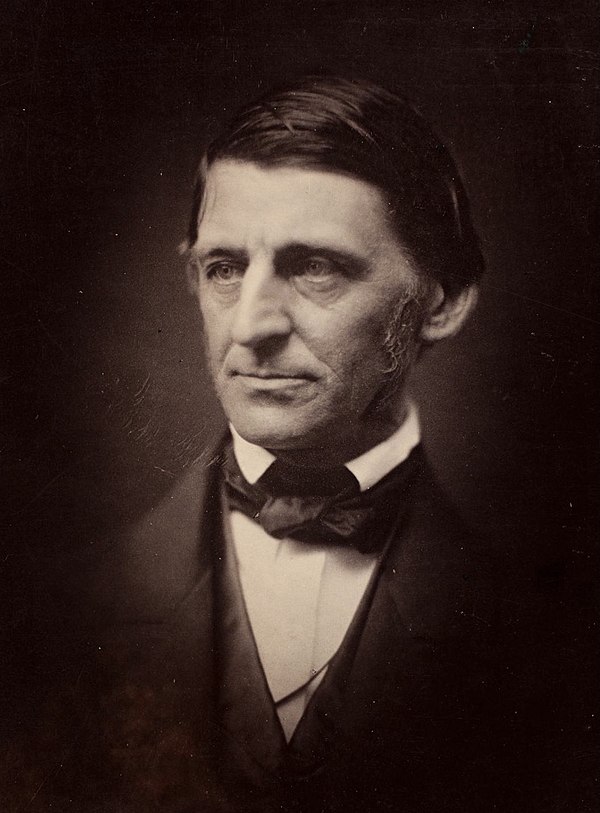
Ralph Waldo Emerson's assertion that "by the mutual action of its structure and of the laws of light, perspective is produced, which integrates every mass of objects, of what character soever, into a well-colored and shaded globe" invites us to contemplate the intricate relationship between perception and reality. In this statement, Emerson emphasizes how our understanding of the world is shaped not only by the inherent qualities of objects but also by the interplay of light and perspective. This perspective is crucial; it suggests that our experience of beauty and integration is not merely a passive observation but an active engagement with the world around us.
Delving deeper, Emerson's words challenge us to consider how we perceive and integrate the myriad elements of our lives. The "well-colored and shaded globe" serves as a metaphor for the holistic vision we can cultivate when we allow ourselves to see beyond the surface. This integration is not just about visual perception; it extends to our emotional and spiritual experiences, urging us to recognize the interconnectedness of all things. In a world often fragmented by individualism and distraction, Emerson's insights remind us of the beauty that arises when we embrace a more unified perspective.
The image / the metaphor
At first glance, Emerson's quote conjures a vivid image of a globe, a representation of the Earth that is both familiar and expansive. The "mutual action of its structure" suggests that the physical properties of objects—how they are arranged and how they interact with light—play a crucial role in shaping our perception. The verbs "produced" and "integrates" imply a dynamic process, one that requires both the observer and the observed to participate in the creation of meaning. This imagery evokes a sense of wonder, as if we are being invited to witness the world as a living tapestry, where every thread contributes to the overall beauty.
On a metaphorical level, the "well-colored and shaded globe" represents the complexity of human experience. Just as light reveals the contours and colors of a globe, our perceptions illuminate the richness of our lives. Emerson suggests that by understanding the interplay of structure and light, we can cultivate a deeper appreciation for the beauty that surrounds us. This metaphor extends beyond mere aesthetics; it speaks to the integration of diverse experiences, emotions, and perspectives into a cohesive understanding of our existence. In this way, Emerson encourages us to embrace the fullness of life, recognizing that every aspect contributes to the greater whole.
In the speaker's tradition
Emerson's insights are deeply rooted in the transcendentalist tradition, which emphasizes the inherent goodness of people and nature and the importance of individual intuition. This philosophy aligns with concepts such as dharma, which refers to the moral order of the universe, and kenosis, the idea of self-emptying to allow for greater understanding and connection. In this context, Emerson's notion of perspective can be seen as a call to align ourselves with the natural order, recognizing that our perceptions shape our reality and that true understanding comes from an integration of self and environment.
In his seminal work, "Nature," Emerson articulates the idea that the natural world is a reflection of the divine, urging readers to seek a deeper connection with the universe. This resonates with the Buddhist concept of sunyata, or emptiness, which invites us to see beyond the illusions of separateness and recognize the interconnectedness of all things. Just as Emerson encourages us to embrace the beauty of perspective, these spiritual traditions remind us that our perceptions can either confine us or liberate us, depending on how we choose to engage with the world.
Living the teaching
Consider a modern scenario where this teaching might resonate: a bustling city street filled with diverse individuals, each with their own stories and experiences. In such a setting, it is easy to become overwhelmed by the chaos and lose sight of the beauty inherent in the integration of these lives. However, by consciously shifting our perspective—much like adjusting the lens through which we view the world—we can begin to appreciate the rich tapestry of humanity. This practice of mindfulness allows us to see beyond the surface, recognizing the shared experiences that connect us all.
In the realm of relationships, Emerson's teaching can be particularly transformative. Imagine a moment of conflict with a loved one, where misunderstandings and emotions cloud our perception. By applying Emerson's insights, we can strive to integrate our perspectives, seeking to understand the underlying motivations and feelings of both ourselves and the other person. This approach fosters empathy and connection, allowing us to navigate difficult moments with grace and compassion. In daily practice, whether through meditation, reflective journaling, or simply pausing to observe the world around us, we can cultivate a deeper awareness of the beauty that emerges from integration.
A reflection
As we contemplate Emerson's profound words, we are invited to reflect on our own perceptions and the ways in which they shape our understanding of the world. How can we cultivate a perspective that integrates the diverse elements of our lives into a cohesive whole? In what ways might we allow the "laws of light" to illuminate our experiences, revealing the beauty that lies within the complexity of existence? This contemplative question encourages us to engage with our surroundings and relationships more deeply, fostering a sense of connection and appreciation for the intricate web of life.