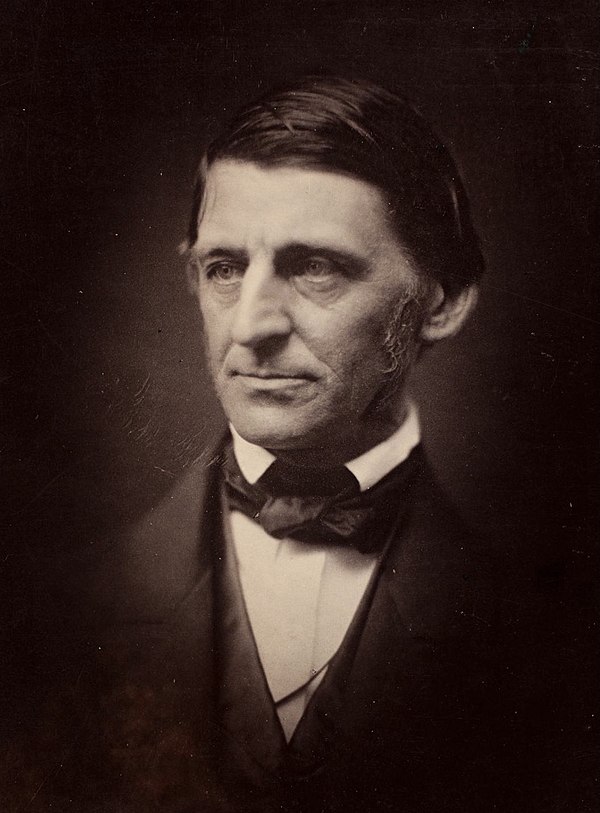
Ralph Waldo Emerson's assertion that "All life is an experiment. The more experiments you make the better" invites us to embrace the fluidity and unpredictability of existence. In this view, life is not a rigid path to be followed but a series of trials and explorations that shape our understanding and experience. This perspective encourages us to engage with the world around us, to take risks, and to learn from the outcomes, whether they align with our expectations or not. The stakes are high; in a society that often values certainty and success, Emerson's call to experiment challenges us to redefine what it means to live fully.
Delving deeper, Emerson's quote suggests a profound relationship between action and growth. Each experiment, whether a success or failure, contributes to our personal evolution and understanding of the world. This notion resonates with the idea that life is inherently dynamic, and our willingness to engage with it actively can lead to richer experiences. In a culture that often prioritizes safety and predictability, Emerson's words serve as a reminder that true wisdom often emerges from the willingness to venture into the unknown, to embrace uncertainty as a vital component of our journey.
The image / the metaphor
At its core, Emerson's quote conjures the image of life as a vast laboratory, where each individual is both the scientist and the subject of study. The verbs "experiment" and "make" evoke a sense of agency and creativity, suggesting that we are not merely passive observers but active participants in our own lives. This imagery invites us to consider the myriad ways we can engage with our surroundings, whether through new experiences, relationships, or ideas. The felt sense of this metaphor is one of liberation; it encourages us to break free from the confines of conventional thinking and to explore the full spectrum of human experience.
Going deeper, the metaphor of experimentation implies a playful curiosity about life. It suggests that we should approach our experiences with an open mind, ready to learn and adapt. Just as a scientist formulates hypotheses and tests them, we too can create our own life experiments, allowing ourselves to be surprised by the outcomes. This approach fosters resilience, as we learn to view setbacks not as failures but as integral parts of our learning process. In this light, life becomes a continuous journey of discovery, where each experiment enriches our understanding of ourselves and the world.
In the speaker's tradition
Emerson's philosophy is deeply rooted in the transcendentalist tradition, which emphasizes the inherent goodness of people and nature, as well as the importance of individual intuition and experience. This perspective aligns with concepts such as dharma, which refers to one's duty or path in life, and prajna, the wisdom that arises from direct experience. In this context, Emerson's call to experiment can be seen as an invitation to engage with our own dharma, to explore our unique paths through the myriad experiments life offers. The transcendentalist belief in the interconnectedness of all beings further underscores the importance of these experiments, as they contribute not only to our personal growth but also to the collective human experience.
In his essay "Self-Reliance," Emerson writes about the importance of trusting oneself and the value of individual experience. This resonates with the idea that each experiment we undertake is a reflection of our inner truth, a manifestation of our unique perspective on life. By embracing our individuality and the lessons learned through experimentation, we align ourselves with the greater flow of existence, contributing to a more profound understanding of both ourselves and the world around us. Emerson's work encourages us to cultivate a sense of wonder and curiosity, reminding us that the journey of self-discovery is as important as the destination.
Living the teaching
Consider a modern scenario where this teaching can be applied: a young professional contemplating a career change. The fear of stepping into the unknown can be paralyzing, yet Emerson's perspective invites this individual to view the transition as an experiment. By exploring different fields, taking on freelance projects, or even volunteering in new environments, they can gather insights about their passions and strengths. Each experience, regardless of its outcome, becomes a valuable data point in their personal journey, guiding them toward a more fulfilling career path.
Another application of this teaching can be found in relationships. Imagine a couple facing challenges in communication. Instead of adhering to familiar patterns that may not serve them, they could approach their interactions as experiments. By trying out new ways of expressing their feelings or resolving conflicts, they open the door to deeper understanding and connection. This willingness to experiment fosters growth not only within the relationship but also within each individual, as they learn more about themselves and their partner through the process.
A reflection
As we contemplate Emerson's assertion that "All life is an experiment," we are invited to reflect on our own willingness to embrace uncertainty and engage with the world around us. What experiments have you undertaken in your life, and what have they taught you about yourself? In considering this question, we can begin to appreciate the richness of our experiences and the transformative power of curiosity. Life, in all its unpredictability, offers us a canvas upon which to paint our unique stories, and each experiment is a brushstroke that contributes to the masterpiece of our existence.