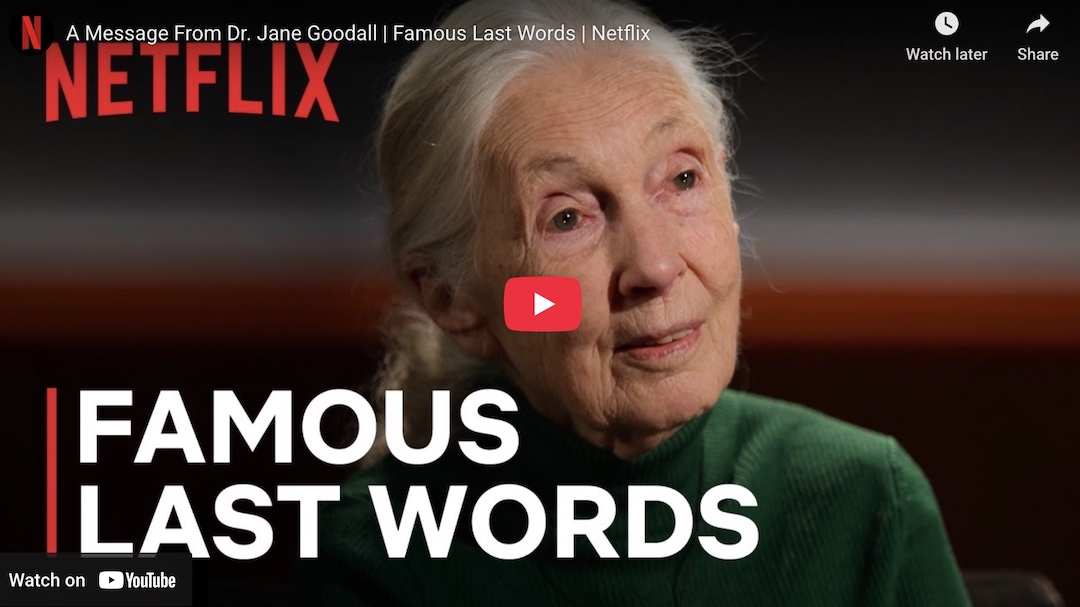
Jane Goodall's poignant assertion, "To stand for the voiceless is the work of conscience," invites us to reflect on our moral responsibilities in a world where many beings lack representation. This statement resonates deeply in an age marked by ecological crises and social injustices, urging us to consider the ethical implications of our actions and inactions. The stakes are high; the voiceless—be they animals, marginalized communities, or the environment itself—rely on those with the capacity to speak out and advocate for their rights. In this light, the work of conscience becomes not just a personal endeavor but a collective imperative.
Goodall's words challenge us to examine the nature of our conscience and the ways in which we engage with the world around us. To stand for the voiceless is to recognize that silence can be as powerful as speech, and that inaction can perpetuate suffering. This call to action compels us to cultivate a deeper awareness of our interconnectedness with all life forms and to act with compassion and integrity. It is a reminder that our conscience is not merely an internal compass but a call to engage with the broader tapestry of existence.
The image / the metaphor
The imagery in Goodall's quote evokes a profound sense of responsibility. The phrase "to stand for" suggests a physical and moral posture, one that requires us to be present and active in the face of injustice. It conjures the image of a guardian or advocate, someone who steps into the fray to give voice to those who cannot speak for themselves. The term "voiceless" is particularly striking, as it highlights the vulnerability of those who lack agency in a world often dominated by power dynamics that favor the loudest voices.
Diving deeper into the metaphor, we can see that standing for the voiceless is not merely about advocacy; it is an act of love and solidarity. It requires us to listen deeply and to understand the nuances of suffering that may not be immediately visible. This work of conscience is a call to cultivate empathy, to recognize the shared essence of all beings, and to act in ways that honor their dignity. In this sense, the act of standing for the voiceless becomes a transformative journey, both for the advocate and the one being advocated for.
In the speaker's tradition
Jane Goodall's work is deeply rooted in the contemplative-ecology tradition, which emphasizes the interconnectedness of all life forms and the moral imperative to protect the natural world. Concepts such as dharma, which refers to one's duty or ethical path, resonate strongly with Goodall's call to action. In this context, standing for the voiceless aligns with the idea of kenosis, or self-emptying, where one transcends personal desires to serve a greater purpose. This selflessness is essential in recognizing the intrinsic value of all beings, regardless of their ability to articulate their needs.
Goodall's insights can also be compared to the Buddhist notion of sunyata, or emptiness, which teaches that all phenomena are interdependent and lack inherent existence. This understanding fosters a sense of compassion that transcends individual concerns, urging us to act for the benefit of the whole. In her speeches and interviews, Goodall often references the interconnectedness of ecosystems, echoing the teachings found in texts like the "Heart Sutra," which emphasizes the importance of compassion and the recognition of our shared existence.
Living the teaching
In today's world, the call to stand for the voiceless manifests in various ways, particularly in the realm of environmental activism. Consider the plight of endangered species, whose habitats are threatened by human expansion and climate change. Activists and organizations work tirelessly to raise awareness, advocate for policy changes, and protect these vulnerable beings. This modern scenario exemplifies how Goodall's teaching can be applied, as individuals and groups come together to give voice to those who cannot advocate for themselves, embodying the essence of conscience in action.
On a more personal level, this teaching can also be applied within our relationships. Imagine a friend who is struggling with mental health issues but feels unable to express their pain. Standing for the voiceless in this context means being present, listening without judgment, and offering support. It requires us to cultivate a compassionate awareness that recognizes when others are suffering in silence. By doing so, we not only honor their experience but also deepen our own understanding of empathy and connection, embodying the work of conscience in our daily lives.
A reflection
As we contemplate Goodall's profound statement, we are invited to reflect on our own lives and the ways we engage with the voiceless around us. What does it mean for you to stand for those who cannot speak for themselves? In what areas of your life can you cultivate a deeper sense of conscience and compassion? These questions encourage us to explore the dimensions of our moral responsibilities and to consider how we can actively contribute to a more just and compassionate world.