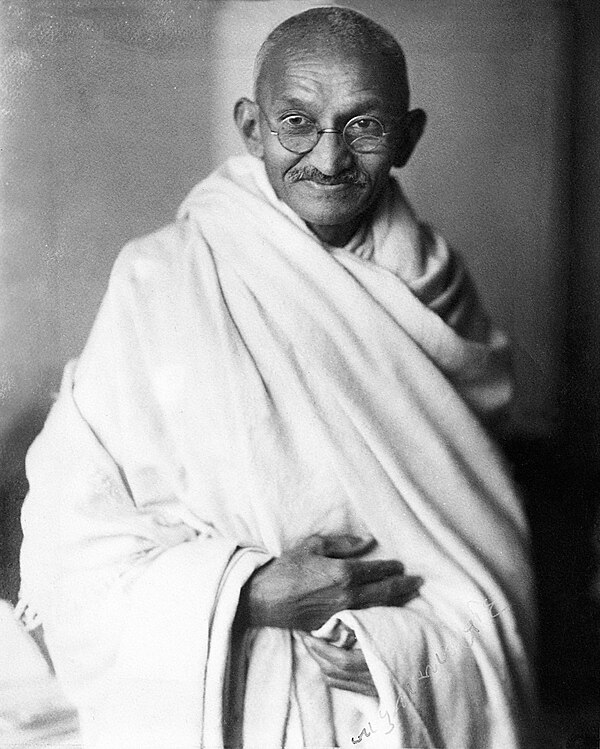
The Unyielding Force Within
Mahatma Gandhi's assertion that "strength does not come from physical capacity. It comes from an indomitable will" invites us to reconsider our understanding of strength. In a world often enamored with physical prowess and tangible achievements, Gandhi's words remind us that true strength is rooted in the depths of our resolve and determination. This perspective is crucial, especially in times of adversity, where the ability to persevere often outweighs sheer physical ability.
Gandhi's insight speaks to a universal truth that transcends cultural and historical boundaries. It challenges us to look beyond the superficial markers of strength and to recognize the profound power of will. This notion resonates deeply within the human experience, urging us to cultivate an inner fortitude that can withstand the trials of life. In doing so, we not only empower ourselves but also inspire those around us to tap into their own reservoirs of strength.
The image / the metaphor
The imagery in Gandhi's quote evokes a sense of resilience and inner power. The phrase "indomitable will" conjures visions of an unyielding spirit, one that remains steadfast in the face of challenges. The contrast between physical capacity and will highlights a profound truth: while our bodies may falter, our will can remain unbroken. This distinction invites us to explore the nature of strength itself, suggesting that it is not merely a function of our physical attributes but rather a manifestation of our inner resolve.
Diving deeper into the metaphor, we can see that willpower is akin to a flame that can be kindled even in the darkest of times. It is a force that can propel us forward, urging us to act in alignment with our values and convictions. This inner strength is not always visible; it often lies beneath the surface, waiting to be summoned in moments of need. Gandhi's words remind us that this flame can be nurtured and cultivated, allowing us to rise above our circumstances and embody a strength that is both profound and transformative.
In the speaker's tradition
Moreover, the concept of bhakti, or devotion, plays a significant role in understanding Gandhi's perspective. Bhakti emphasizes the importance of surrendering to a higher power, which can fortify one's will and resolve. In this light, Gandhi's indomitable will can be viewed as a manifestation of his deep devotion to truth and justice. His commitment to nonviolent resistance was not merely a strategy but a profound expression of his spiritual beliefs, illustrating how inner strength can emerge from a deep connection to one's values and purpose.
Living the teaching
Consider a modern scenario where this teaching resonates: an individual facing a significant career setback. Perhaps they have been passed over for a promotion or faced criticism for their work. In such moments, the temptation to succumb to despair or frustration can be overwhelming. However, by embracing Gandhi's insight, this individual can recognize that their true strength lies not in their immediate circumstances but in their ability to persist, learn, and adapt. This indomitable will can empower them to seek new opportunities, refine their skills, and ultimately emerge stronger from the experience.
In the realm of relationships, Gandhi's teaching can also find profound application. Imagine a couple navigating a challenging phase in their partnership, where misunderstandings and conflicts seem insurmountable. By embodying an indomitable will, they can choose to engage in open communication, practice empathy, and commit to resolving their differences. This conscious effort to strengthen their bond, despite the difficulties, reflects the essence of Gandhi's message: that true strength is found in the willingness to confront challenges with determination and love.
A reflection
As we contemplate Gandhi's powerful assertion, we are invited to reflect on our own lives and the sources of our strength. What challenges have we faced that required us to summon our indomitable will? In what areas of our lives can we cultivate a deeper sense of resolve and commitment to our values? These questions encourage us to explore the depths of our inner strength and to recognize that, like Gandhi, we too possess the capacity to rise above our circumstances through the power of our will.


