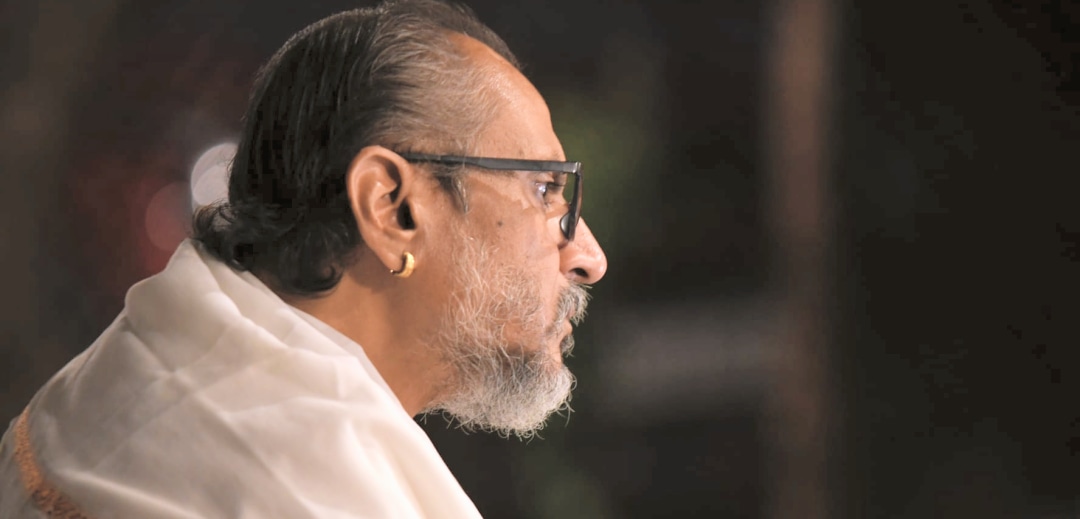

Yogi Shivraj {Shambhnath}
Classical Singer · Pune, India
À propos
Yogi Shivraj {Shambhnath}, also known as Yogi Shambhnath, is a Kriya Yoga practitioner and teacher, and a Hindustani classical vocalist. His work is gathered under Shiva Sanjeevan Yoga, a path of holistic healing and spiritual rejuvenation, and he is based at the Siddhanath Forest Ashram near Pune, India.
Yogi Shivraj {Shambhnath}, also known as Yogi Shambhnath, is a Kriya Yoga practitioner and teacher, and a Hindustani classical vocalist. His work is gathered under Shiva Sanjeevan Yoga, a path of holistic healing and spiritual rejuvenation, and he is based at the Siddhanath Forest Ashram near Pune, India.
He was born into the Rāj~Rājendra Rājā Shitole Deshmukh family of Pune, which traces its descent from the Solar dynasty of Prabhu Shree Rāmachandra. Through his father, Yog~Mārtand Yogirāj Siddhanāth, he was often in the presence of great spiritual beings, and received blessings from Paramhansa Hariharānanda Giri Mahārāj, Yog~Chaitanya Gagangiri Mahārāj and Prem~Avtār Shree Shree Anandamai Mā.
At the age of nine he was empowered into Kriyā Yog by his father. He has been a practicing Kriyabaan Sadhak for 40 years. He takes an active part in his father's mission of propagating the message and the spiritual science of Shiv Goraksha Babaji, and he initiates seekers into the sacred science of Kriya Yog.
Shambhnath ji is also an accomplished Hindustani classical vocalist and a disciple of the legendary Vidhushi Kishori Amonkar.
FAQ
Questions
Yogi Shivraj, known as Shambhnath, is a Kriya Yoga teacher and Hindustani classical vocalist based at the Siddhanath Forest Ashram near Pune, India. He descends from the Rāj~Rājendra Rājā Shitole Deshmukh family and traces his lineage to the Solar dynasty of Prabhu Shree Rāmachandra. His practice spans four decades as a dedicated Kriyabaan Sadhak—someone initiated into and actively practicing Kriya Yoga—and his classical vocal training came directly from the legendary Vidhushi Kishori Amonkar. What draws people to his work is the integration of these two disciplines: Kriya Yoga, an ancient path of spiritual science, and Indian classical music specifically rooted in Hindustani vocal tradition. His teachings and recordings operate under Shiva Sanjeevan Yoga, a framework for holistic healing and spiritual rejuvenation rooted in the transmission of Shiv Goraksha Babaji. For seekers exploring sound vibration healing, pranayama practice, and classical music as spiritual technology, Shambhnath represents a living connection to both monastic and artistic lineages.
Yogi Shivraj's spiritual lineage is rooted in Kriya Yoga, specifically the teachings of Shiv Goraksha Babaji and his father Yog~Mārtand Yogirāj Siddhanāth. He was initiated into Kriyā Yog at age nine and has spent forty years as a practicing Kriyabaan Sadhak—a formal designation for one who actively practices and teaches Kriya Yoga's specific meditation and life-force energy techniques. This lineage includes blessings and teachings from major spiritual figures: Paramhansa Hariharānanda Giri Mahārāj, Yog~Chaitanya Gagangiri Mahārāj, and Prem~Avtār Shree Shree Anandamai Mā. In the realm of music, his training traces to Vidhushi Kishori Amonkar, one of the most respected voices in Hindustani classical music tradition. The synthesis—Kriya Yoga's emphasis on pranayama and sound vibration healing (Naada) combined with Hindustani classical voice—means his work straddles both the monastic lineages and the rasa-centered world of Indian classical music, a rare positioning.
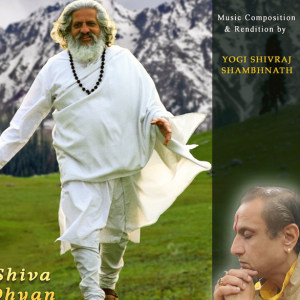
For listeners new to both Kriya Yoga and Hindustani classical music, 'Himalayan Shiva Chants' (2024) is the most accessible entry point—a six-track album that weaves classical vocal technique with devotional content rooted in Shaivite practice. The title itself signals its focus: chants in the Himalayan meditative tradition, the geographic heart of yogic lineages. From there, the recent single 'Shiv Dhyan' (2025) offers a more condensed introduction to his approach to meditation and sound practice. Both recordings are available on Spotify, though his presence there remains limited; his YouTube channel (@yogishambhnath/) and his website at shivasanjeevan.org provide more direct access to his teaching and recorded work. A complete newcomer should begin by listening to one full play-through of 'Himalayan Shiva Chants' to understand the vocal texture and pacing, then explore his website and channel to contextualize the music within his broader teaching on Kriya Yoga, pranayama, and life-force energy healing.
Most Hindustani classical musicians who record today are primarily performers and composers; Shambhnath is unusual because he is first and foremost a yogi and spiritual teacher with forty years of Kriya Yoga practice embedded in his identity. His musical output is not driven by rasa performance or concert schedules but by his teaching mission at Siddhanath Forest Ashram—his recordings function as part of Shiva Sanjeevan Yoga's holistic healing framework. Where a traditional classical vocalist emphasizes improvisation and emotional storytelling within raga forms, Shambhnath's recordings are explicitly structured for meditation, pranayama practice, and sound vibration healing (Naada), with their purpose signaled in titles like 'Himalayan Shiva Chants' and 'Shiv Dhyan.' His training under Vidhushi Kishori Amonkar is significant—Amonkar herself was known for a spare, deeply introspective approach to Hindustani music—but Shambhnath's use of that training is spiritual and healing-centered rather than performance-centered. For listeners seeking classical-trained vocals integrated with meditation practice and yogic science, this integration is rare.
Yogi Shivraj's music and teaching are not designed for casual listeners seeking uplifting background music or the high-virtuosity fireworks of traditional raga concerts. His recordings assume some familiarity with or openness to Shaivite philosophy and Kriya Yoga concepts—'Himalayan Shiva Chants' and 'Shiv Dhyan' will feel abstract to listeners without a spiritual practice or curiosity about meditation. His teaching on Kriya Yoga initiation is specifically for seekers ready to commit to a formal lineage and its practices, not for those exploring spirituality in a looser, eclectic way. Additionally, because his Spotify presence is minimal and his discography limited to two recent releases, he's not suited for listeners looking for a deep catalog to explore or a mainstream artist with extensive collaborations and media presence. His work also requires the capacity to sit with restraint and simplicity in vocal production—there are no lush arrangements, no orchestral accompaniment, no Western fusion elements. In sum, his audience is narrowly defined: spiritual practitioners interested in Kriya Yoga, seekers of classical-vocal meditation music, and those drawn to the integration of yoga and sound healing.
The most reliable channels are his website shivasanjeevan.org and his YouTube channel @yogishambhnath/, both of which serve as the official platforms for Shiva Sanjeevan Yoga and his teaching. He is based year-round at Siddhanath Forest Ashram near Pune, India, and teachings, retreats, and initiations take place there; direct inquiry through his website is the appropriate way to ask about Kriya Yoga initiation or in-person events. His recent releases—'Himalayan Shiva Chants' (2024) and 'Shiv Dhyan' (2025)—are available on Spotify, though the platform's algorithm offers limited visibility; YouTube is a more reliable way to follow his audio releases and any recorded teachings. His Spotify artist profile exists but with minimal follower engagement, so don't rely on playlist recommendations. For those seeking to engage with his work beyond listening, contacting Siddhanath Forest Ashram directly through his website is the most authentic path; mass-market event listings and social media platforms do not appear to be his primary communication channels.
Shambhnath's vocal approach is marked by clarity and restraint—trained in Hindustani classical technique under Vidhushi Kishori Amonkar, his voice carries the technical precision of that tradition but applied to meditative, devotional material rather than raga improvisation. 'Himalayan Shiva Chants' features his vocals foregrounded in arrangements that prioritize space and resonance over complexity; the pacing is slow, emphasizing the vibrational quality of Sanskrit syllables and mantra-based phrases, which aligns with his teaching on sound vibration healing (Naada). The production style is minimal, without the orchestral additions or contemporary arrangements common in world-music releases—the focus is on the pure tonal quality of his voice and the spiritual intention behind the chants. Listeners accustomed to high-production-value classical releases or complex fusion arrangements will find his work austere; those drawn to the meditative use of classical voice will find it precise and centered. The pacing invites sustained listening rather than passive background play, a quality that reflects his orientation toward meditation practice.
Yogi Shivraj has released two bodies of recorded work: 'Himalayan Shiva Chants' (2024), a full album with six tracks, is his primary recorded work to date and the best introduction to his approach to classical voice in service of meditation and healing. The recent single 'Shiv Dhyan' (2025) represents his most current statement, and the title—meaning Shiva Meditation—signals its explicit meditative function. Both are available on Spotify and should be heard in order: begin with 'Himalayan Shiva Chants' to establish the full sonic and spiritual context, then move to 'Shiv Dhyan' to see how his approach has developed or deepened. Given the limited discography, both works are essential for understanding his current direction; there is no back catalog of earlier albums to explore or historical trajectory to trace. For a complete picture of his voice and teaching, his YouTube channel and website should be consulted alongside these two recordings, as his presence may include recorded teachings or additional audio content beyond the Spotify releases.
Both of his recorded works are explicitly designed for meditation and yogic practice. 'Himalayan Shiva Chants,' as its title indicates, comprises chants rooted in Shaivite meditation traditions of the Himalayas, and the six-track format suggests it may be structured as a progression through different meditative states or aspects of Shiva-centered practice. 'Shiv Dhyan' (2025) translates literally as 'Meditation on Shiva' and is clearly intended as a meditation anchor or focus point for practitioners. Given Shambhnath's dual expertise in Kriya Yoga—emphasizing pranayama and life-force energy (Praan) practices—and classical vocal technique, these recordings likely function as tools within pranayama and meditation sessions rather than as performance pieces. For listeners seeking music specifically for meditation or ceremony, both of these releases are purpose-built; they are not concert recordings or exploratory classical pieces designed for aesthetic enjoyment alone. To understand exactly which tracks suit which practices (early morning meditation, evening pranayama, ceremonial chanting), direct study of the albums and consultation with his teaching materials at shivasanjeevan.org would be valuable.
Based on his background and mission, Shambhnath's teaching centers on Kriya Yoga initiation and practice—he is a Kriyabaan Sadhak who initiates seekers into the sacred science of Kriya Yog, meaning formal transmission of techniques, not general spiritual counseling or group talks. A session would likely involve direct instruction in pranayama (breath control), meditation methods specific to Kriya Yoga lineage, and the role of sound (Naada) and life-force energy (Praan) within that framework. His forty years of dedicated practice and his lineage connection to Paramhansa Hariharānanda Giri Mahārāj, Yog~Chaitanya Gagangiri Mahārāj, and Shree Anandamai Mā suggest a teaching style rooted in transmission of lived experience rather than intellectual explanation. Retreats at Siddhanath Forest Ashram near Pune would occur in an ashram setting—formal, structured, focused on practice—rather than in commercial retreat venues or contemporary workshop formats. His role as heir to his father's spiritual mission indicates he holds responsibility for preserving and transmitting Shiv Goraksha Babaji's teachings within a specific lineage framework.


There's more where this came from.
BrightStar is the global directory of artists, teachers, and healers in the wellness and spiritual movement. Find your next experience — or add yourself.
Discover More Artists
Browse 14,000+ curated profiles across kirtan, yoga, meditation, and beyond.
Explore directory →Find an Event Near You
Kirtan, retreats, sound baths, breathwork, ceremonies — happening this week.
Browse events →Add Your Profile
Are you an artist, teacher, or healer? Get listed — free, AI-assisted, live in minutes.
Get started →