





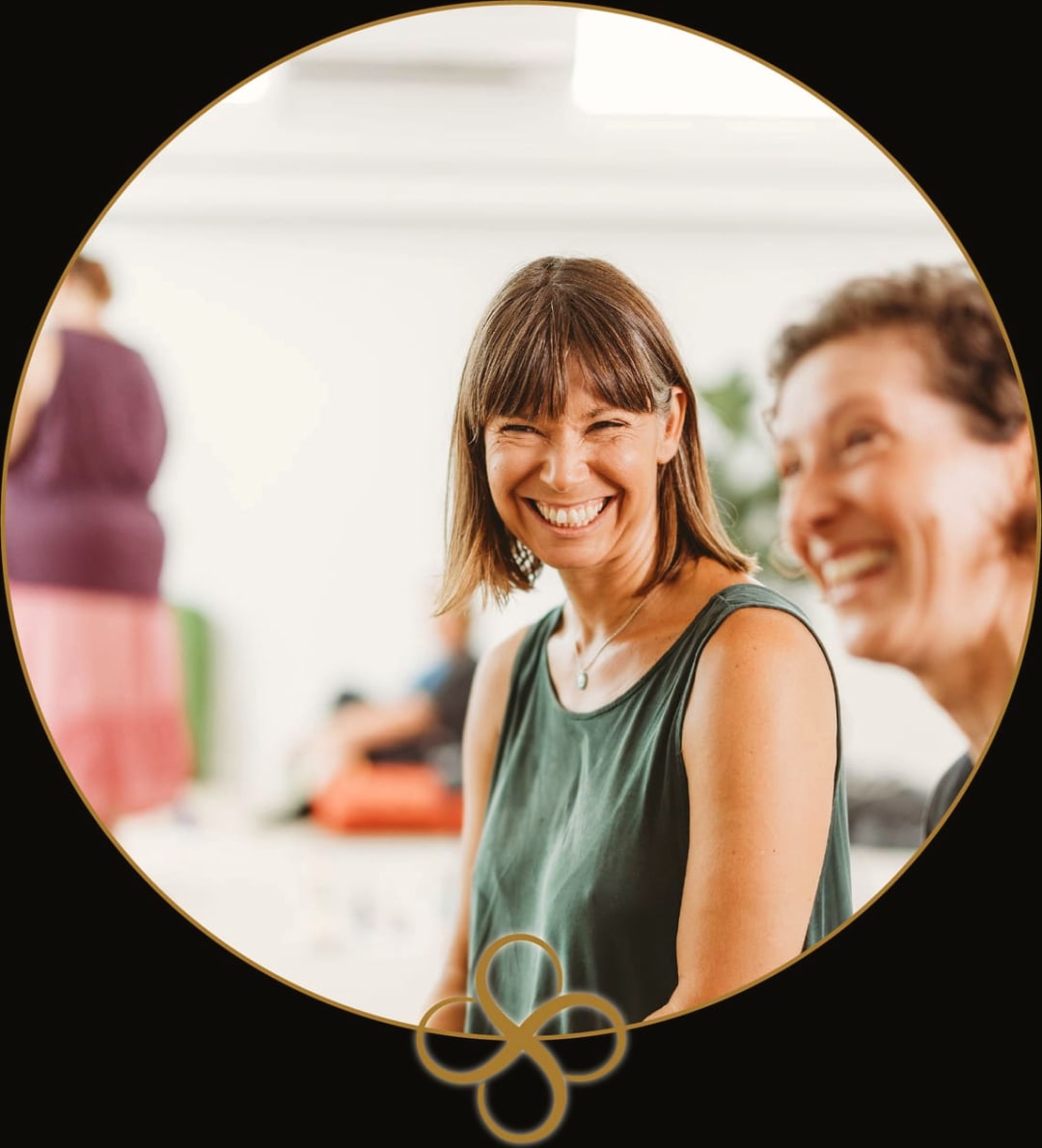
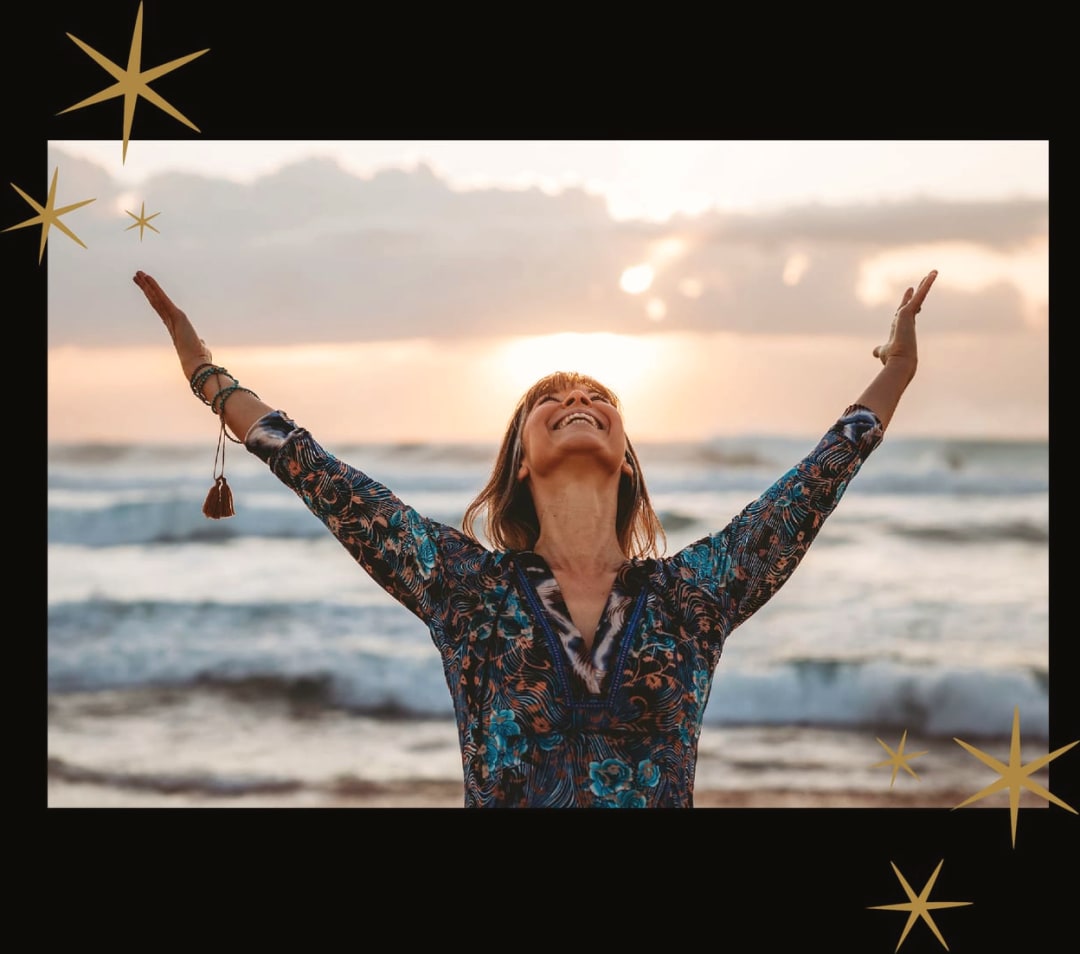

Nid Ra
Meditation Teacher
À propos
Nid is a meditation teacher and Soul Guide who offers yoga nidra, embodiment practices and personal guidance through Nid's Nidra, a small team based in Australia. She describes herself as playfully curious about the journey of life, delighting in sensory experiences and in the challenge of disciplining her mind to surrender to what she calls the magical dance of existence. She chose the name Nid before she turned two and refused to respond to anything else.
Nid is a meditation teacher and Soul Guide who offers yoga nidra, embodiment practices and personal guidance through Nid's Nidra, a small team based in Australia. She describes herself as playfully curious about the journey of life, delighting in sensory experiences and in the challenge of disciplining her mind to surrender to what she calls the magical dance of existence. She chose the name Nid before she turned two and refused to respond to anything else.
Her path into this work began in 2013, when an accident and brain injury ended her career as a media lawyer. She had to face the grief of an abruptly changed life and identity. As she healed, she also resolved her lifelong struggles with depression and anxiety, and rebuilt herself and her life by exploring a range of healing modalities. She names three things that kept her going: fully accepting her current state, finding purpose in each healing experience and sharing it with others, and trusting her vision of a happy, loving future.
Her teaching draws on qualifications in yoga, Pilates, fascia, dance, fitness, meditation, yoga nidra, breathwork, energy healing, Light Body, Law of Attraction and Akashic Records. Her aim is to make self-care a fun and easy part of daily life. Her work is organised around the Awakening Spiral, a way of understanding the cycles of growth, integration and unfolding that arise through life. Rather than trying to fix yourself, she suggests, you learn to recognise what is happening and respond with gentle loving-kindness.
Nid works through courses, community circles, live events and private sessions, and shares free guided meditations and yoga nidra practices through her app and YouTube channel. She has spoken about her recovery and healing on podcasts, and her YouTube channel was featured by Forks Over Knives among yoga channels. Her stated intention is to support a world living from the heart, embodied and deeply connected.
FAQ
Questions
Nid Ra is an Australian-based meditation teacher and yoga nidra facilitator who rebuilt her life and teaching career through healing practices after a transformative brain injury in 2013 ended her work as a media lawyer. What draws followers to her work is the integration of personal survival story with a rigorous, multi-disciplinary teaching approach—she's trained in yoga, Pilates, fascia work, breathwork, energy healing, Law of Attraction, and Akashic Records reading, all funneled toward making self-care accessible rather than aspirational. Her work operates around the Awakening Spiral, a framework for understanding life's natural cycles of growth and integration rather than "fixing" what's broken. She has built a dedicated audience through free guided meditations on YouTube and her app, with her channel receiving recognition from Forks Over Knives among notable yoga instructors. People care because Nid Ra models something rare: direct, lived expertise in recovery paired with the humility to teach it gently, without presenting herself as already-enlightened or transcendent.
Nid Ra's practice doesn't claim a single classical lineage but instead synthesizes multiple contemporary wellness traditions—yoga, yoga nidra (the systematic relaxation practice rooted in tantric yoga), somatic work (fascia, dance, embodiment), and modern energy work (Law of Attraction, Akashic Records, what she calls "Light Body" practice). The Awakening Spiral itself appears to be her own framework for integrating these modalities rather than inherited from a classical guru lineage, positioning her within the contemporary holistic healing movement that emphasizes accessibility and self-directed exploration. Her emphasis on gentle loving-kindness, the integration of what she calls the "magical dance of existence," and the focus on embodiment reflects broader nondual and somatic yoga trends of the 2010s-2020s, where the goal isn't transcendence but felt aliveness and emotional integration in real time. This pluralistic approach means she draws equally from clinical somatic psychology, energy healing traditions, and yogic philosophy without privileging one source as authoritative. She's not rooted in a traditional Hindu or Buddhist scripture-based path, but in the Western wellness ecosystem where practitioners synthesize from many sources and adapt them to lived context.
The most direct entry point is Nid Ra's YouTube channel (nidsnidra) or her dedicated app, both offering free guided meditations and yoga nidra sessions at no cost—an unusual generosity in the teaching world. Newcomers should begin with a guided yoga nidra practice (typically 20-45 minutes) rather than jumping into courses or private sessions; yoga nidra is designed as a total-body relaxation protocol, so even beginners experience measurable calm and body awareness in a single session. YouTube and the app also give a clear sense of her voice, pacing, the embodied quality of her facilitation, and her teaching aesthetic before committing financially to deeper work. If after a few free sessions someone resonates with her approach, the next step would be exploring her courses or community circles through nidsnidra.com, which deepen engagement with the Awakening Spiral framework and her teachings on healing, integration, and embodied practice. Her podcast appearances (where she's discussed her recovery from brain injury) offer another entry point for listeners interested in her personal story and how trauma shaped her teaching philosophy.
Unlike many yoga nidra teachers who position the practice primarily as stress-relief or sleep aid, Nid Ra frames yoga nidra and guided meditation as part of a larger healing curriculum rooted in the Awakening Spiral—a developmental model where each cycle of life brings natural periods of growth, integration, and unfolding. Her distinguishing edge is the integration of somatics, dance, and fascia work into what might otherwise be purely meditation-based teaching, reflecting a full-body, embodied philosophy rather than mind-only approaches. She uniquely centers her own recovery narrative—brain injury, depression, anxiety, identity loss—as not a liability but the foundation of her credibility, refusing the common spiritual teacher trope of presenting as already-transformed or enlightened. Her work explicitly aims to "make self-care a fun and easy part of daily life," which means she resists both toxic positivity and excessive seriousness; the humor and playfulness mentioned in her philosophy come through in teaching that feels less performative than many wellness educators. Her combination of qualifications—yoga alongside Pilates, dance, breathwork, and energy work—is broader than most yoga nidra specialists, allowing her to meet students across different embodied entry points.
Nid Ra's approach is not suited for seekers looking for classical Hindu or Buddhist theology, scripture study, or traditional guru-disciple lineage work; her framework is explicitly contemporary, pluralistic, and synthesis-based rather than devotional to a single tradition. Students seeking a more rigorous, academically-framed yoga philosophy (detailed study of the Yoga Sutras or Upanishads) will find her teaching oriented toward felt experience and embodied practice over intellectual study. Her work may not resonate with highly skeptical, scientifically-first practitioners uncomfortable with concepts like the Akashic Records, Law of Attraction, or energy healing—she names these explicitly as part of her toolkit, and they're woven throughout her teaching. Those looking for high-intensity, performative wellness content (intense breathwork, extreme asana, rapid-fire goal-setting) will find her pace and philosophy too gentle and integrative. Additionally, her teaching is primarily digital and online-based (app, YouTube, courses, private sessions); someone seeking frequent in-person, community-based studio yoga or regular retreats in specific geographic locations may not find the same level of accessibility.
Nid Ra's teaching voice is warm, intentional, and unhurried—marked by clarity and calm without saccharine sweetness or pseudo-mystical affectation. In her guided meditations and yoga nidra sessions, she uses simple, direct language, clear pacing, and absence of excess instrumentation, allowing her voice and simple soundscapes to carry the practice. Her approach reflects somatic intelligence: she frequently invites students into body awareness, sensation, and gentle movement rather than purely mental focus or visualization alone. What distinguishes her facilitation is the explicit framing of acceptance and gentle loving-kindness as the foundation—rather than "fixing" what feels broken, she teaches students to recognize what's happening internally and respond with compassion, a core principle of the Awakening Spiral. Sessions tend to be accessible to complete beginners while remaining substantive for experienced practitioners; there's no requirement to have a "quiet mind" or prior meditation experience, and she normalizes the mind's natural activity rather than presenting stillness as failure.
The Awakening Spiral is Nid Ra's own interpretive framework for understanding how growth, healing, and consciousness unfold through lived experience—a nonlinear model in which life moves through natural cycles of expansion, consolidation, and renewal rather than in straight-line "progress" toward a fixed destination. Rather than positioning healing as "fixing" what's wrong, the Awakening Spiral invites students to recognize the patterns and seasons already moving through their lives and respond with intention and gentleness. The framework draws implicitly from spiral and cyclical models found in somatic psychology, energy work, and nondual traditions, but Nid Ra adapts it to contemporary lived experience—honoring that growth is iterative, that integration takes time, and that each cycle contains its own wisdom. This is central to her work because it reframes her own brain injury, depression, and career loss not as aberrations to overcome but as part of her spiral's unfolding; she models how to live from acceptance and trust in a broader arc rather than from fear of what's "wrong." Students who engage with the Awakening Spiral across her courses and sessions learn to apply this lens to their own challenges, relationships, and life transitions, fundamentally shifting the relationship to difficulty from resistance into curiosity.
Nid Ra has not published books, but she has recorded extensive guided meditations and yoga nidra practices available on her YouTube channel and app—these are designed as standalone practices rather than traditional "talks," though many contain instructional elements woven into the guidance. She has also appeared on podcasts discussing her recovery from her 2013 brain injury and the healing journey that led to her current work; these podcast interviews serve as both personal narrative and implicit teaching on how trauma can become the foundation for embodied, relational teaching. Her YouTube channel functions as an archive of her voice, teaching style, and approach to meditation and guided practices, with Forks Over Knives having featured her channel among notable yoga teachers, indicating the visibility of her recorded content in mainstream wellness spaces. While she hasn't written a formal book or produced standalone lecture series, her courses (available through nidsnidra.com) likely include recorded sessions and written material specific to the Awakening Spiral framework and themes she emphasizes in community circles. For someone seeking independent study without real-time instruction, YouTube and her app offer the most direct access to her voice and methodology.
No prior meditation, yoga, or spiritual experience is required to engage with Nid Ra's work—her yoga nidra practices and guided meditations are explicitly designed as entry points for complete beginners. The practice itself doesn't require mastery of asana (yoga poses), breathing techniques, or conceptual understanding of spiritual philosophy, and Nid Ra normalizes the beginner's mind and the natural activity of thought during meditation. For her teaching around the Awakening Spiral, embodiment practices, and energy work, she meets students where they are—there's no prerequisite knowledge of Law of Attraction, Akashic Records, or chakra work, as these are introduced within the teaching context itself. Students who bring openness to somatic awareness (body feeling), comfort with concepts of energy or subtle experience, and willingness to explore healing modalities outside clinical psychology will find her teaching more immediately resonant. Her philosophy explicitly emphasizes acceptance of current state as the entry point; there's no pressure to "be further along" or to have prior accomplishment—starting exactly where you are is the foundation.
Nid Ra chose her own name before she turned two years old and refused to respond to anything else—a striking detail that signals her lifelong self-directedness and the centrality of authentic naming to her identity and philosophy. Her path into meditation teaching and yoga nidra facilitation began involuntarily in 2013 when a brain injury ended her career as a media lawyer, forcing her into abrupt identity loss and the grief that accompanies forced life change. Rather than viewing this rupture as tragedy alone, she reframed the crisis as an opportunity to heal lifelong struggles with depression and anxiety by exploring multiple healing modalities—yoga, energy work, breathwork, fascia work, and dance among them. Over the following years, she rebuilt herself through these practices and developed a teaching philosophy rooted in acceptance, gentle loving-kindness, and the recognition that healing is cyclical rather than linear (what became the Awakening Spiral). Her explicit intention to "share it with others" and "support a world living from the heart, embodied and deeply connected" emerged from the lived experience of her own recovery—she didn't come to teaching through traditional lineage or spiritual aspiration, but through survival and the desire to help others in similar struggle.


C’est vous ? Revendiquer cette page ›
There's more where this came from.
BrightStar is the global directory of artists, teachers, and healers in the wellness and spiritual movement. Find your next experience — or add yourself.
Discover More Artists
Browse 14,000+ curated profiles across kirtan, yoga, meditation, and beyond.
Explore directory →Find an Event Near You
Kirtan, retreats, sound baths, breathwork, ceremonies — happening this week.
Browse events →Add Your Profile
Are you an artist, teacher, or healer? Get listed — free, AI-assisted, live in minutes.
Get started →