Jakon Rate — Yarinacocha, Peru
Shipibo-owned plant medicine school and retreat center near Yarinacocha, Peru
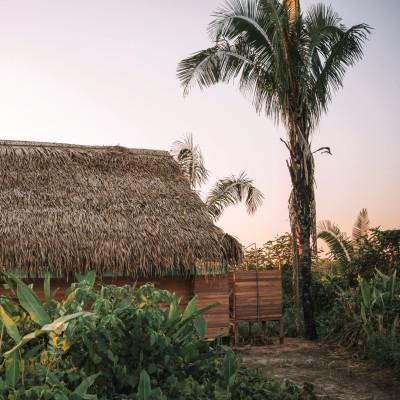
Jakon Rate is a Shipibo-Konibo plant medicine education center in the Peruvian Amazon, on the outskirts of Yarinacocha and Pucallpa in the Ucayali region. It is run by the Mahua family as a nonprofit association, Asociación Jakon Rate. Its pages describe it as a school of living knowledge, owned by a Shipibo family rather than by a foreign for-profit business, and it teaches plant medicine together with the culture the practice comes from. The name comes from the true name of the great-grandmother Manuela Mahua Ahuanari, who inspires and guides the work. Jakon Rate means 'A Life-Giving Good Surprise.' The center is rooted in the Mahua family lineage, guided by the teachings of Noya Rao, and grounded in the tradition of samá, which is commonly called dieta. The pages say it is sung that the Shipibo-Konibo ancestors began the practice 200,000 years ago, sitting in fasting meditation with a plant until a connection was made. Today the teaching is led by the maestras Yoxán Manuela Mahua and Yoxán Robertina Mahua. There are two paths of study. The Payanti and Cultural Immersion Program is the introduction. Payanti is the Shipibo-Konibo word for an initial process of cleansing and attunement. The program runs 10 days and 9 nights with four traditional plant medicine ceremonies, and Américo Mahua Campos teaches alongside the two maestras. It also includes art workshops and two nights of storytelling. Depending on the season, the workshops cover traditional ceramics, kene design with natural dye, embroidery, or traditional tools. Two Shipibo language classes cover background, daily language and singing language, and the workshop schedule includes one Pacha Nishi nature walk. The Samá Program is the deeper path, offered in two-, three- and four-week formats. It includes three ceremonies a week, a first week of pre-samá cleansing for new students, and one-to-one preparation and integration sessions. Beyond the ceremonies, the pages say, most of the time is spent in solitude in a private tambo, with the teacher plants and the forest. Students can diet Noyá Ráo (Palo Volador), Sémein (Bobinsana) or Kéne Wáste (Piri Piri Para Diseño). Mókapari (Chiricsanango) is available only by special request in the four-week program. The curriculum also covers Shipibo-Konibo language, the art of singing and 'opening the voice,' and energetic maintenance tools for life after the diet. The land is 26.5 hectares (65 acres), a raised peninsula of forest and farmland between the oxbow lakes of Cashibococha and Yarinacocha. It lies 8 km from Yarinacocha and Pucallpa, a 30 to 45 minute ride by van, truck or motokar, and transport from Pucallpa is provided. The family lives near the entrance. A deep well and a water tower with a 10-metre observation deck serve the land. Students stay in individual sámati xóbo, or tambos, set apart in the forest. Each has a leaf roof, hardwood floors and walls, mosquito screening, a composting toilet and an open-air bathing platform. The tambos have no electricity, so nights are lit by candle and headlamp, and the pages say plainly that the center is not a luxury stay. Groups are capped at 12 guests, a day guard and two night guards are on duty, and a facilitator is always on site. The center receives people new to plant medicine, those seeking cultural immersion, and returning students going deeper into samá. The pages state that the focus is on integration, continuity and daily practice rather than peak experiences. Learning is largely self-guided and is held by the grandmothers of the lineage. Occasionally the land also hosts private group retreats led by students of the two maestras.
Traditions: Shipibo-Konibo Plant Medicine, Samá (Masterplant Diet), Payanti, Noya Rao, Icaros, Kene Design, Vapor Baths, Floral Baths
Programs: Payanti & Cultural Immersion Program, Samá (Masterplant Diet) Program, Traditional Ceramics Workshops, Kene Design Workshop, Traditional Embroidery Workshop, Shipibo Language Classes, Storytelling Nights, Pacha Nishi Nature Walk (Payanti), Private Group Retreats
Amenities: Private Tambos, Open-Air Bathing Platform, Composting Toilets, Deep Well Water, Water Tower Observation Deck, Kitchen and Dining Area, Hammocks, On-Site Guards, Transport from Pucallpa