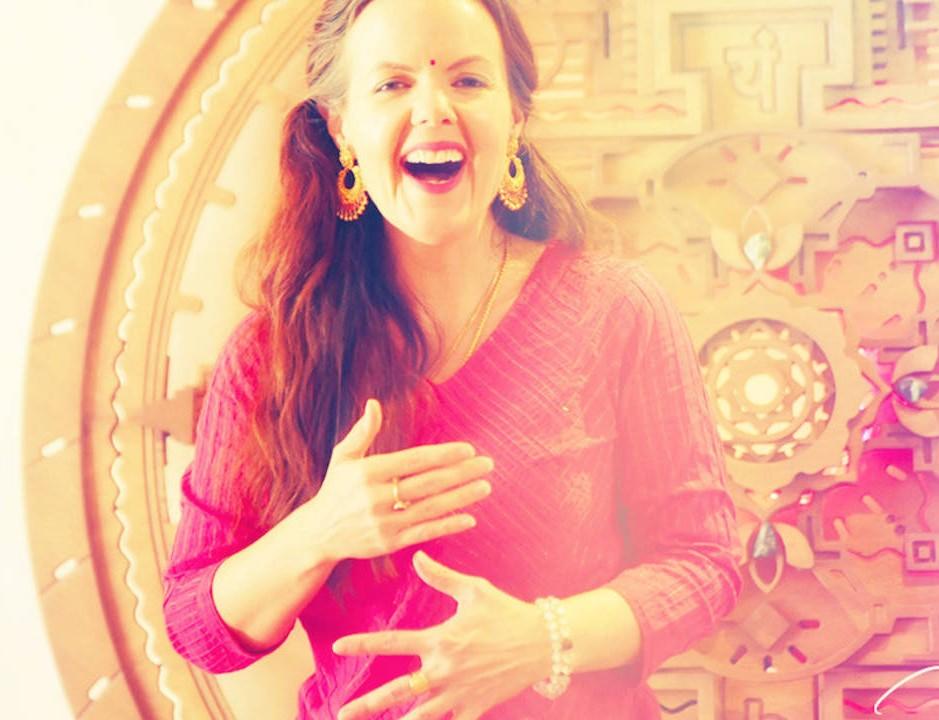

Anandra George occupies a distinctive space in contemporary sacred music, where the ancient call-and-response tradition of kirtan meets the spiritual hunger of Western seekers. As a kirtan artist and teacher, she has spent decades cultivating a practice that honors the depth of Indian devotional traditions while creating an accessible entry point for those unfamiliar with the language or cultural context. Her work represents more than performance—it's an invitation into a living practice of devotion, community, and transformation.
George's path into kirtan began not as a conversion or discovery, but as inheritance. Born into a family where music and spirituality were woven into daily life, she grew up surrounded by the sound of devotional singing. Her parents practiced chanting, and the household resonated with sacred songs that would become the foundation of her life's work. In this environment, kirtan wasn't an exotic practice to be studied—it was simply how one connected with the divine.
This early immersion gave George something rare: a childhood fluency in devotional expression. While many Western kirtan artists come to the practice as adults, having to learn both the musical forms and the spiritual context simultaneously, George absorbed these traditions organically. Her formative years included deep exploration of Indian classical music, providing her with technical mastery that would later inform her approach to leading kirtan. The discipline of classical training combined with the emotional openness of bhakti devotion created a unique musical sensibility—rigorous yet spontaneous, structured yet ecstatic.
Central to George's work is her grounding in the Bhakti tradition, the centuries-old path of devotional love within Hinduism. Bhakti emphasizes direct, personal relationship with the divine through practices like chanting, singing, and surrender. For practitioners, kirtan becomes not merely music but a form of prayer—a way of dissolving the boundaries between self and sacred.
George studied under a guru whose teachings emphasized authenticity and sincerity over technical perfection. This lineage connection profoundly shapes her approach to both performance and teaching. Rather than presenting kirtan as entertainment or even strictly as music, she frames it as a spiritual technology—a method for accessing states of consciousness that transcend ordinary experience. Her guru's influence is evident in her insistence that students find their own authentic voice rather than simply imitating forms, a teaching that honors both tradition and individual expression.
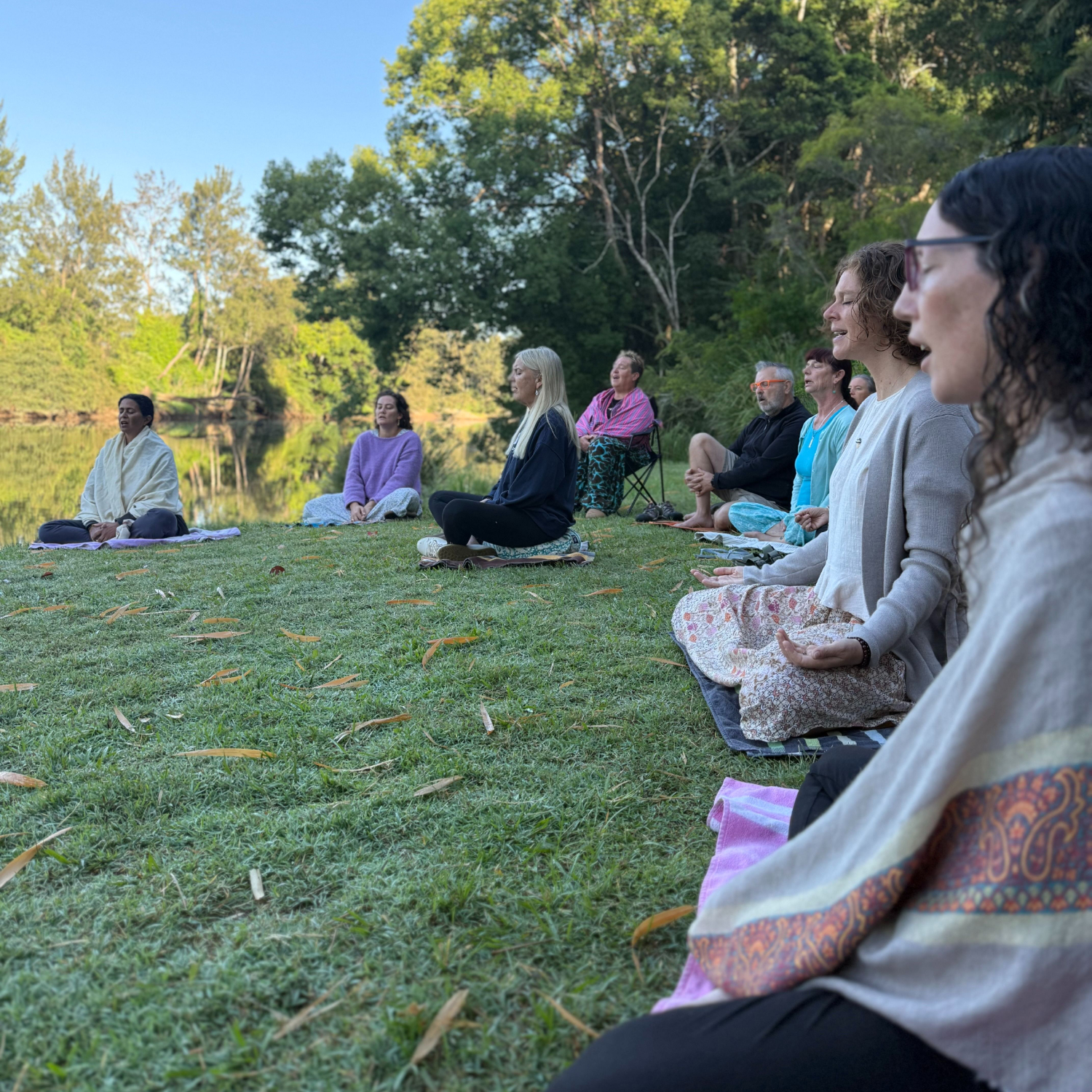
Beyond her identity as a performing artist, George has built a substantial teaching practice focused on deepening understanding of kirtan as spiritual discipline. Her workshops and retreats create containers where participants can experience kirtan not as spectators but as co-creators of sacred sound. These gatherings emphasize the communal dimension of the practice—the way individual voices merge into collective devotion, creating something larger than any single participant.
George's teacher trainings represent another facet of her legacy work, preparing a new generation to lead kirtan with integrity and depth. In an era where sacred practices can become commodified or superficialized, her emphasis on lineage, proper transmission, and spiritual foundations ensures that kirtan maintains its transformative potential. She teaches that leading kirtan requires more than musical skill—it demands an ongoing personal practice, understanding of the tradition's philosophical underpinnings, and genuine devotion.
What makes George's work culturally significant is her ability to serve as a bridge. For Western practitioners often disconnected from embodied spiritual traditions, kirtan offers a way back into devotional practice that doesn't require belief in particular doctrines. The mantras work on multiple levels simultaneously—as sound vibration, as poetry, as prayer, as community building.
George's soulful vocal quality and heartfelt delivery invite participation rather than performance. Audiences around the world have responded to this invitation, finding in her kirtans a rare space where cultural boundaries soften. The practice she offers requires no prior knowledge, no religious affiliation, no musical training—only willingness to open one's voice and heart.
Her reach extends across continents, testament to kirtan's growing presence in yoga studios, meditation centers, and spiritual communities throughout the West. Yet George's work maintains connection to its roots, honoring the Indian traditions from which kirtan emerges while acknowledging the universal human capacity for devotion.
In an age of spiritual eclecticism, where practices are often extracted from their contexts and repurposed, Anandra George represents something more integrated. Her childhood immersion, classical training, lineage connection, and decades of practice create a foundation that allows her to transmit kirtan with both authenticity and accessibility. She demonstrates that honoring tradition and welcoming newcomers need not be opposing impulses—that the ancient practices remain vital precisely because they continue to meet contemporary spiritual needs.
Through her music, teaching, and community building, George has become a guardian and transmitter of living tradition, ensuring that the transformative power of kirtan continues to resonate in new contexts and new hearts.