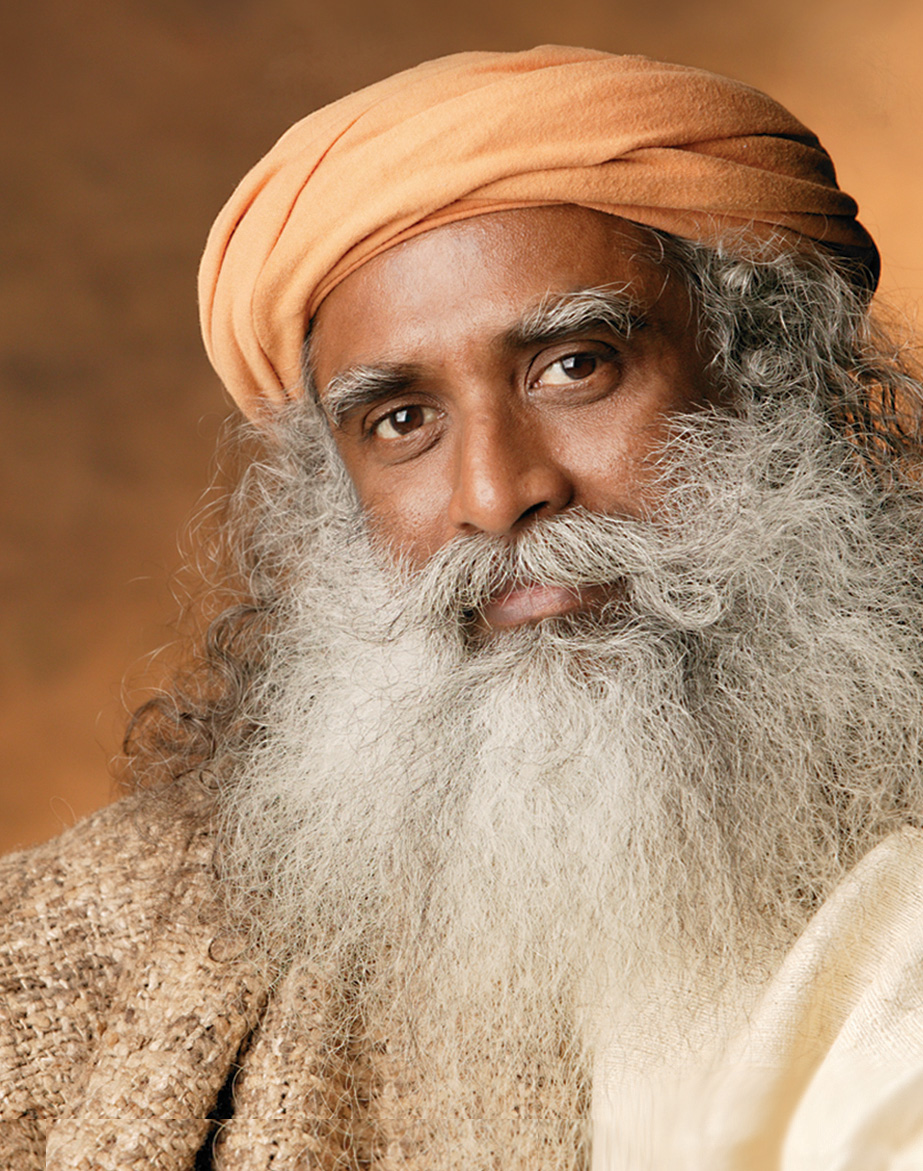
In a two-and-a-half-minute video, Sadhguru takes one of the Ramayana’s most dramatic turns and makes it a working rule for living among other people. The episode, as he tells it, arrives at the moment of victory: Rama has defeated Ravana in battle and slain him, and instead of celebrating, he announces that he wants to go to the Himalayas to repent for a great sin. The reason he gives is not a list of Ravana’s crimes but a distinction among Ravana’s heads. Nine of them, Rama says, carried greed, jealousy and lust. The tenth carried wisdom, knowledge, piety and devotion, and that is the one he regrets destroying. From this small story, Sadhguru draws a claim that reaches well beyond mythology: every person is a mixture of qualities, and the deepest error we make is to condemn the individual instead of the quality that troubles us.
The video moves quickly, and its power lies in the abruptness of the reversal. Rama is victorious, and then he asks for something no one around him expects. Sadhguru’s narration puts it plainly:
“Battle won, he says, ‘I want to go to Himalayas because I want to repent for the great sin that I have committed.’ The others were shocked.”
— Sadhguru, YouTube video published October 20, 2026 (0:15 and 0:24)
The reaction is immediate. Lakshmana, Rama’s brother, pushes back with the most obvious objection available: Ravana had kidnapped Rama’s wife. In the story as Sadhguru frames it, the shock comes from the gap between what everyone believes was justified and what Rama feels was wrong. That gap is the hinge of the entire teaching. If Rama’s regret were simply a general remorse about violence, the lesson would be familiar. Instead, the regret is specific, and specificity is what Sadhguru wants us to notice.
This is the central image of the video, and it repays slow reading. Rama does not regret killing a monster; he regrets killing a particular head. The explanation he gives, as Sadhguru relays it, is a sorting of qualities:
“In these other nine heads of his, he had greed, jealousy, lust, all kinds of things. But, there was one head which had great wisdom, knowledge, piety, devotion. I regret taking that head.”
— Sadhguru, YouTube video published October 20, 2026 (0:41 to 1:02)
Notice what the regret does and does not do. It does not pretend the other nine heads were harmless. Greed, jealousy and lust are named plainly and are not excused. But the act of destruction, in Rama’s telling, swept up everything that was in the same body, including the one part worth keeping. The tragedy of the victory is that the good was lost along with the bad because the good had no separate existence in the eyes of the battle. A single body was treated as a single enemy.
This is why the image of a ten-headed figure works so well as a teaching device. Heads are visible, separate and easy to point at. Sadhguru uses that visibility to make an invisible point: the qualities that define a person are arranged inside one life, and they do not come in neat packages labeled good and evil.
Sadhguru widens the image directly from the story to the listener. He is not describing Ravana alone; he is describing the human inner condition:
“What this is trying to tell you is all of you have 10 or more heads. But, everybody has head at least one head of love, beauty, generosity, compassion.”
— Sadhguru, YouTube video published October 20, 2026 (1:06 and 1:14)
Read this as an inventory rather than a flattering reassurance. Each of us, on this account, carries a crowd of qualities, some of them unflattering, and at least one of them worth honoring. The “10 or more” count is an image of abundance, not a literal claim, and the practical point is that no one you meet is reduced to a single trait. The person who irritates you at work probably has a head of generosity somewhere in them. The person who wronged you may carry a head of compassion you have never witnessed. Sadhguru’s argument is that our perception is usually too narrow to see those heads, and that narrowness is itself a choice we keep making.
The sharpest sentence in the video names the error directly:
“The biggest mistake you do in your life is that instead of identifying and condemning a quality, you condemn an individual person. This is what Rama is trying to say.”
— Sadhguru, YouTube video published October 20, 2026 (1:28 and 1:42)
The distinction between judging a quality and judging a person is subtle but consequential. Judging a quality is precise. If someone’s greed is hurting you, you can name greed, describe its effects, and set a boundary against it. The judgment has a target you can address. Condemning a person is different in kind. It is total, it closes the door on everything else the person might be, and it tends to harden into a verdict that no new behavior can overturn. Rama’s regret, in Sadhguru’s telling, is the regret of someone who condemned the whole when only a part was the problem.
There is also a practical consequence here that Sadhguru flags. A verdict on a person leaves you with nothing to work with, while a precise judgment about a quality leaves room for change, including your own.
This is the most striking claim in the video, and Sadhguru delivers it as an instruction rather than a theory. He asks the listener to look for the good in the person who seems terrible:
“Just see that one drop of sweetness because if you cannot recognize that it will not reflect in you. You better know that. Terrible things that you see in other people will reflect in you.”
— Sadhguru, YouTube video published October 20, 2026 (1:52 and 2:05)
The logic he offers is that what we dwell on in others becomes part of the way we see and act. The qualities we refuse to recognize in another person are the ones we are least able to recognize in ourselves, and the ones we fixate on tend to take up residence in our own attention. Sadhguru frames this as a reason to look carefully. If you can only see the poison in someone, that is what you will carry. If you can locate the one drop of sweetness, you give your own inner life something better to reflect.
The claim is worth testing against your own experience rather than accepting on authority. Think of a person you cannot stand. Notice what you think about when you think about them. Then ask whether that attention has made you more like the quality you resent, or less capable of seeing good in anyone else.
Sadhguru anticipates the obvious objection and answers it quickly:
“This does not mean you should become blind to everything. No. We see the leaf in the tree. We see the thorns in the rose bush. But we acknowledge the flower and the fruit.”
— Sadhguru, YouTube video published October 20, 2026 (2:09 and 2:15)
This is the discipline that keeps the teaching honest. Sadhguru is not asking for sentimentality or a refusal to see harm. The thorns are real, and a rose bush with thorns is still a rose bush with thorns. The point is proportion and completeness. A person who sees only thorns has mistaken a part for the whole, and a person who sees only flowers has made the same error in reverse. The task is to hold both: to acknowledge the thorn without letting it define the plant, and to honor the flower without pretending the thorn is absent.
The video does not walk through a method, but its logic suggests a few concrete steps. Treat these as one way to take the teaching into daily practice rather than as instructions Sadhguru gives in the clip:
- When someone provokes you, name the specific quality that troubles you before you name the person. “This is greed” is a different sentence from “this person is awful.”
- Before forming a verdict, look for at least one head of love, generosity or compassion in the same person. Even a small one counts, since Sadhguru describes the drop of sweetness as enough to matter.
- Notice where your attention goes after an encounter. What you keep replaying is, by Sadhguru’s account, what will reflect in you.
- Keep seeing the thorns. Acknowledging a fault clearly is part of the practice, not an exception to it.
These steps are simple to describe and hard to keep. Most of us have a habit of collapsing a whole person into the one behavior that hurt us, and that habit runs deep. Sadhguru’s point is that the habit is not only unfair to others; it shapes the person doing the judging.
The video is short, and it offers Sadhguru’s telling of the episode rather than a full walk through the Ramayana. That brevity is part of its value. The core idea fits in one sentence: condemn the quality that harms you, not the whole human being who carries it. If you want to go further, watch the clip on Sadhguru’s YouTube channel, titled “Why Rama Regretted Killing Ravana,” and then try the practice for a week. Each time you feel the urge to write someone off, pause and ask which head you are condemning, and whether there is another head in the same person that you have not yet seen.