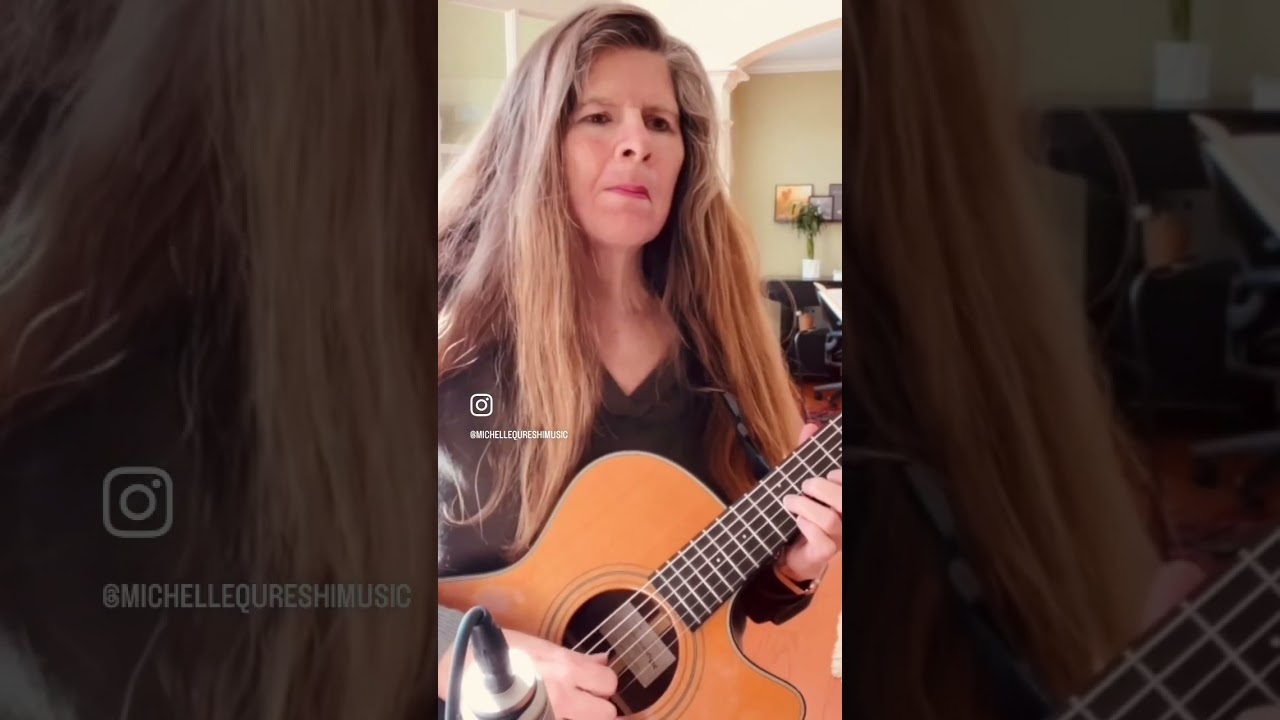
Michelle Qureshi's nine-minute piece "Shivasana," released in 2018 from the album Meditations, is built for the moment most yoga classes treat as an afterthought: the last few minutes, when the practice is over, the mat is still underneath you, and the body is supposed to let go of everything it just did. Qureshi's own description frames the track for the final resting pose of a yoga session, but it also says the music is meant for anyone who wants to slow down, find calm, and refresh. That double purpose is the interesting part. A piece of music that works both as the end of a class and as a standalone space for rest is making a claim about what stillness requires, and what sound can and cannot do to help it along.
Because no transcript accompanies the video, this article doesn't attribute spoken remarks to Qureshi or describe the track bar by bar. What follows draws on the release's title and description, and on the practice the piece was made to serve.
Shavasana, often spelled savasana, is the corpse pose. The name comes from the Sanskrit śava, meaning corpse, and in its basic form the practitioner lies flat on the back with the arms relaxed away from the body and the palms turned up. It looks like nothing is happening, which is precisely why it is hard. Most people come to a yoga class to move, to build strength, to sweat, or to stretch out a tight hip. Then the teacher asks them to stop, lie down, and do nothing for several minutes, and the restlessness that the practice was quietly managing comes straight to the surface.
That is the reason Shavasana usually closes a session. The postures before it have raised heart rate, moved breath around, and asked the nervous system to pay attention. Shavasana is where the body is invited to register those changes and settle into them. Teachers often describe it as the place where the work of the practice is integrated rather than performed. Anyone who has tried to skip it knows the difference: a class that ends abruptly leaves people sitting up quickly, reaching for their phones, and carrying the day's tension out the door.
Shavasana is also one of the few yoga moments that asks for no effort at all, which makes it harder than it sounds. The mind does not relax on command. It fidgets, plans, replays conversations, and checks whether it is doing this correctly. This is the gap that a well-made piece of music can fill, not by forcing relaxation but by giving the attention something gentle and continuous to rest on so it has less reason to keep busy.
The reasoning behind a track like Qureshi's is practical. Silence can be too exposed for a room full of people lying on mats. Some students hear every cough, every creak of a floor, every stray thought about dinner. A soft, unhurried sound establishes a field around the room. It tells people that the session is still holding them, even though nothing is being asked of them. In that sense, the music does a job similar to a teacher's voice during the final relaxation, but without words, which means there is nothing to follow and nothing to correct.
Music made for this purpose also has to avoid pulling attention forward. A piece that builds toward a climax, shifts suddenly in dynamics, or invites the listener to anticipate what comes next works against the goal. The intention of a resting-pose track is to be easy to lose yourself in. It should be present enough to notice and undemanding enough to let go of.
Qureshi's description makes the case in plain terms. It describes the piece as offering "a beautiful inner peace for any person wishing to slow down, find calm, and refresh." That sentence is worth reading slowly, because each verb names a different stage. To slow down is about tempo, the body's pace and the breath's pace. To find calm is about the emotional temperature of the room and the self inside it. To refresh is about what happens after the stillness, the sense of having been restored rather than merely paused. A track meant to do all three is asking more of its listener than background music ordinarily does.
The hashtags attached to the video point to a wider audience than yoga classes alone. They include terms for relaxation music, calm music, sleep meditation, deep sleeping music, guided sleep meditation, mindfulness meditation, and loving-kindness meditation, along with chakra meditation and beginner meditation. Read in sequence, they show how a resting-pose track travels. A person who unrolls a mat at home at the end of the day is doing something structurally similar to the last minutes of a class: lying still, letting the body know it is allowed to stop, and waiting for the mind to follow.
The overlap matters because it reveals something about how people actually use this kind of music. Many do not sit upright in a dedicated meditation posture. They lie down. They are tired, or they are trying to fall asleep, or they have just finished a physical practice and want a few quiet minutes without an agenda. Music that is designed to be heard in a reclining body, with eyes closed and no instructions to follow, serves all of those needs at once.
The chakra and loving-kindness references in the tags suggest a second layer of intention. Loving-kindness practice typically invites the practitioner to offer goodwill toward oneself and then toward others, and chakra-oriented meditation frames the body as a set of energetic centers that can be attended to in turn. Neither is necessary to enjoy a calm piece of music. But both are traditions that work through attention and softness rather than achievement, and a listener who arrives with either practice in mind may find that the music gives those intentions room.
The most useful approach is also the simplest. Lie down somewhere you will not be interrupted. Let the back of the body make contact with the floor or bed without correcting its position. Let the arms fall where they fall. Then give the track its full length, which for this piece runs a little over nine minutes, rather than checking the clock every thirty seconds.
Some practical notes follow from the intent of the piece:
- Use it at the end of a physical practice, when the body is warm and the breath has already slowed a little. The contrast is part of what makes Shavasana work.
- Keep the volume low enough that you can still hear the room around you if you need to, especially in a shared studio where a teacher may be moving between students.
- If the mind wanders, return to the sound rather than trying to empty the head. The goal is not blankness. It is letting attention rest on something that does not ask for a response.
- Treat the final minute as part of the rest. Many people sit up too quickly. Taking a few breaths before opening the eyes helps the restoration carry into the rest of the day.
- If you are using it to fall asleep, you may want to listen to the full piece and then let the silence after it take over, rather than starting something new.
None of this requires special knowledge of yoga or meditation. The piece was made for people who want to slow down, and the simplest way to honor that is to slow down with it.
Qureshi's album Meditations sits in a growing category of recorded music made for the body at rest rather than for the ear at attention. Its availability on the major music platforms and on Qureshi's official website, as her description notes, means the piece can travel from a yoga studio to a bedroom to a commute with headphones. That portability is part of its design. Resting-pose music is not meant to be a performance to be applauded. It is meant to be used, repeatedly, in the quiet places of a daily routine.
The video's modest view count at the time of this writing, 2,055, is a reminder that most work of this kind finds its audience slowly, through practitioners who return to it, teachers who play it in classes, and listeners who discover it while searching for a sleep track or a way to end a long day. There is no grand narrative in that trajectory, and perhaps there does not need to be. The record of a piece like this is measured less in headlines than in the number of people who have, at one point or another, lain still and let it hold them.
For anyone approaching Shavasana for the first time, or returning to it after years away, the lesson in Qureshi's framing is an honest one. The final resting pose is not a reward for a good practice or a pause before the real day begins. It is a practice in its own right, and one that asks almost nothing except willingness. Music made for that moment does not do the resting for you. What it can do is make the stillness feel less like a test and more like a place you are allowed to stay.
If this piece has you thinking about how sound shapes rest, the most direct next step is to listen to the full track and notice where your attention goes in the first minute, the middle, and the last. Then try it at the end of a yoga session, or in the hour before sleep, and compare. For more on the pose itself, look for instruction from a qualified teacher on how to support the lower back and neck with props, which is useful for many bodies. For the album and the wider body of work, the release is available through the platforms listed in the video description and through Michelle Qureshi's official website at michellequreshi.com.