BrightStar

Sfoglia tutti i Events

Scopri incontri consapevoli

events

Yoga
Meditation
Breathwork
Qigong
Tai Chi
Sacred Music
World Music
Medicine Music
Sound Healing
Ecstatic Dance
Destinazioni popolari
BaliSedonaLos AngelesCosta RicaNew YorkSan FranciscoAustinMiamiJoshua TreeTulum
Vedi tutte le categorieVedi tutte le destinazioni

Esplora tutte le funzionalità

Strumenti potenti per far crescere i tuoi eventi

Funzionalità della piattaforma

Prezzi dinamici intelligenti
Categorie di biglietti
Posti assegnati
Recupero carrelli abbandonati
Recupero visitatori
Donazioni e prezzi variabili
Sistema affiliati
Scanner biglietti
Codici sconto
Domande personalizzate
Condivisione biglietti
Upsell e componenti aggiuntivi
Analisi e report
Sequenze email
Lista d'attesa / Notifica / Promemoria
Persone e Luoghi
Artists & TeachersEvent OrganizersVenues & StudiosKnowledge BaseGlossaryInspiration
Vedi tutte le funzionalitàChi siamo
PrezziBlog
Language
Saved events
Sfoglia tutti gli eventi

events

YogaMeditationBreathworkQigongTai ChiSacred MusicWorld MusicMedicine Music

Destinazioni popolari

BaliSedonaLos AngelesCosta RicaNew YorkSan Francisco

Persone e Luoghi

Artists & TeachersEvent OrganizersVenues & StudiosKnowledge BaseGlossaryInspiration

Funzionalità della piattaforma

Prezzi dinamici intelligentiCategorie di bigliettiPosti assegnatiRecupero carrelli abbandonatiRecupero visitatoriDonazioni e prezzi variabiliSistema affiliatiScanner bigliettiCodici scontoDomande personalizzateCondivisione bigliettiUpsell e componenti aggiuntiviAnalisi e reportSequenze emailLista d'attesa / Notifica / Promemoria
Vedi tutte le funzionalitàChi siamo
PrezziBlog
AccediRicercatoriCreatori
  • Sfoglia tutti i Eventi
  • Per i ricercatori
  • Yoga
  • Meditazione
  • Breathwork
  • Qigong
  • Tai chi
  • Musica sacra
  • World music
  • Musica medicina
  • Sound healing
  • Danza estatica
  • Ritiri
  • Workshop
  • Tutte le categorie →
  • Bali
  • Sedona
  • Los Angeles
  • Costa Rica
  • Tulum
  • Byron Bay
  • San Francisco
  • Austin
  • New York
  • San Diego
  • Denver
  • Seattle
  • Portland
  • Miami
  • Tutte le città →
  • Join the Movement
  • Why we list
  • Sell Globally
  • Per i creatori
  • Per team
  • Per gli scrittori
  • Per gli insegnanti
  • Per gli artisti kirtan
  • Per gli studi
  • Per i festival
  • Per i centri ritiro
  • Per le no-profit
  • Ambasciatore del brand
  • Biglietteria gratuita
  • Elevate
  • Amplify
  • Rete di 500K+ acquirenti
  • Recupero carrelli abbandonati
  • Prezzi dinamici intelligenti
  • Categorie di biglietti
  • Eventi ricorrenti
  • Posti assegnati
  • Sistema affiliati
  • Lista d'attesa / Notifica
  • Scanner biglietti
  • Widget incorporabile
  • Distribuzione eventi
  • Centro messaggi
  • Integrazioni
  • Report
  • Tutte le funzionalità →
  • Chi siamo
  • L’ecosistema
  • Blog
  • Glossario
  • Ispirazione
  • Centro assistenza
  • Contatti
  • Documentazione API
  • Risorse del brand
  • Carriere
  • Stampa
  • Termini di servizio
  • Informativa sulla privacy

Eventi

  • Sfoglia tutti i Eventi
  • Per i ricercatori
  • Yoga
  • Meditazione
  • Breathwork
  • Qigong
  • Tai chi
  • Musica sacra
  • World music
  • Musica medicina
  • Sound healing
  • Danza estatica
  • Ritiri
  • Workshop
  • Tutte le categorie →

Destinazioni

  • Bali
  • Sedona
  • Los Angeles
  • Costa Rica
  • Tulum
  • Byron Bay
  • San Francisco
  • Austin
  • New York
  • San Diego
  • Denver
  • Seattle
  • Portland
  • Miami
  • Tutte le città →

Per i creatori

  • Join the Movement
  • Why we list
  • Sell Globally
  • Per i creatori
  • Per team
  • Per gli scrittori
  • Per gli insegnanti
  • Per gli artisti kirtan
  • Per gli studi
  • Per i festival
  • Per i centri ritiro
  • Per le no-profit
  • Ambasciatore del brand
  • Biglietteria gratuita
  • Elevate
  • Amplify

Funzionalità

  • Rete di 500K+ acquirenti
  • Recupero carrelli abbandonati
  • Prezzi dinamici intelligenti
  • Categorie di biglietti
  • Eventi ricorrenti
  • Posti assegnati
  • Sistema affiliati
  • Lista d'attesa / Notifica
  • Scanner biglietti
  • Widget incorporabile
  • Distribuzione eventi
  • Centro messaggi
  • Integrazioni
  • Report
  • Tutte le funzionalità →

Azienda

  • Chi siamo
  • L’ecosistema
  • Blog
  • Glossario
  • Ispirazione
  • Centro assistenza
  • Contatti
  • Documentazione API
  • Risorse del brand
  • Carriere
  • Stampa
  • Termini di servizio
  • Informativa sulla privacy
BrightStar
Scarica l'app
Scarica suApp StoreDisponibile suGoogle Play
© 2026 BrightStar. Tutti i diritti riservati.
Watch

Be Still and Know: Psalm 46:10 Meditation Practice Explained

Lou Redmond
Lou Redmond
Aug 2, 2021
8 min di lettura
Guarda · 8

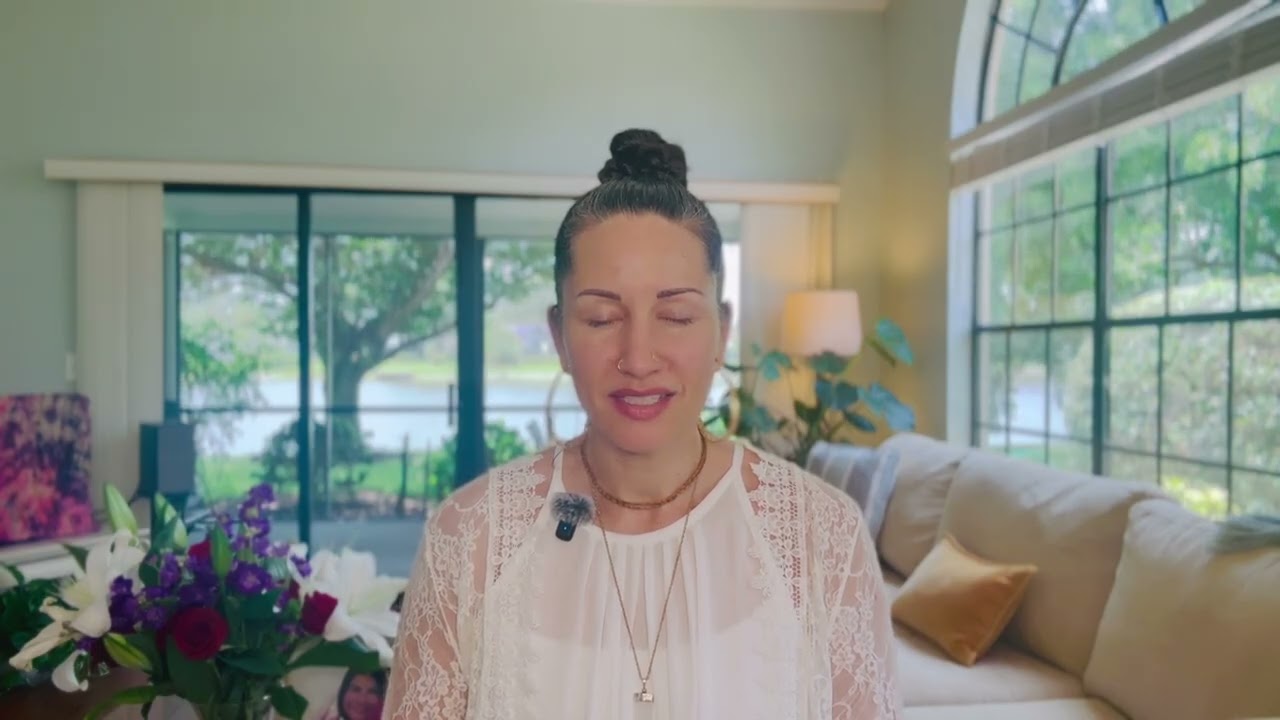
Lou Redmond's guided meditation "Be Still and Know That I Am God" runs just under sixteen minutes and is built on a single line from the Psalms. Instead of explaining the verse, she takes it apart. A phrase is spoken, then silently repeated, then stripped of one word at a time until nothing is left but the quiet underneath it. The method comes from centering prayer, a contemplative Christian practice Redmond says she has returned to in her mornings, and she adapts it into a session she offers to anyone who wants to set down anxiety and feel connected to something larger than their to-do list. The verse is her starting point, but the destination she names is stillness itself.

Lettura · 7 sezioni

What does the opening of this meditation sound like?

There is no music, no bell, no ambient pad. There is a woman's voice, unhurried, giving instructions in the first person plural. She opens by naming the verse and where it comes from for her: the Christianity she grew up with, which she is careful to say is "not my main practice" but is the tradition she brings into a meditative space. Then comes the body. Close your eyes. Feel the body settle. Relax the shoulders, soften the face, root down through the sit bones while finding "a gentle lift through your upper chest."

That physical setup is not decoration. Redmond is asking the listener to do something most spiritual audio skips: arrive. The posture she describes is upright and open at once, grounded and lifted, which is the same balance a good vocalist seeks before the first note. Nothing starts until the room inside you has been tuned.

Then she asks for a surrender. Name the anxieties, the stressors, the agenda and the list. Hand them over, she suggests, to God or your higher power or spirit, for the next ten minutes or so. She is candid about the limits of that gesture: "it's okay if it's not that easy." Most people do not drop their worries on command. The meditation makes room for the attempt rather than demanding success.

How does breath fit into a practice built on a verse?

Around the four-minute mark, the instruction turns to breath, and it carries one of the sharper ideas in the session. Redmond says that "stillness doesn't always mean quiet," and that it also means "balanced, poised." Breath is moving, she points out, yet it can still create a sense of stillness if you find its rhythm. She links that inner steadiness to alertness: when the body is still, you become more able to notice "the finer energies in and around us."

This is a useful correction for anyone who has tried meditation and decided they were bad at it because their mind would not quiet. Redmond is not asking you to stop the breath or the thoughts. She is asking you to find the stillness within motion, the way a steady pulse can sit inside a busy groove without the groove losing its shape. Only after the breath has settled does she move to the body itself, asking the listener to let "the heaviness sink in" and to resist the small urge to fidget or scratch. Those small urges are where the restless mind often hides, and the practice gives them nowhere to go.

Why strip the words away one by one?

This is the heart of the method, and it is worth understanding in detail. The session moves through the verse in a deliberate sequence, and each stage removes or reshapes a piece of it.

  • The full verse. "Be still and know that I am God," repeated silently, letting the words "land."
  • God. Only the last word is kept, repeated almost like a mantra, then released into silence.
  • I am. The phrase is shortened and repeated. Redmond ties it to the Exodus passage in which Moses asks God for a name and receives an answer she renders as "I am who I am."
  • Know. The verse is cut to "be still and know," then to "no," then to "knowingness," a word she offers as a possible way into the idea.
  • Still. "Still, still, still," until the word itself dissolves.
  • B. The final stage reduces the verse to a single letter, repeated, then let go.

The logic is subtractive. Every time a word falls away, the mind loses a handhold. There is less to grip, less to analyze, less to argue with. A verse that might be recited on autopilot becomes, by the fourth or fifth round, something you are actually hearing for the first time. Musicians will recognize the principle: take a phrase, play it, then strip out notes until the rhythm itself is the subject. The meaning does not disappear. It sinks below the level of the words.

Redmond is also careful about pacing. The instructions explicitly say the verse will be shortened "as we go along," so the listener is not left guessing when the next cut is coming. That structure gives the practice a shape, a clear arc from words toward wordlessness.

What is the meaning of "I am" in this meditation?

The "I am" stage is where Redmond draws the most explicit line between the psalm and a wider tradition. She connects the phrase to the moment in Exodus when Moses asks God for a name, and she offers the answer she has in mind: "I am who I am." She does not turn the meditation into a lecture on the passage. She simply lets the listener repeat "I am" and rest in what remains. The effect is to move the verse from a claim about God into a simple statement of presence, the one thing you can say without any preface.

This choice matters for listeners outside Christianity. Redmond frames her own background openly, and the practice does not require anyone to adopt it. Her instruction to "ask your higher power, asking spirit" to take the anxieties is deliberately broad. The invitation is to the experience of surrender and inner knowing, and the scripture is the container, not the requirement.

Why does the meditation end in silence?

Near the close, Redmond gathers the threads. The final stage is repeating a single letter, then letting go of even that, and resting "in the final stillness, the final silence." She passes along a line from one of her teachers: "the voice of God is silence." Whatever one believes about the nature of the divine, the statement gives the whole session its logic. If God speaks at all, the practice suggests, it does so in the gap after the words stop.

She then returns the listener to ordinary life with unromantic honesty. "I know that we have to do those to-do lists," she says, and that we "can't always be still all day." The goal she names is modest and achievable: to pause and find stillness within the day, not to escape it. That realism is what keeps the session credible. A practice that promised permanent calm would be easy to abandon. One that offers a few minutes of quiet, and a way back into them, can become a habit.

How can you try this practice yourself?

  • Choose a short verse or phrase that already feels meaningful to you. Redmond uses Psalm 46:10, but the structure works with any line you trust.
  • Sit with your eyes closed and settle the body first: root through the base, lengthen the spine, soften the face.
  • Name what you are carrying, then hand it over for a set period, knowing that letting go may not come easily.
  • Repeat the full phrase silently, letting each word land before the next.
  • Drop one word at a time, staying with each shorter version until it feels complete. Let the last word go and rest in the silence that follows.
  • When you come back to the room, open your eyes slowly and carry one small pause into the rest of your day.

The practice is simple enough to do in ten minutes before a difficult conversation or at the start of a workday. Its power is cumulative. Each round trains the mind to tolerate the space where a word used to be, and that tolerance is what Redmond is ultimately cultivating.

Where to go from here

If this meditation resonates, the best next step is to listen to the full session at least twice: once to follow the instructions, and once to notice how your attention behaves as each word falls away. Pay attention to the moments when you want to add the word back, because that impulse is part of the practice too. If you are drawn to the centering prayer roots Redmond describes, look into the contemplative Christian tradition it comes from, and read Psalm 46 in full rather than only the tenth verse. For a different angle on the same stillness, try a silent practice with a phrase from your own tradition, or simply sit for five minutes in the quiet at the end of this one. The verse is where Redmond starts. The silence is what she is inviting you to find.

Comments

Loading the conversation…

Transcript

[0:01] hello welcome my name is lou redman i am

[0:04] so grateful that you are here today we

[0:07] are going to be using

[0:09] psalm 46 verse 10 as the basis

[0:13] of our our practice and this is a verse

[0:16] that many of us

[0:17] know and i like to

[0:20] bring these verses from my tradition

[0:23] from my background of of christianity

[0:26] not saying that that's my main practice

[0:28] however it is

[0:29] where i grew up and so i like to to

[0:32] bring these

[0:33] into a meditative space

[0:36] and i love this verse for so many

[0:40] reasons and it's

[0:41] recently been inspired i've actually

[0:43] been coming back

[0:44] to my roots practicing the the morning

[0:47] practice of

[0:48] centering prayer and in centering prayer

[0:51] you begin

[0:53] your meditation with a

[0:56] verse or a prayer that feels true for

[0:59] you

[1:00] and for me it's been this verse based on

[1:04] the teacher that i learned this from

[1:05] cynthia bergeau

[1:07] the be still and know that i

[1:11] am god and what we do in the beginning

[1:14] of a centering prayer practice

[1:15] is i repeat that and i take away

[1:19] one word each time so be still and know

[1:23] that i am god

[1:24] be still and know that i am

[1:27] and while we're not going to be doing a

[1:29] centering prayer practice that's not

[1:31] what this

[1:32] is i will be using that concept of

[1:36] working through this verse slowly

[1:40] meditating on it allowing it to sink in

[1:44] and then slowly allowing the words to

[1:46] fall off

[1:47] until there is just stillness till there

[1:50] is

[1:51] just us resting in silence

[1:54] and so go ahead and allow

[1:58] yourself to root into your space

[2:01] closing down your eyes

[2:07] really feeling your body settle in

[2:13] relaxing your shoulders

[2:16] softening your face

[2:22] rooting down but also finding a gentle

[2:24] lift

[2:25] through your upper chest

[2:28] and lengthening through the sides of

[2:31] your neck

[2:36] and as you ground and open i'd like

[2:40] you to ask

[2:43] a surrendering of your thoughts and

[2:45] maybe

[2:46] that is asking god to

[2:49] take away the anxieties and the

[2:52] stressors that you might have

[2:54] right now that might be

[2:57] hindering you from finding that

[2:59] stillness

[3:03] the agenda that you have the to-do list

[3:08] and just for this practice asking god

[3:12] asking your higher power asking spirit

[3:16] to be free to just surrender these

[3:19] anxieties for now

[3:21] you will hold on to them god for this

[3:24] next

[3:25] 10 or so minutes

[3:36] and we're offering that intention but

[3:38] also knowing that it's okay if

[3:40] it's not that easy not that easy to just

[3:43] surrender

[3:44] our stresses

[3:55] so as we set that intention beginning to

[3:58] come into your breath now

[4:05] feeling as the breath moves in that

[4:07] gentle rise

[4:12] and as the breath moves out

[4:15] a rooting and relaxing of the body

[4:24] stillness doesn't always mean quiet

[4:29] and also means balanced poised

[4:35] and so find the rhythm and in that

[4:38] rhythm the stillness of your breath

[4:41] even though it's moving

[4:46] can you sense the stillness that it

[4:55] creates

[5:02] and as you do this it heightens the

[5:04] ability to be alert

[5:07] and aware of the finer energies in and

[5:10] around us

[5:24] then allow the stillness of the breath

[5:26] to move into stillness of your body

[5:32] really letting the heaviness sink in

[5:36] resisting the urge to fidget or to

[5:39] scratch

[5:45] creating that bodily stillness do open

[5:47] yourself

[5:48] to receive and to connect

[6:06] easing any tension that you might feel

[6:19] and then take a gentle breath in with me

[6:25] and a gentle breath out

[6:32] i'm now going to begin the first

[6:36] repeating of this verse and so i'd like

[6:40] you to

[6:41] repeat it silently to yourself right

[6:43] after i do

[6:46] allowing the words to fall and then

[6:49] seeing

[6:50] how they land as you repeat them to

[6:52] yourself

[6:58] be still

[7:01] and know that i am god

[7:15] be still

[7:18] and know that i am

[7:29] god

[7:34] and now just stay in your stillness and

[7:37] i'd like you to repeat

[7:39] the last word so repeating god almost

[7:42] like it's a mantra here for a minute

[7:44] god god god

[7:50] silently to yourself

[8:11] let go of the word god

[8:16] and just rest in that silence and that

[8:19] stillness for another moment

[8:41] we'll continue shortening this verse

[8:44] as we go along

[8:48] so again repeating this silently to

[8:53] yourself

[8:55] be still and know

[8:59] that i am

[9:08] be still

[9:12] and know that i

[9:21] am

[9:26] and you can take this i am as

[9:29] correlating to

[9:31] when moses asked god for his name

[9:35] and he replied aya

[9:38] asher aya

[9:42] i am who i am

[9:48] so just repeating those last two words

[9:52] i am i am

[9:57] i am

[10:17] and then letting go of the words

[10:22] and resting again in that stillness

[10:47] and then moving on

[10:52] be still and know

[11:03] be still and

[11:06] no

[11:12] and then just repeating no

[11:17] no no

[11:25] maybe it's knowingness knowingness

[11:39] and then letting go of the word and

[11:40] resting in the

[11:42] silence and the stillness

[12:10] be still

[12:18] be still

[12:26] and then repeating still

[12:32] still still

[12:56] letting go of the word and resting in

[13:00] the stillness

[13:25] and then finally

[13:29] b b

[13:35] b repeating that

[13:52] and then letting that go and resting

[13:55] in the final stillness the final silence

[14:01] as one of my teachers would say

[14:05] the voice of god

[14:09] is silence

[14:44] and then slowly

[14:50] when you feel ready starting to come

[14:52] back to your body

[14:58] come back to this day

[15:04] and go ahead and open your eyes

[15:13] i know that we have to do those

[15:16] to-do lists and we can't always be still

[15:18] all day and we have the anxieties and

[15:20] the stressors of just being

[15:22] a human being in the world so i hope

[15:25] that

[15:26] this helps you even admits the chaos

[15:28] that is going around

[15:30] for you to see if you can pause and find

[15:34] that stillness within your day and

[15:37] within yourself

[15:38] and so i wish you so much love amen

[15:41] and as always namaste

Lou Redmond
ArtistLou Redmond

Lou Redmond is a transformation coach, inspirational speaker, author and meditation guide whose meditations have been heard over 2 million times and whose courses have enrolled ove…

Vedi il profiloSito web
Esplora i temi
Psalm-46-10Centering-prayerGuided-meditationSilent-repetitionStillness

Hai domande?

Domande frequenti

It is a guided meditation by Lou Redmond built on Psalm 46:10, in which the verse is repeated silently and shortened word by word until only silence remains. Redmond describes the session as an invitation to surrender stress and anxiety and to connect with one's inner knowing. It runs about sixteen minutes.
Redmond says she has returned to the morning practice of centering prayer, where you begin with a verse or prayer that feels true and repeat it while removing one word at a time. She adapts that method into her guided session rather than presenting it as a strict centering prayer sit. The subtraction of words is the core idea she borrows.
No. Redmond openly says Christianity is the tradition she grew up in and not her only practice, and she invites listeners to ask their higher power or spirit to take their anxieties. The structure of settling, breathing, and repeating a phrase can work with a line from any tradition.
Removing a word at a time gives the mind fewer things to grip, so a familiar verse that might be recited on autopilot can be experienced more freshly. By the later rounds the focus shifts from the meaning of the words to the stillness underneath them. Redmond moves from the full verse down to a single repeated letter before releasing it into silence.
In the video, Redmond connects the phrase 'I am' to the Exodus passage where Moses asks God for a name, and she offers the answer 'I am who I am.' She uses the phrase as a simple statement of presence for the listener to rest in, rather than a doctrinal claim.
Redmond explains that stillness does not always mean quiet; it can mean balance and poise even while the breath moves. Find the rhythm of the breath and notice the stillness within it. She also suggests letting the body's heaviness sink in and resisting the urge to fidget.
The video itself runs about sixteen minutes, with the core repetition section taking up most of that time. Redmond frames the aim realistically as pausing to find stillness within a busy day rather than escaping it. Shorter, regular sessions can be a practical way to build the habit.

Continua a leggere

More from Lou

Vedi Tutto
How Meditation Teachers Grow on Insight Timer in 2026
Inspire

How Meditation Teachers Grow on Insight Timer in 2026

Lou Redmond breaks down what still works on Insight Timer in 2026: tracking revenue, defining content pillars, serving anxiety and sleep see…

1 min read
Growing on Insight Timer in 2025: Lessons from a Veteran Teacher
Inspire

Growing on Insight Timer in 2025: Lessons from a Veteran Teacher

Meditation teacher Lou Redmond breaks down how to grow on Insight Timer after the 2024 pay change, from publishing for the long term to valu…

1 min read
Yoga Nidra for Wholeness: Sankalpa and Body Scan Guide
Inspire

Yoga Nidra for Wholeness: Sankalpa and Body Scan Guide

A 35-minute guided Yoga Nidra rest that moves from breath to sankalpa to a full body scan and back to waking. Here is how its structure work…

1 min read
What You Know for Sure: Consciousness Aware of Itself
Inspire

What You Know for Sure: Consciousness Aware of Itself

Tolle answers Oprah's closing question with one certainty: you are conscious. Here is why noticing that awareness halts thought, and the sma…

1 min read

Continua a esplorare

Continua il tuo viaggio

Altra saggezza e altri incontri da tutta la directory BrightStar.

Altri articoli

Sfoglia l’intera raccolta di insegnamenti, interviste e guide.

Torna a tutti gli articoli →

Insegnanti e artisti

Esplora i lignaggi, i musicisti e le guide del mondo consapevole.

Esplora gli artisti →

Trova un evento

Kirtan, ritiri, sound bath, breathwork, festival: in arrivo presto.

Sfoglia gli eventi →