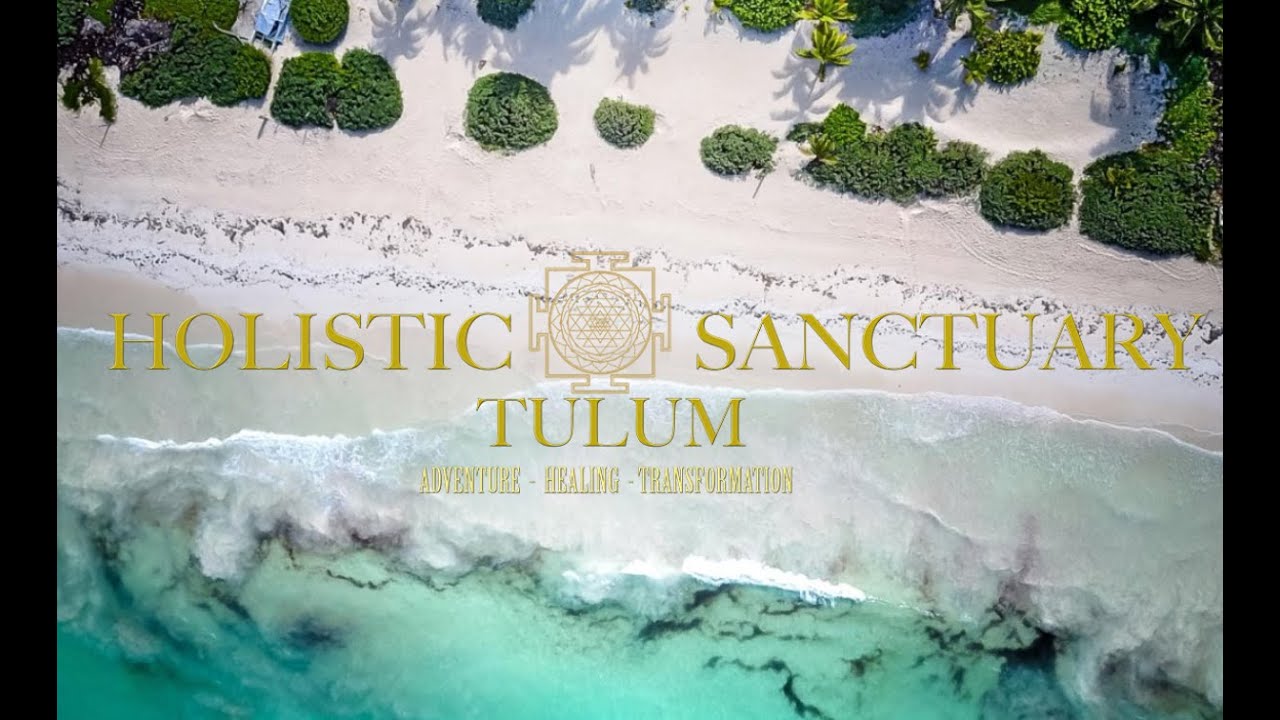
The ocean view from your suite is unblemished—turquoise meeting horizon. Inside, the setting carries none of the austere, clinical hum of conventional rehab. This is Sanctuary Tulum, positioned as the intersection where cutting-edge healing technology meets the oldest sacred medicines: a facility that holds space for ibogaine, ayahuasca, 5-MeO-DMT, and psilocybin within a framework of oceanfront luxury and what it describes as "advanced biohacking technologies." It's a model worth examining, not because it's new, but because it represents how plant medicine work is being reimagined in the twenty-first century.
What draws people to plant medicine healing?
For decades, plant medicine therapies existed in the margins—either in indigenous contexts in the Amazon and beyond, or in underground therapeutic circles operating beyond legal frameworks. The last ten years have shifted that landscape. Scientific research into psilocybin-assisted therapy and other entheogenic compounds has gained mainstream legitimacy. Ayahuasca retreats have proliferated. Ibogaine, a naturally occurring alkaloid from the iboga plant, has shown marked potential in addiction treatment protocols. And 5-MeO-DMT, one of nature's most potent psychedelics, has entered the conversation about consciousness and neuroplasticity.
What these substances share is a capacity to induce profound psychological and neurological shifts—often within a single session or a short retreat format. For people struggling with treatment-resistant depression, PTSD, addiction, or existential disconnection, the promise is real. The research backs aspects of it. But the terrain is delicate: these are powerful tools, and their administration requires not just pharmacological knowledge, but psychological sophistication, emotional attunement, and a container that can hold whatever emerges.
Why luxury matters in the healing equation
Sanctuary Tulum's positioning suggests an answer to that container question: by pairing these therapies with oceanfront bespoke accommodations and what it calls "world-class care," the facility argues that *where* and *how* you heal shapes the depth of the work. This isn't frivolous. The nervous system doesn't distinguish between luxury and austerity on an abstract level, but it *does* register safety, beauty, comfort, and whether it's being asked to process trauma while also managing basic environmental stress.
An oceanfront setting removes one layer of friction. Bespoke accommodations—private suites designed for individual needs rather than dormitory-style arrangements—honor the vulnerability that plant medicine work requires. Someone processing the unbinding of their sense of self doesn't need to do it while worrying about noise from the next bed. These choices reflect an understanding that healing isn't only neurochemical; it's environmental.
The technology layer
Sanctuary Tulum describes its approach as including "advanced biohacking technologies" alongside sacred medicines. The term "biohacking" itself has become a catch-all in wellness, sometimes meaningful and sometimes marketing. In the context of plant medicine work, it likely gestures toward technologies that optimize the body's capacity to integrate and respond to the therapy—possibly breathwork technology, neurofeedback, hyperbaric oxygen therapy, or other biometric optimization. The specifics matter less here than the principle: the facility positions itself as not choosing *between* ancient wisdom and modern science, but synthesizing them.
Licensing and safety in an emerging field
Sanctuary Tulum emphasizes its "fully licensed holistic approach," a claim worth noting carefully. The legal and regulatory status of these medicines varies radically by jurisdiction. In Mexico, where Tulum is located, some plant medicines operate in regulatory gray zones or exist outside conventional pharmaceutical licensing. The word "licensed" here likely refers to the facility's operational license as a wellness center and its practitioners' qualifications, rather than to regulatory approval of the substances themselves—which wouldn't exist for most of these compounds in conventional pharmaceutical terms.
This distinction matters. It means that people considering such a facility should understand they're entering a space informed by holistic and therapeutic frameworks, not FDA-regulated clinical trials. That's not inherently a criticism—clinical trials are their own context—but it's essential information. The facility's emphasis on "unparalleled safety" is a claim that deserves scrutiny: what specific safety protocols are in place? What medical monitoring happens? What is the psychological screening process? What is the crisis intervention capability? These are the questions that actually determine safety.
The retreat model and integration
One of the real limits of retreat-based plant medicine work—and this applies whether the retreat is luxurious or not—is time. Most transformative work with these substances isn't completed in the ceremony itself; it unfolds in the weeks and months after, as the nervous system integrates what was activated and revealed. A retreat can open a door, but integration requires sustained work: therapy, community, practice, time.
Sanctuary Tulum positions itself as offering "a sanctuary unlike any other," and if that sanctuary includes not just the retreat week but a framework for ongoing integration—whether that's recommended therapists, online community, follow-up protocols, or other continuity—that would distinguish it meaningfully. The description provided focuses on the retreat experience itself: the oceanfront setting, the medicines, the comfort level. The integration architecture isn't detailed, but it's often the invisible skeleton of whether a retreat creates lasting change or a powerful memory.
Who chooses this path, and why now?
The people who find their way to places like Sanctuary Tulum tend to be those who've exhausted conventional options or who are seeking something that conventional medicine doesn't address. Someone with severe depression who's tried multiple SSRIs. Someone with PTSD who's done years of talk therapy. Someone with addiction who's seeking something beyond the twelve-step model. Someone asking existential questions that no therapist trained in cognitive-behavioral frameworks can answer.
The luxury framing suggests another demographic layer: this is expensive. Private oceanfront accommodations, world-class care, therapies like ibogaine which require medical monitoring—these don't come cheap. So Sanctuary Tulum is also reaching people with financial means who are willing to invest substantially in their healing, often because they can afford to, but also because they've come to see their transformation as worth the cost.
The larger conversation
What Sanctuary Tulum represents, in miniature, is a broader cultural reckoning with plant medicines. For too long, these substances were confined either to criminalized underground spaces or to indigenous contexts that Western seekers would parachute into, often with inadequate preparation or respect. Now, there's a third space emerging: professionally designed, legally navigable (where possible), informed by both traditional wisdom and modern psychology, and increasingly, informed by research.
That third space is still experimental. It's still working out its ethics, its protocols, its genuine limits. The question isn't whether such facilities are inherently good or bad; it's whether a specific facility has thought carefully about safety, integration, the complexity of the work, the vulnerability of the people arriving, and whether the luxury trappings serve the healing or distract from it.
Where to go from here
If you're considering a plant medicine retreat, luxury or otherwise, the questions to ask are: What is the screening process, and does it actually exclude people for whom these medicines might be contraindicated? What is the medical monitoring during ceremonies? Who is facilitating, and what is their training and experience? What is the integration protocol—how is the work held after you leave? Are there therapists available for processing? Is there community or continuity? And perhaps most importantly: Is this facility honest about what it doesn't know, and humble about the limits of what even the best container can guarantee?
Sanctuary Tulum's emphasis on luxury and innovation reflects a real understanding that the environment and quality of care matter. Whether that translates into sustained, integrated healing depends on everything beneath the oceanfront view.