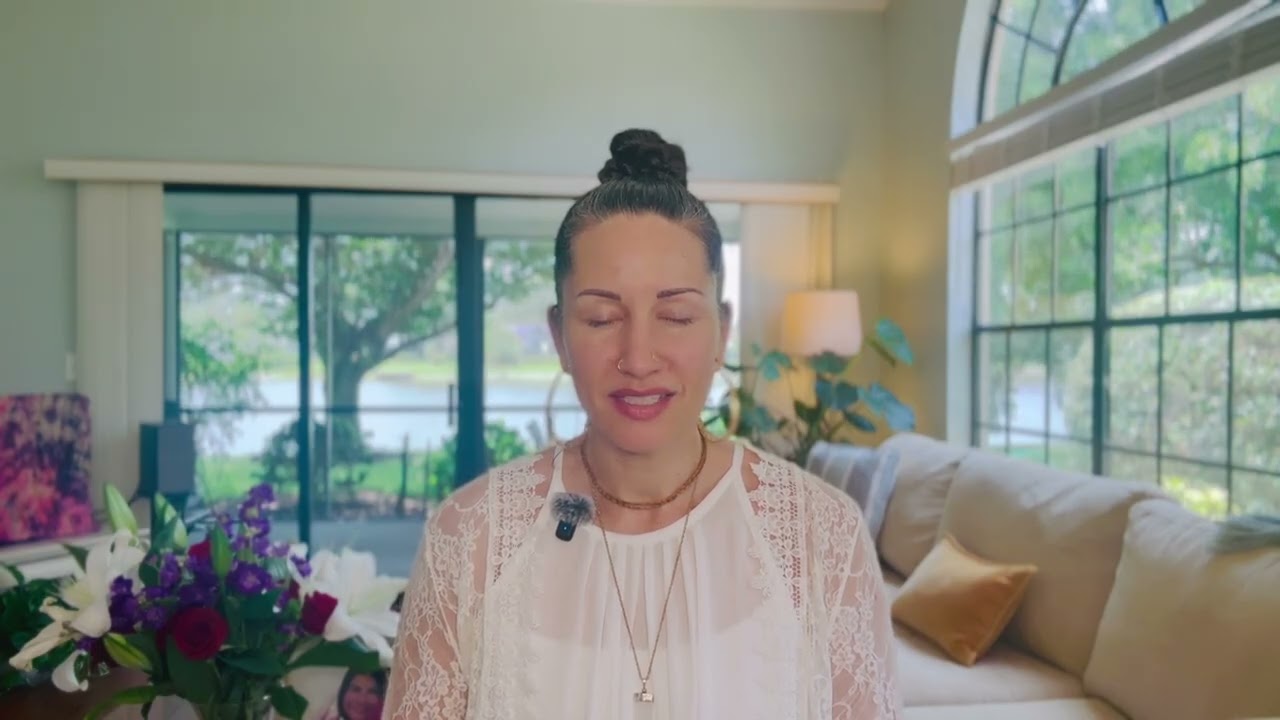
A little under forty minutes into a guided practice, the listener is asked to do something most meditation teachers never request: with eyes closed, decide whether a color you are picturing looks clear or mucky. That single instruction is the spine of Carrie Suwal's Chakra Balancing Meditation, a recording published on her channel in May 2020. Moving through the seven main chakras with tuning forks, color visualization and light work that the video's own description places within reiki, visualization and sound healing, Suwal treats each energy center as a place to listen rather than a problem to correct. The session rests on one claim: the way a color shows up in your imagination is itself information about where you are out of alignment. What follows explains how the practice is built, what the first four chakras are asked to carry, and how to use the session without taking its claims on faith.
The voice is calm and unhurried. It opens with a welcome, names the chakras as "energy vortexes within our body that help bring us into a space of alignment," and promises that the sound of the tuning forks will "penetrate into your body and being" to remove what is no longer needed. The instructions are practical: find a comfortable seated or lying position, and shift as often as you need to. Nothing is demanded of your posture or your breath beyond a few slow inhales and exhales.
Then comes the first image, and it sets the emotional register for everything after it. Suwal asks you to tune in to a shower of white light pouring from the sky or the universe, through the crown of the head, down the face, neck, torso, arms and legs, and out through the feet into the earth. The light, she explains, is "purifying any heaviness" you are carrying and gathering up energies that do not support your highest good. The earth then does the work of recycling them.
"The earth has this lovely energy of renewal where it's able to compost any stagnant or negative vibrations that were sending to it and transform it back into a space of love and light."
— Carrie Suwal, Chakra Balancing Meditation (3:07)
That composting image is worth pausing on. Most energy-work instructions ask you to push something out. Suwal asks you to let it sink, and to trust that the ground can transform what you hand it. The same logic returns in the practice's closing moves, where the aim is less about expelling and more about allowing.
The diagnostic idea arrives early, and it shapes how the rest of the session should be heard. Suwal says:
"If you notice that some colors are harder to visualize or seem mucky or distorted it's a good indicator that that chakra is out of alignment, and by the end of this meditation you'll find that those colors are more clear more easy to visualize and connect with as the chakras have been balancing and healing throughout."
— Carrie Suwal, Chakra Balancing Meditation (0:49)
This is the practice's most distinctive move. Each chakra is paired with a color, and the listener is invited to treat the quality of that color as a readout. A vivid red or a clean orange signals one thing; a murky, shifting, hard-to-hold color signals another. Suwal repeatedly insists on the qualifier "without judgment" when describing this. You are not failing the meditation if a color won't stay put. You are noticing the state of the center, and the session is designed so that by the end, the same colors should feel easier to see. Whether one accepts the energetic premise or not, the instruction does something useful: it converts a vague sense of being "off" into a specific, repeatable question you can return to.
The journey moves downward from the crown through the legs, releasing tension from the calves, knees, thighs and hips until the pelvis "melts into the earth." At the base of the pelvis Suwal names the root chakra, muladhara, and its color, a vibrant red. Here the practice gets concrete about what this center governs: connection to the outer world, to environment, to family and work, and to money and finances. It is, in her framing, where you feel "safe," "secure" and "grounded."
Her definition of grounding is worth remembering because it is more precise than the word usually allows. "To be grounded means to be present," she says, meaning that body, mind, heart and spirit are all in the same moment. She connects this directly to restlessness: if your mind is always drifting into the future or the past, she suggests, working with this center will help.
"Your body is your temple it is your home and true safety true security is always here within you as well as Mother Earth."
— Carrie Suwal, Chakra Balancing Meditation (6:58)
The root chakra is also where action begins. Suwal describes it as the place "where we take action in life as we place one foot in front of the other." If you feel stuck, the instruction is to let this center guide you toward some concrete step. That makes the root chakra less a soothing stop and more a practical one, which is a useful lens for anyone who finds meditation drifting into pure feeling.
Moving upward into the lower belly, the practice reaches the sacral chakra, which Suwal calls swadisthana and pairs with orange. Here she names a set of emotional patterns that tend to settle in this area: "fears of not being accepted," fears about whether you are good enough, fears of "going out into life as we truly are." Judgment, both the judgment we hold toward others and the judgment we sense from them, is also housed here.
The counterweight she offers is acceptance, and it is the most quotable idea in the first half of the session:
"The beautiful counter energy to that judgment and fear is acceptance, accepting yourself as you are and accepting your world as it unfolds."
— Carrie Suwal, Chakra Balancing Meditation (11:58)
The sacral center is also described as the home of the inner child, of playfulness and creativity. Suwal asks whether you have let that part of you express itself through writing, painting, music or projects, or whether you have been resisting. She also ties this center to sexual energy and to the expression of what she calls the divine feminine and masculine, and notes that any history of sexual trauma may be held here. The guidance is gentle: step into your sensual self with acceptance, and let the orange light burn through blockages.
The solar plexus center, which Suwal pairs with a bright yellow, is framed around self-love and personal power. The questions she poses are pointed. Are you tending to your own care? Are you constantly giving outward, always doing and thinking and never honoring your own need for breaks? She ties the center to practical self-respect: listening to the body's needs, whether that means exercise, a healthy diet, meditation or a bath, and asking whether you have been "truly kind and compassionate" with yourself.
The sequence is intentional. The root asks whether you are safe and present; the sacral asks whether you are accepted and free to express; the solar plexus asks whether you are willing to take care of your own energy reservoir. Each center builds on the one below it, which is why Suwal's structure feels less like a list and more like a staircase.
The heart chakra, which the practice pairs with green, is introduced through the body's muscles of the chest and the emotions that sit in them. Suwal invites you to tune in to whatever is present, including "grief or anger or sadness even happiness," and to hold those feelings in what she describes as a safe and inviting space. From there the attention widens to the people and animals of the planet, and the idea shifts toward a flow of receiving and giving.
Then the practice moves to the neck and throat, where the focus is speaking one's truth and being "authentic to just be who we are." The language here reinforces the logic of the whole session: the centers are not a set of separate machines but a sequence of ways the same person can be present, honest and open. The excerpt available for this article ends partway through the upper body, so the crown and remaining centers are not described here.
The honest answer is that the video does not argue for the mechanics behind its tools, and this article does not either. The description presents the forks as "planetary tuning forks" that invite each chakra to rise toward its "optimal level," and it says the practice releases "blockages, fears and negativity." Those are the teacher's claims about an energetic framework, not findings from a study, and they are best treated as an invitation to try the practice and observe your own response.
What can be evaluated on its own terms is the structure. The session asks you to slow down, to picture a color, to notice where your attention snags, and to return to that snag without scolding yourself. Many listeners find that the discipline of "without judgment" is the most useful part, whatever they believe about the forks. The strongest case for the practice is that it turns vague self-assessment into a repeatable, gentle check-in.
If you try this meditation, do it once through without stopping, then listen back to the ending. Note which colors came easily and which stayed murky, and do not force a verdict on yourself. A simple journal line for each center, written in plain words, will give you something to compare across weeks of practice. Pair the root and sacral sections with a walk outdoors if grounding is what you are looking for, or with a creative act if the sacral questions about play and expression are what you need.
Suwal's most durable instruction may be the one she gives most often: notice, and do not judge what you notice. That is a practice that can outlast any single recording.