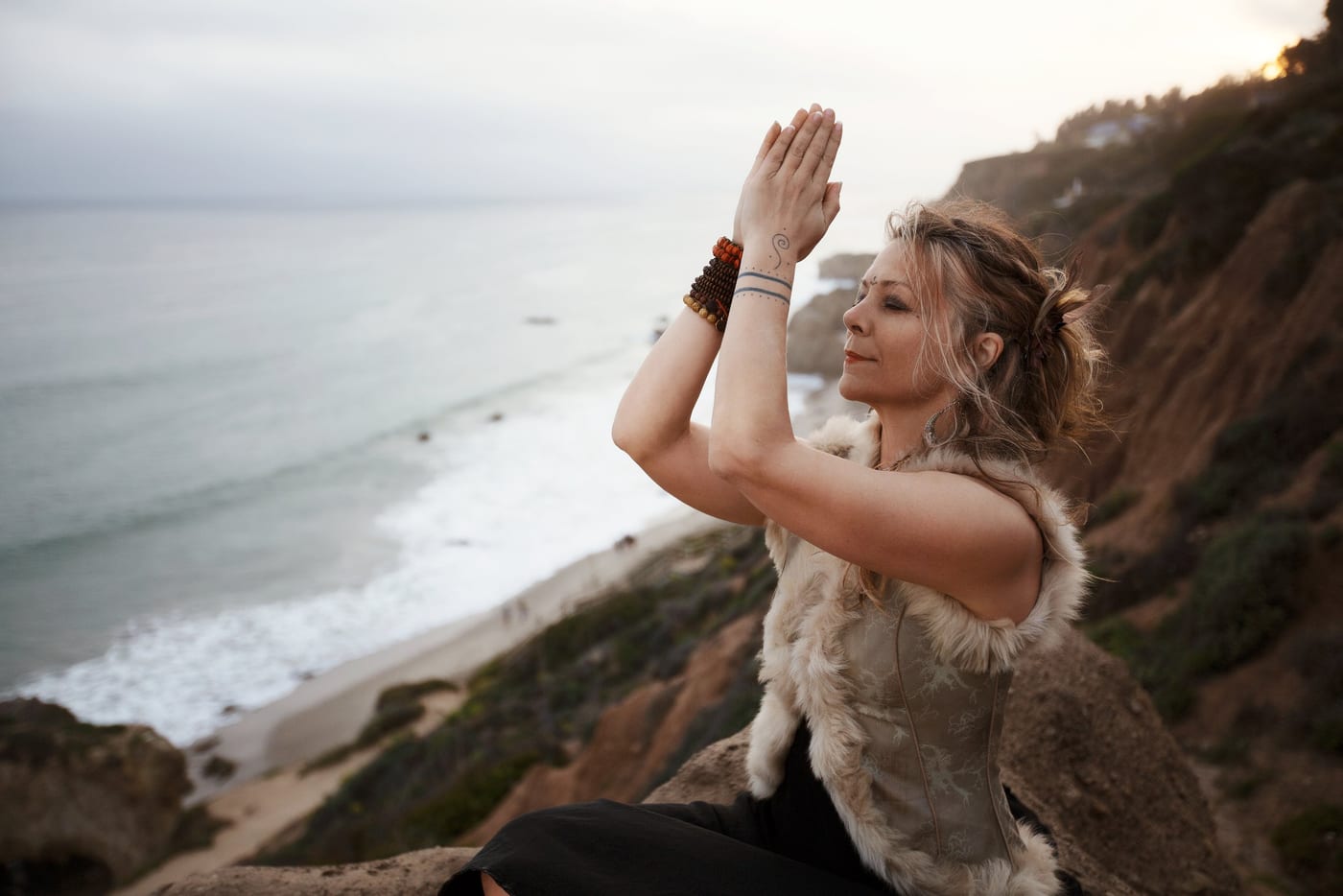

Released on June 1, 2018, Kirtan: The Bhakti Yoga of Chanting Mantras is a twenty-track compilation, and it is the most direct door into the devotional side of Suzanne Sterling's work. Sterling is a singer, musician, ritual leader and activist who has spent more than 25 years performing and teaching around sound, song and the sacred. Her catalogue runs wide, from the dub-inflected Dub Mantra Sangha to ambient practice records and earth-based ritual compilations. This album gathers the chant core of that range. Its title frames kirtan as bhakti yoga, and that framing is the point: this is music offered as a practice, not a performance.
Sterling's bio describes a life work of helping people find their unique voice through sound, singing, embodiment and connection to the sacred. Much of what she does happens off the record: workshops, the Voice of Change Method, sacred activism training through Off the Mat, Into the World, and community ritual. A chant compilation like this one is where those threads become audible. It sits after her earlier ambient and dub-leaning work and well before her 2024 remasters and 2026 singles, and it works as a hub. If you want to know what her practice sounds like at its center, this is the record to start with.
Her sound is built around the human voice, mantra and rhythm rather than dense orchestration. Expect repetition as the organizing principle. A phrase returns, a melody settles, and you are invited to stay with it rather than wait for a climax. Kirtan is group call-and-response singing, so the texture is communal and conversational rather than soloist-driven. Her singing voice is the central instrument, and the production supports chant and breath instead of competing with them.
The mood is open, devotional and unhurried. Listeners who want fast tempos or layered electronic arrangements will find it spare and slow-moving. That spareness is the design. Over twenty tracks, the cumulative effect matters more than any single moment, and the record rewards patience.
I can't responsibly name individual tracks here. The information available to me gives no track-by-track listing, and I won't invent titles. What I can offer is a way to listen for what makes a chant track land, which you can apply as you move through the sequence:
- The first return of the refrain. In call-and-response, the moment the response arrives for the second or third time is when the music shifts from hearing to joining. Notice where that happens.
- Tempo changes within a chant. Kirtan often builds gradually. A track that begins quietly and thickens over several minutes is doing its devotional work.
- The quietest tracks. Where the voice thins and the repetition turns inward, the record leans toward japa, the quiet repetition of a mantra. These are often the ones that stay with you.
Preview the album on Spotify and mark your own favorites. Because the album is a compilation, the track-to-track variety is part of the experience.
This album sits within bhakti, the Indian devotional path in which song and repeated sacred names become a direct route to the divine. Sterling's work belongs to that current, but she is better read as a practitioner of a set of practices than as a follower of a single guru line. Her bio names no lineage teachers, and she also has long ties to the International Reclaiming Community and earth-based ritual. Those who expect a strictly orthodox South Asian lineage may find her eclectic framing unusual. What the album offers is a modern, participatory take on devotional music, closer to a ritual room than a concert hall. It shares ground with ambient and meditation music in its patience and repetition, but its purpose is communal singing.
This album suits people who want music tied to practice: yoga students, meditators, and anyone curious about kirtan who has not yet sat in a live room. It lands especially well in a life moment that calls for steadiness or release, such as a transition, a stretch of grief, or a wish to reconnect with your own voice. It is also a good rehearsal space for newcomers who want to learn the shape of call-and-response before joining a group.
It is less suited to listeners who want polished pop hooks, club energy or a concert arc with clear peaks. People skeptical of devotional language will find it central rather than decorative. And those who want a purely recorded listening experience may sense that this music is meant to be sung, not just heard.
Choose an evening and a quiet room. Use headphones for the first pass so you can follow the voices as they trade phrases. Let the first few tracks do their work before judging the pacing; kirtan needs a little time to settle in. On a second listen, sing along under your breath, even if you don't consider yourself a singer. That is the practice the album invites. If you can, treat one session as a small ritual: light a candle, sit with a mala or simply your breath, and let the repetition carry you.
When the record has become familiar, the logical next step is a live kirtan or workshop. Her official site, suzannesterling.com, is the best place to check for dates.