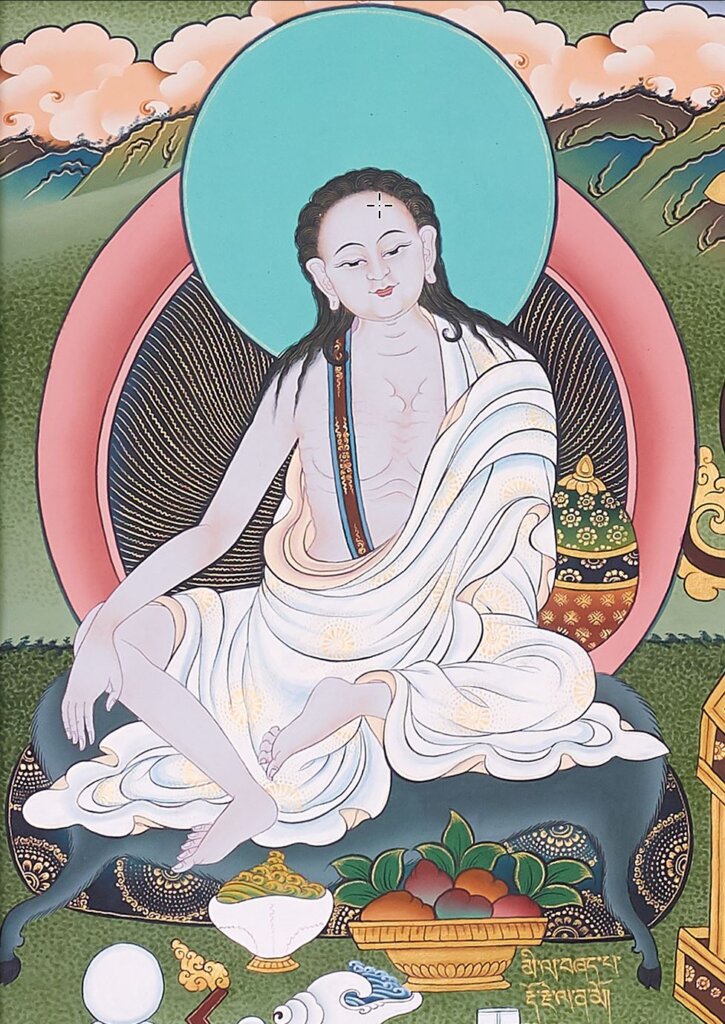
Milarepa's assertion, "My religion is not deceiving myself," invites us to examine the profound relationship between self-awareness and spiritual practice. At its core, this statement challenges us to confront the illusions we often harbor about ourselves and the world around us. In a society rife with distractions and false narratives, the call to honesty becomes not just a personal endeavor but a spiritual imperative. This quote resonates deeply within the context of Buddhist teachings, where the path to enlightenment is paved with the stones of integrity and truthfulness.
To delve deeper, we must recognize that Milarepa's words serve as a mirror reflecting our inner landscapes. The act of self-deception can manifest in myriad ways—through denial of our emotions, avoidance of responsibility, or the clinging to false identities. In a world that often rewards superficiality, Milarepa's commitment to authenticity stands as a beacon, urging us to strip away the layers of pretense and engage with our true selves. This journey toward honesty is not merely an intellectual exercise; it is a transformative practice that requires courage and vulnerability.
The image / the metaphor
Milarepa's declaration is rich with imagery that evokes a sense of clarity and starkness. The phrase "deceiving myself" conjures a vivid picture of a self entangled in webs of illusion, where the light of truth is obscured by shadows of denial. The verbs chosen—"my religion is not"—imply a conscious choice, a deliberate rejection of falsehood in favor of a more profound understanding of existence. This imagery invites us to visualize the act of peeling away layers of self-deception, revealing the essence of who we are beneath the masks we wear.
Going deeper into the metaphor, we can see that Milarepa's statement serves as a call to cultivate a practice of radical honesty. This honesty is not merely about acknowledging our flaws but also about embracing our potential for growth and transformation. The metaphor of a journey emerges, where each step taken in truthfulness leads us closer to a state of genuine connection with ourselves and the universe. In this light, Milarepa's words become a guiding principle, illuminating the path toward spiritual awakening through the lens of integrity.
In the speaker's tradition
Within the rich tapestry of Tibetan Buddhism, Milarepa's insights resonate deeply with the core principles of dharma and the pursuit of enlightenment. The concept of dharma encompasses not only the teachings of the Buddha but also the ethical conduct and mental discipline required to navigate the complexities of life. Milarepa's emphasis on honesty aligns with the Buddhist practice of mindfulness, where awareness of one's thoughts and actions fosters a deeper understanding of the self and the interconnectedness of all beings. This integrity is essential for cultivating prajna, or wisdom, which is the ultimate goal of the Buddhist path.
Moreover, Milarepa's teachings echo the notion of sunyata, or emptiness, which invites practitioners to recognize the transient nature of all phenomena, including our self-conceptions. In this context, the act of not deceiving oneself becomes a practice of letting go—releasing attachments to fixed identities and embracing the fluidity of existence. The Tibetan text "Songs of Milarepa" serves as a testament to this journey, where the poet-saint articulates his struggles and realizations, ultimately guiding others toward the liberation found in truth.
Living the teaching
Consider a modern scenario where Milarepa's teaching might find resonance: a professional grappling with the pressures of success. In a competitive environment, it is easy to succumb to self-deception—portraying an image of confidence while internally battling self-doubt. By embracing Milarepa's call to honesty, this individual might choose to confront their insecurities, seeking support from colleagues or mentors rather than masking their vulnerabilities. This act of authenticity not only fosters personal growth but also cultivates a culture of openness within the workplace, allowing others to feel safe in their own struggles.
In the realm of relationships, the application of this teaching can be equally transformative. Imagine a couple facing communication challenges, where misunderstandings have led to resentment. By embodying Milarepa's principle of honesty, they can engage in open dialogues, expressing their true feelings without fear of judgment. This commitment to transparency can pave the way for deeper intimacy and trust, allowing both partners to navigate their differences with compassion and understanding. In these moments, the practice of not deceiving oneself becomes a pathway to healing and connection.
A reflection
As we reflect on Milarepa's profound statement, we are invited to consider the ways in which we may be deceiving ourselves in our own lives. What truths have we been avoiding, and how might embracing honesty transform our experiences? In the spirit of contemplation, let us ask ourselves: How can I cultivate a deeper sense of integrity in my daily life, and what steps can I take to align my actions with my true self?
