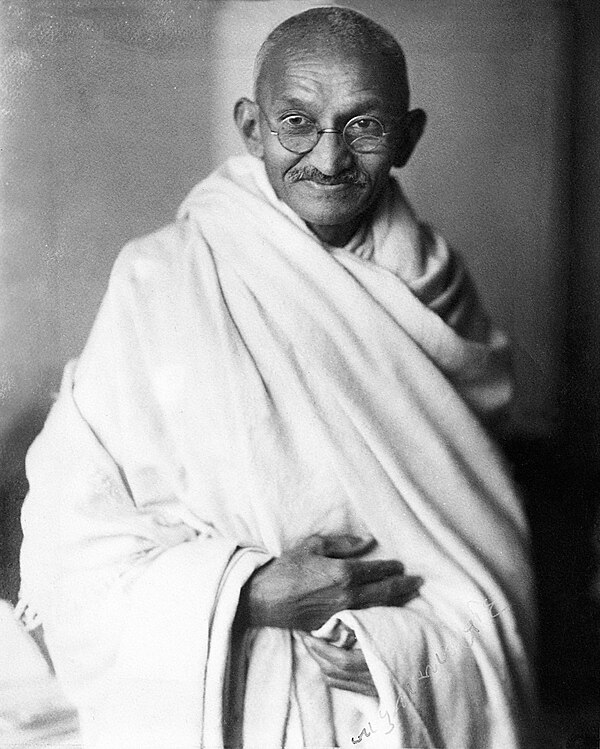
Mahatma Gandhi's assertion that "An error does not become truth by reason of multiplied propagation, nor does truth become error because nobody sees it" invites us to reflect on the intrinsic nature of truth and falsehood. In a world where opinions can be amplified and distorted through repetition, Gandhi's words remind us that the essence of truth remains unchanged, regardless of external validation or popular belief. This distinction is crucial, as it challenges us to cultivate discernment in our understanding of reality.
In an age dominated by social media and the rapid spread of information, the stakes of this teaching are higher than ever. The proliferation of misinformation can lead to widespread confusion and disillusionment, making it imperative for individuals to seek a deeper understanding of truth. Gandhi's wisdom encourages us to engage courageously with our convictions, urging us to look beyond the surface and to question the narratives that shape our perceptions of the world.
The image / the metaphor
Gandhi's quote employs a striking metaphorical framework that juxtaposes error and truth, emphasizing their distinct natures. The imagery of "multiplied propagation" evokes a sense of viral spread, suggesting that falsehoods can gain traction through sheer repetition, much like a rumor that circulates unchecked. Conversely, the assertion that truth remains unaffected by the lack of acknowledgment highlights its steadfastness, akin to a mountain that stands tall despite the shifting sands around it.
Diving deeper into this metaphor, we can see that Gandhi is not merely commenting on the nature of truth and error; he is also inviting us to consider our relationship with both. The verbs "become" and "see" imply a dynamic interplay between perception and reality. This invites us to reflect on how our beliefs and biases can cloud our understanding, urging us to cultivate a more discerning eye that seeks the essence of truth, rather than succumbing to the allure of popular opinion.
In the speaker's tradition
Situated within the rich tapestry of Hindu philosophy, Gandhi's perspective on truth resonates deeply with concepts such as satya (truth) and ahimsa (non-violence). In the context of dharma, or righteous living, the pursuit of truth is not merely an intellectual exercise but a moral imperative that guides one's actions and decisions. This alignment with truth is seen as essential for achieving harmony within oneself and with the world, reflecting the interconnectedness of all beings.
Moreover, Gandhi's emphasis on truth echoes the teachings found in the Bhagavad Gita, where the pursuit of knowledge and understanding is revered as a path to liberation. In Chapter 4, verse 38, it is stated that "In this world, there is nothing so purifying as knowledge." This aligns with Gandhi's assertion that truth, regardless of its visibility or acceptance, holds an intrinsic purity that transcends human perception. Thus, the quest for truth becomes a spiritual journey, one that requires courage and commitment.
Living the teaching
In contemporary society, we often encounter scenarios where misinformation spreads rapidly, leading to confusion and conflict. Consider a situation in which a false narrative about a public figure circulates widely, gaining traction through social media. In such instances, Gandhi's teaching serves as a reminder to approach these narratives with skepticism and discernment, encouraging individuals to seek out credible sources and engage in critical thinking rather than accepting popular opinion at face value.
This teaching can also be applied in personal relationships, particularly during moments of conflict or misunderstanding. When faced with accusations or misinterpretations, it is easy to become defensive or to accept the prevailing narrative without question. However, Gandhi's wisdom invites us to pause and reflect, urging us to seek clarity and understanding before reacting. By grounding ourselves in truth, we can navigate difficult conversations with grace and integrity, fostering deeper connections and mutual respect.
A reflection
As we contemplate Gandhi's profound words, we are invited to consider the nature of our own beliefs and the narratives we uphold. Are we willing to challenge popular opinions in pursuit of deeper truths? In what areas of our lives do we find ourselves accepting errors as truths simply because they are widely propagated? This reflection encourages us to cultivate a courageous heart and a discerning mind, allowing us to navigate the complexities of our world with integrity and wisdom.


