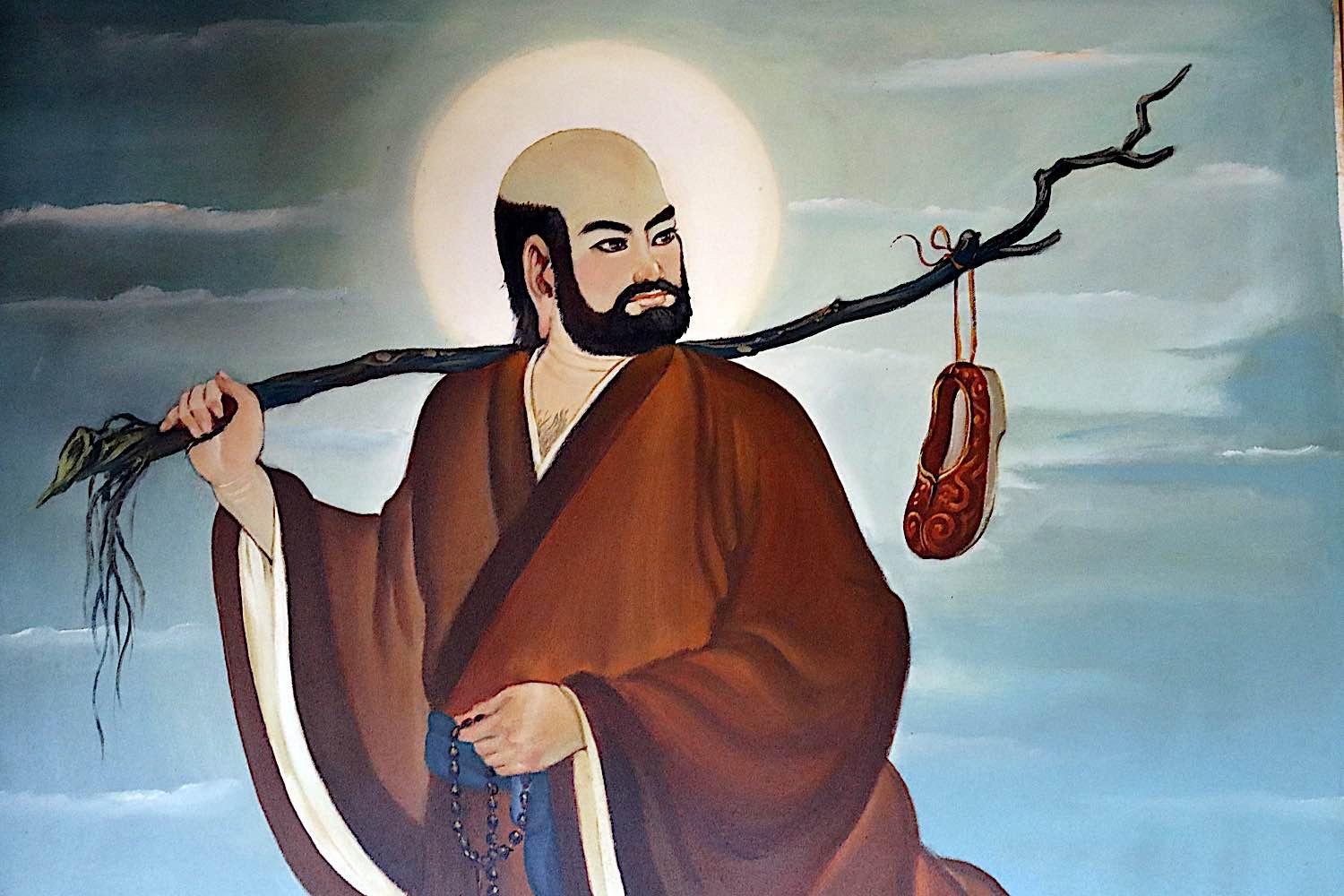
The Ever-Present Truth of Now
Bodhidharma's assertion, "It always has been waiting," invites us to contemplate the nature of presence and the eternal truth that exists beyond our fleeting perceptions. This statement suggests that the essence of reality, the truth we seek, is not something to be chased or acquired; rather, it is a constant presence that has always been available to us. The stakes of this understanding are profound, as they challenge our habitual tendencies to look outside ourselves for fulfillment, urging us instead to recognize the inherent completeness of the moment.
In a world that often feels chaotic and transient, Bodhidharma's words serve as a gentle reminder of the stability that lies within the present. This invitation to recognize what has always been waiting for us calls for a deepening of our awareness and a shift in our relationship with time. It encourages us to pause, to breathe, and to realize that the truth we seek is not a distant goal but a present reality, patiently awaiting our recognition and acceptance.
The image / the metaphor
The phrase "It always has been waiting" conjures an image of timelessness, suggesting that truth is not bound by the constraints of our linear understanding of time. The verb "waiting" implies a sense of readiness and availability, as if the truth is a steadfast companion, quietly present in the background of our lives. This imagery evokes a feeling of comfort, as it reassures us that we are never truly alone in our search for meaning; rather, we are enveloped by a reality that is always there, patiently inviting us to engage.
Diving deeper into the metaphor, we can see that waiting does not imply passivity; instead, it suggests a dynamic interplay between our awareness and the truth that is ever-present. This waiting is an active invitation to awaken to the richness of the moment, to recognize that the essence of our existence is not something to be grasped but something to be experienced. It encourages us to cultivate a sense of mindfulness, to be fully present in our lives, and to acknowledge the profound depth that lies within each moment.
In the speaker's tradition
Bodhidharma, the legendary figure credited with bringing Zen Buddhism to China, emphasizes the importance of direct experience and the realization of one's true nature. His teachings often revolve around concepts such as dharma, the path of truth, and sunyata, the emptiness that allows for the fullness of existence. In this context, "It always has been waiting" resonates with the Zen understanding that enlightenment is not a distant goal but a recognition of the inherent clarity and presence that exists within us all.
This notion is echoed in the Heart Sutra, where the concept of emptiness reveals that all phenomena are interconnected and that our perceptions often obscure the truth of our experience. Just as the sutra teaches that form is emptiness and emptiness is form, Bodhidharma's words remind us that the truth we seek is not separate from our lived experience; it is the very essence of our being, waiting for us to awaken to it. In this way, the teachings of Zen invite us to cultivate a deep awareness of the present moment, allowing us to see that what we seek has always been right here.
Living the teaching
Consider a modern scenario where the teaching of "It always has been waiting" can be applied: a busy professional, overwhelmed by deadlines and responsibilities, finds themselves constantly yearning for a future moment when they will finally feel at peace. In this state of mind, they may overlook the beauty of the present, missing opportunities for connection and joy. By recognizing that peace is not a future destination but a present reality that has always been available, they can shift their focus, allowing themselves to experience the richness of each moment, even amidst the chaos.
This teaching can also be applied in relationships, particularly during difficult moments of conflict. When tensions arise, it is easy to become consumed by the desire to resolve issues quickly or to seek validation from the other person. However, by embracing the understanding that love and understanding have always been present, we can approach these moments with a sense of patience and openness. This perspective allows us to engage more deeply with our partners, recognizing that the truth of our connection is not contingent upon the resolution of conflict but is an ever-present reality waiting to be acknowledged and nurtured.
A reflection
As we contemplate Bodhidharma's profound statement, we are invited to reflect on our own relationship with presence and truth. What aspects of your life feel as though they are perpetually out of reach, and how might you shift your perspective to recognize the truth that has always been waiting for you? In this moment of reflection, consider how embracing the present can transform your experience and deepen your understanding of the world around you.
