

What is Vinyasa Flow?
Vinyasa Flow is a smooth transition between asanas (postures) in flowing styles of modern yoga, especially when movement is paired with breath. The term derives from the Sanskrit vinyasa, meaning “to place in a special way,” and describes both a method of practice and a philosophy of sequential unfolding. Unlike static forms of yoga where practitioners hold poses in isolation, Vinyasa Flow emphasizes continuous movement synchronized with inhalation and exhalation, creating what practitioners often describe as a moving meditation. The word vinyasa is composed of two words: vi = order + nyasa = placement; and the word krama means “the uninterrupted sequence of events from beginning to end.”
In contemporary practice, Vinyasa Flow classes vary widely in intensity, pacing, and sequencing. Some follow fixed series (as in Ashtanga Vinyasa Yoga), while others are creatively sequenced by individual teachers. What unites them is the principle of breath-synchronized movement and the intention to build progressively toward more complex postures or states of consciousness.
Origins & Lineage
Whether you practice the dynamic series of Pattabhi Jois, the refined alignments of B.K.S. Iyengar, the classical postures of Indra Devi, or the customized vinyasa of Viniyoga, your practice stems from one source: a five-foot, two-inch Brahmin born more than one hundred years ago in a small South Indian village. Tirumalai Krishnamacharya, often called the “father of modern yoga,” was a scholar, healer, and yoga master who lived from 1888 to 1989.
Krishnamacharya developed what is now known as Ashtanga Vinyasa Yoga during one of his most fertile periods at the Mysore palace, where as his pupils were primarily active young boys, he drew on many disciplines—including yoga, gymnastics, and Indian wrestling—to develop dynamically-performed asana sequences aimed at building physical fitness. Both B. K. S. Iyengar and Pattabhi Jois, who are major influences on modern yoga forms, studied under teacher Tirumalai Krishnamacharya at the Mysore Palace in the 1930s.
The historical narrative surrounding Vinyasa’s origins contains significant controversy. According to Ashtanga yoga’s official history, Krishnamacharya learned the complete system of asanas and vinyasas from an otherwise unknown document, the Yoga Kurunta, supposedly written 5,000 years ago by Vamana Rishi. However, the original manuscript was supposedly destroyed by ants, and no copy survives; neither Jois nor any other of Krishnamacharya’s pupils transcribed it, as would have been expected in a traditional guru-shishya relationship. Scholar Norman Sjoman takes evidence that Krishnamacharya created rather than inherited the vinyasas: “It was not an inherited format.”
Vinyasas first appear in the teaching of Krishnamacharya in the 1930s, and became widely-known in the Ashtanga Yoga system of one of his pupils, Pattabhi Jois, created in 1948. From Jois’s school in Mysore, the practice spread globally beginning in the 1970s, spawning countless variations now taught under names like Power Yoga, Flow Yoga, and simply Vinyasa.
How It’s Practiced
In a typical Vinyasa Flow class, practitioners move through sequences of postures—standing poses, balances, twists, backbends, forward folds—each initiated by either an inhalation or exhalation. There should be no stopping or pause between movements, and the transition into or out of an asana should take the same amount of time as the inhale or exhale to which it is linked, no more and no less.
Common sequences include Sun Salutations (Surya Namaskar) and the classic Vinyasa transition (sometimes called “taking a vinyasa”): a flow from plank to low push-up (Chaturanga Dandasana) to upward-facing dog (Urdhva Mukha Svanasana) to downward-facing dog (Adho Mukha Svanasana). This linking sequence appears repeatedly, functioning as both a rest and a reset between standing poses.
Krishnamacharya’s “jumping” yoga style at the Mysore Palace was constantly changing, adapted to the needs of specific pupils according to their ages, constitutions (deha), vocations (vrttibheda), capabilities (sakti), and paths (marga); the approach was “experimental.” This principle of adaptation persists in contemporary Vinyasa Flow teaching, though interpretations vary widely.
Breath during practice is typically ujjayi pranayama—a subtle constriction of the throat producing an ocean-like sound. The breath serves as both metronome and anchor, keeping practitioners present despite physical challenge.
Vinyasa Flow Today
Contemporary seekers encounter Vinyasa Flow in multiple contexts: drop-in studio classes labeled “Vinyasa,” “Flow,” or “Power Yoga”; teacher training programs; online platforms offering recorded sequences; and yoga retreats worldwide. The style has become the dominant form of yoga taught in Western urban centers.
While Ashtanga Vinyasa maintains fixed sequences (Primary Series, Intermediate Series, etc.), most Vinyasa Flow classes feature teacher-designed sequences that change each session. Some teachers sequence toward a “peak pose”—building preparatory movements that culminate in an advanced posture. Others emphasize therapeutic goals, seasonal themes, or chakra activation.
The practice has influenced adjacent movement forms including Strala Yoga (emphasizing ease and organic movement) and various fusion styles combining vinyasa with dance, martial arts, or weights.
Common Misconceptions
Vinyasa Flow is not ancient. Despite marketing language suggesting 5,000-year lineages, the breath-synchronized flowing sequences characteristic of modern Vinyasa emerged in the early-to-mid 20th century. The style represents a creative synthesis of classical yoga philosophy, Hatha yoga postures, Indian physical culture, and—according to scholarly research—European gymnastics methods present at the Mysore Palace.
Vinyasa is not a single fixed system. Unlike Iyengar Yoga (with its emphasis on alignment and props) or Ashtanga Vinyasa (with its set sequences), “Vinyasa Flow” describes a principle rather than a codified method. Two Vinyasa classes may bear little resemblance to each other.
The practice is not inherently spiritual. While Vinyasa can serve contemplative and transformative purposes, its origins lie partly in physical education for young men. Modern practitioners bring their own intentions—athletic, meditative, therapeutic, or devotional.
What is Vinyasa Flow meaning? At its core, it means intelligent sequencing (krama) that honors the body’s need for gradual preparation and the mind’s capacity for flow states when movement and breath synchronize.
How to Begin
For those new to Vinyasa Flow, begin with beginner-oriented classes explicitly labeled “Vinyasa for beginners,” “Slow Flow,” or “Fundamentals.” These introduce foundational postures and breath technique before accelerating pace.
Key resources include:
- Classes: Studio classes offering modifications and hands-on adjustment (when consensual)
- Books: The Heart of Yoga by T.K.V. Desikachar (Krishnamacharya’s son) explains the therapeutic individualization underlying vinyasa krama; Mark Stephens’ Teaching Yoga provides comprehensive sequencing principles
- Online platforms: Yoga with Adriene, Yoga International, and Glo offer graduated Vinyasa sequences accessible to home practitioners
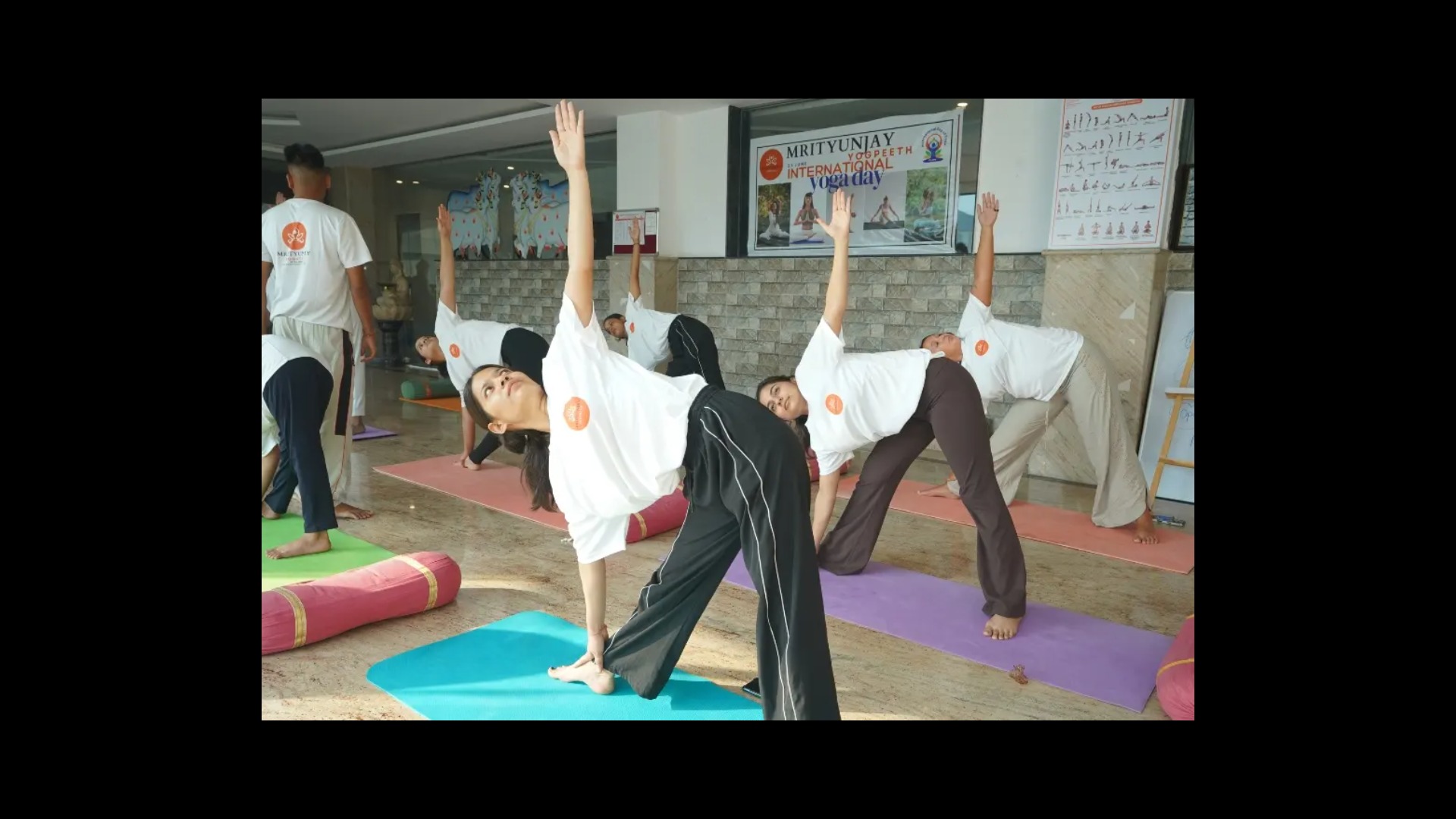
Essential preparation includes familiarity with Downward-Facing Dog, basic standing poses (Warrior I and II, Triangle), and ujjayi breath. Many practitioners benefit from complementary study of anatomy, pranayama techniques, or classical yoga texts like the Yoga Sutras of Patanjali to contextualize the physical practice within broader yogic philosophy.
What is vinyasa flow practice ultimately about? It offers an entry point where physicality becomes a vehicle for presence—not through stillness, but through disciplined, breath-guided motion.