BrightStar

すべてのEventsを見る

意識ある集いに出会う

events

Yoga
Meditation
Breathwork
Qigong
Tai Chi
Sacred Music
World Music
Medicine Music
Sound Healing
Ecstatic Dance
人気の目的地
BaliSedonaLos AngelesCosta RicaNew YorkSan FranciscoAustinMiamiJoshua TreeTulum
すべてのカテゴリを見るすべての目的地を見る

すべての機能を探索

イベントを成長させる強力なツール

プラットフォーム機能

スマートダイナミックプライシング
チケットカテゴリ
座席指定
カート放棄リカバリー
訪問者リカバリー
寄付とスライディングスケール
アフィリエイトシステム
チケットスキャナー
クーポンコード
カスタム質問
チケット共有
アップセルとアドオン
分析とレポート
メールシーケンス
ウェイトリスト / 通知 / リマインダー
人と場所
Artists & TeachersEvent OrganizersVenues & StudiosKnowledge BaseGlossaryInspiration
すべての機能を見る私たちについて
料金ブログ
Language
Saved events
すべてのイベントを見る

events

YogaMeditationBreathworkQigongTai ChiSacred MusicWorld MusicMedicine Music

人気の目的地

BaliSedonaLos AngelesCosta RicaNew YorkSan Francisco

人と場所

Artists & TeachersEvent OrganizersVenues & StudiosKnowledge BaseGlossaryInspiration

プラットフォーム機能

スマートダイナミックプライシングチケットカテゴリ座席指定カート放棄リカバリー訪問者リカバリー寄付とスライディングスケールアフィリエイトシステムチケットスキャナークーポンコードカスタム質問チケット共有アップセルとアドオン分析とレポートメールシーケンスウェイトリスト / 通知 / リマインダー
すべての機能を見る私たちについて
料金ブログ
ログイン探求者クリエイター
  • すべてのイベントを見る
  • 探求者向け
  • ヨガ
  • 瞑想
  • ブレスワーク
  • 気功
  • 太極拳
  • 聖なる音楽
  • ワールドミュージック
  • メディスンミュージック
  • サウンドヒーリング
  • エクスタティックダンス
  • リトリート
  • ワークショップ
  • すべてのカテゴリ →
  • Bali
  • Sedona
  • Los Angeles
  • Costa Rica
  • Tulum
  • Byron Bay
  • San Francisco
  • Austin
  • New York
  • San Diego
  • Denver
  • Seattle
  • Portland
  • Miami
  • すべての都市 →
  • Join the Movement
  • Why we list
  • Sell Globally
  • クリエイター向け
  • チーム向け
  • ライター向け
  • 講師向け
  • キルタンアーティスト向け
  • スタジオ向け
  • フェスティバル向け
  • リトリートセンター向け
  • 非営利団体向け
  • ブランドアンバサダー
  • 事例紹介
  • 無料チケット販売
  • Elevate
  • Amplify
  • 50万人以上のバイヤーネットワーク
  • カート放棄リカバリー
  • スマートダイナミックプライシング
  • チケットカテゴリ
  • 定期イベント
  • 座席指定
  • アフィリエイトシステム
  • ウェイトリスト / 通知
  • チケットスキャナー
  • 埋め込みウィジェット
  • イベント配信
  • メッセージセンター
  • インテグレーション
  • レポート
  • すべての機能 →
  • 概要
  • エコシステム
  • ブログ
  • 用語集
  • インスピレーション
  • ヘルプセンター
  • お問い合わせ
  • APIドキュメント
  • ブランドアセット
  • 採用
  • プレス
  • 利用規約
  • プライバシーポリシー

イベント

  • すべてのイベントを見る
  • 探求者向け
  • ヨガ
  • 瞑想
  • ブレスワーク
  • 気功
  • 太極拳
  • 聖なる音楽
  • ワールドミュージック
  • メディスンミュージック
  • サウンドヒーリング
  • エクスタティックダンス
  • リトリート
  • ワークショップ
  • すべてのカテゴリ →

目的地

  • Bali
  • Sedona
  • Los Angeles
  • Costa Rica
  • Tulum
  • Byron Bay
  • San Francisco
  • Austin
  • New York
  • San Diego
  • Denver
  • Seattle
  • Portland
  • Miami
  • すべての都市 →

クリエイター向け

  • Join the Movement
  • Why we list
  • Sell Globally
  • クリエイター向け
  • チーム向け
  • ライター向け
  • 講師向け
  • キルタンアーティスト向け
  • スタジオ向け
  • フェスティバル向け
  • リトリートセンター向け
  • 非営利団体向け
  • ブランドアンバサダー
  • 事例紹介
  • 無料チケット販売
  • Elevate
  • Amplify

機能

  • 50万人以上のバイヤーネットワーク
  • カート放棄リカバリー
  • スマートダイナミックプライシング
  • チケットカテゴリ
  • 定期イベント
  • 座席指定
  • アフィリエイトシステム
  • ウェイトリスト / 通知
  • チケットスキャナー
  • 埋め込みウィジェット
  • イベント配信
  • メッセージセンター
  • インテグレーション
  • レポート
  • すべての機能 →

会社

  • 概要
  • エコシステム
  • ブログ
  • 用語集
  • インスピレーション
  • ヘルプセンター
  • お問い合わせ
  • APIドキュメント
  • ブランドアセット
  • 採用
  • プレス
  • 利用規約
  • プライバシーポリシー
BrightStar
© 2026 BrightStar. 全著作権所有.
Watch

Reclaim Playfulness: Why We Sacrifice Joy for Success

Gabor Mate
Gabor Mate
Nov 27, 2024
読了 約6分
視聴 · 4
読む · 7セクション

The Tears Behind Christopher Robin's Goodbye

Dr. Gabor Maté opens with a confession that cuts to the heart of a universal wound: the ending of A.A. Milne's Winnie the Pooh brought him to tears for years. The passage describes Christopher Robin, the little boy protagonist, realizing he must leave behind his toy animals because he's going to school and won't have time to play with them anymore. It's a moment of childhood ending—not dramatically, but inevitably. Maté didn't fully understand why that passage moved him so deeply until much later in his life, when he began examining the patterns he'd internalized as a physician and as a human being.

How Do We Justify Our Existence?

What Maté wasn't conscious of during medical school or for decades afterward as a practicing physician was how fundamentally driven he was to justify his existence in the world. This isn't vanity or ego in the conventional sense; it's a deeper survival mechanism. Many of us carry an implicit belief that we must earn our right to be here through achievement, productivity, and usefulness. Maté illustrates how this drive operates at an unconscious level, shaping decisions about work, rest, relationships, and play long before we're aware it's happening. The physician in him—trained to heal, to help, to be indispensable—embodied this pattern perhaps more intensely than most, yet the underlying mechanism is shared across cultures and professions.

What Gets Sacrificed When We Work Too Hard?

Maté makes a specific and striking claim: when you're driven to work too hard, you actually ignore what matters. This isn't a moral failing or a personal weakness. It's a cognitive and emotional consequence of being trapped in a particular orientation toward life. The sacrifice becomes automatic. People give up their playfulness, their joyfulness—the very capacities that make life feel worth living—in pursuit of acceptance and success. The trade-off seems reasonable in the moment: sacrifice fun now, secure achievement later. But Maté's reflection suggests this calculus is inverted. What gets left behind isn't peripheral to a good life; it is central to it.

"When you're driven to work too hard you actually ignore what matters. People sacrifice their playfulness their joyfulness for the sake of being accepted and being successful."

This pattern is particularly potent because society reinforces it constantly. We celebrate the driven, the hardworking, the self-sacrificing. We build identities around productivity. Children are taught to defer play, to focus on grades and credentials. Adults are rewarded for overwork and penalized—socially, economically—for prioritizing rest or play. The very institutions designed to help us (schools, workplaces, healthcare systems) often operate on the assumption that serious, relentless effort is noble and necessary.

Can We Live Like Winnie the Pooh and Christopher Robin?

Maté's answer is unambiguous: yes. He proposes that we can all be Winnie the Pooh and Christopher Robin—and that we can always keep playing in the Enchanted Forest. This isn't a regression to childishness or an abandonment of responsibility. Rather, it's a recognition that playfulness and presence are not luxuries to be earned after success; they are essential to being human. The Enchanted Forest, in his framing, is both literal (a place of imagination and joy) and metaphorical—the inner landscape where creativity, connection, and ease live.

What makes this statement radical is its rejection of the Protestant work ethic and the achievement society that most of us have absorbed without question. Maté isn't saying "work less then play." He's suggesting a fundamental reorientation: recognize that play, presence, and joyfulness aren't destinations to reach after you've proven yourself. They are the destination itself. They are what makes a life worth living. The Enchanted Forest isn't something you visit after retirement or after you've achieved enough. You can be in it now.

Why Is Playfulness Essential?

Maté's emphasis on playfulness as "essential" points to something neurobiological and psychological. Play is how humans regulate their nervous system, build genuine connection, access creativity, and experience flow. When we're in a state of driven productivity without play, we're in a chronic stress state, even if it doesn't feel that way. The body is always calculating, striving, defending. Play—genuine play, not play that's optimized or productive—quiets that calculation. It brings presence. It restores.

This matters not just for happiness but for health, relationships, and the quality of the work we do. Some of Maté's most influential work has focused on the connection between trauma, stress, and disease. Chronic stress without the counterbalance of play and joy contributes to illness. Disconnection from our own playfulness is a form of abandonment of self, a betrayal of what makes us alive. Christopher Robin grows up and leaves the Enchanted Forest, and something in us—something essential—is left behind.

How Does This Pattern Start?

While Maté doesn't detail the developmental roots in this brief reflection, his broader work suggests this pattern often begins in childhood. Children who grow up in environments where their worth is conditional on achievement, where love and attention are earned through performance, internalize the message: my existence must be justified. Over time, this becomes automatic. The internal voice that whispers "you're not enough unless you're productive" becomes so familiar it feels like truth. By adulthood, we've forgotten there was ever another way.

The ending of Winnie the Pooh is poignant precisely because it captures this moment—the moment a child is told they must grow up, leave the forest, and join the serious world. Maté's tears weren't just nostalgia. They were recognition of a profound loss that happens to nearly all of us, and the realization that this loss doesn't have to be permanent.

Where to go from here

If you've recognized yourself in this reflection—the driven professional, the person who has sacrificed playfulness for acceptance—Maté's challenge is to ask: What would change if you gave yourself permission to live differently? Not by abandoning your responsibilities, but by reconnecting with the Enchanted Forest within. This might look like setting boundaries around work. It might mean rediscovering something you loved to do as a child. It might mean noticing, moment to moment, whether you're present or striving. Most radically, it means questioning the internalized belief that your existence requires justification through achievement. You are already worthy. The forest is always there. You can always keep playing.

Comments

Loading the conversation…

Transcript

[0:00] if I were to choose to live my life over

[0:02] again I wouldn't live it in this way do

[0:04] you know wi the Pooh yeah okay the end

[0:07] of that book would bring tears to my

[0:10] eyes for years Christopher Robin the

[0:12] little boy now has to go to school and

[0:14] he's telling his friends the toy animals

[0:16] that he won't be able to play with them

[0:17] so much anymore and what I wasn't aware

[0:19] of when I went to medical school and

[0:21] when I was a

[0:23] physician for decades is how driven I

[0:27] was to justify my existence in the world

[0:29] and we share work too hard when you're

[0:32] driven to work too hard you actually

[0:34] ignore what matters people sacrifice

[0:37] their playfulness their joyfulness for

[0:39] the sake of being accepted and being

[0:41] successful and all that we can all be wi

[0:44] Theo and and Christopher we can always

[0:47] keep playing in the Enchanted Forest and

[0:50] that's just essential I think

Gabor Mate
ArtistGabor Mate

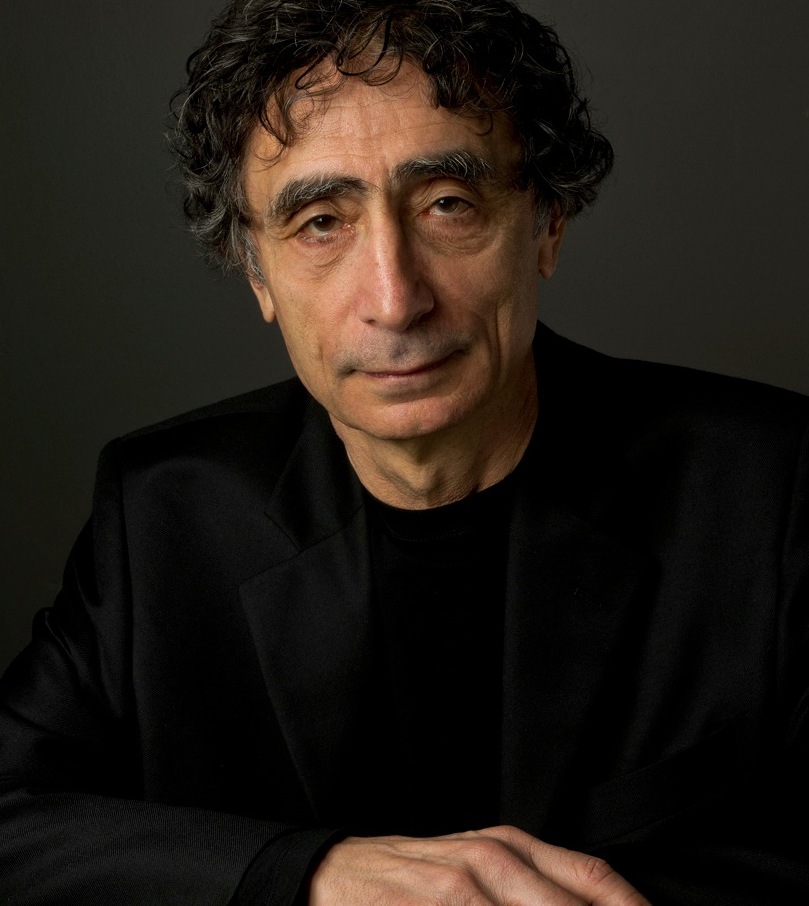
Hungarian-Canadian physician known for his work on trauma, addiction, stress, and child development. His teachings connect medical insight with deep psychological and spiritual und…

プロフィールを見るウェブサイト
トピックを見る
Work-addictionPlayfulness-joyChildhood-traumaAchievement-culturePresence-consciousness

ご質問はありますか?

よくある質問

According to Maté, many people are unconsciously driven to justify their existence through achievement and productivity. When this drive is active, we ignore what matters—connection, creativity, and joy—and sacrifice our natural playfulness for acceptance and success, often without realizing the cost.
The Enchanted Forest refers to the inner landscape of play, imagination, presence, and joy that exists in all of us. It's both the literal place from Winnie the Pooh and a metaphor for the state of being where we're not driven by the need to prove ourselves—a state we can access at any age.
No. Maté argues that playfulness is essential for human wellbeing, not a luxury to earn after success. Genuine play regulates the nervous system, builds connection, and restores presence. It's not regression; it's reclaiming something vital that driven productivity often strips away.
When you're driven to work too hard, you operate in chronic stress without the counterbalance of play and joy. This chronic stress state, even if it feels normal, contributes to physical and emotional illness and disconnection from what makes life meaningful.
Yes. Maté's point isn't to abandon responsibility but to recognize that playfulness and presence aren't rewards to earn later—they're essential now. This means setting boundaries around work and reconnecting with joy, not as a luxury, but as necessary to your wellbeing and the quality of your life.
The moment when Christopher Robin must leave his toy animals to go to school represents the universal loss of childhood playfulness and presence. For Maté, it symbolized the deeper realization that we've internalized the same message—that growing up means abandoning the Enchanted Forest and our own joyfulness.

読みつづける

More from Gabor

すべて表示
How Childhood Trauma Shapes Adult Behavior and Worldview
Inspire

How Childhood Trauma Shapes Adult Behavior and Worldview

Childhood trauma, especially from harsh or psychopathic parents, creates unconscious defensive patterns that shape how people interpret real…

1 min read
Trauma as a Wound: Understanding Why Healing Requires More Than Time
Inspire

Trauma as a Wound: Understanding Why Healing Requires More Than Time

Dr. Gabor Maté defines trauma not as the difficult event itself, but as the psychic wound it leaves—and explains why time alone cannot heal …

1 min read
Trusting the Gold: Awakening Your Intrinsic Goodness
Inspire

Trusting the Gold: Awakening Your Intrinsic Goodness

Discover how to awaken from the trance of unworthiness and recognize the loving awareness already living within you, beyond the stories that…

1 min read
Liberation Through Grief and Self-Worth in Buddhist Practice
Inspire

Liberation Through Grief and Self-Worth in Buddhist Practice

Br. Phap Huu explores how recognizing our inherent goodness and learning to grieve openly within community liberates us from suffering and s…

1 min read

探索を続ける

旅をつづける

BrightStarのディレクトリから、さらなる智慧と集いを。

もっと記事を読む

教え、インタビュー、ガイドのライブラリ全体をご覧ください。

すべての記事に戻る →

講師とアーティスト

コンシャスな世界の系譜、音楽家、導き手を探しましょう。

アーティストを探す →

イベントを見つける

キルタン、リトリート、サウンドバス、ブレスワーク、フェスティバル — まもなく開かれます。

イベントを見る →