BrightStar

すべてのEventsを見る

意識ある集いに出会う

events

Yoga
Meditation
Breathwork
Qigong
Tai Chi
Sacred Music
World Music
Medicine Music
Sound Healing
Ecstatic Dance
人気の目的地
BaliSedonaLos AngelesCosta RicaNew YorkSan FranciscoAustinMiamiJoshua TreeTulum
すべてのカテゴリを見るすべての目的地を見る

すべての機能を探索

イベントを成長させる強力なツール

プラットフォーム機能

スマートダイナミックプライシング
チケットカテゴリ
座席指定
カート放棄リカバリー
訪問者リカバリー
寄付とスライディングスケール
アフィリエイトシステム
チケットスキャナー
クーポンコード
カスタム質問
チケット共有
アップセルとアドオン
分析とレポート
メールシーケンス
ウェイトリスト / 通知 / リマインダー
人と場所
Artists & TeachersEvent OrganizersVenues & StudiosKnowledge BaseGlossaryInspiration
すべての機能を見る私たちについて
料金ブログ
Language
Saved events
すべてのイベントを見る

events

YogaMeditationBreathworkQigongTai ChiSacred MusicWorld MusicMedicine Music

人気の目的地

BaliSedonaLos AngelesCosta RicaNew YorkSan Francisco

人と場所

Artists & TeachersEvent OrganizersVenues & StudiosKnowledge BaseGlossaryInspiration

プラットフォーム機能

スマートダイナミックプライシングチケットカテゴリ座席指定カート放棄リカバリー訪問者リカバリー寄付とスライディングスケールアフィリエイトシステムチケットスキャナークーポンコードカスタム質問チケット共有アップセルとアドオン分析とレポートメールシーケンスウェイトリスト / 通知 / リマインダー
すべての機能を見る私たちについて
料金ブログ
ログイン探求者クリエイター
  • すべてのイベントを見る
  • 探求者向け
  • ヨガ
  • 瞑想
  • ブレスワーク
  • 気功
  • 太極拳
  • 聖なる音楽
  • ワールドミュージック
  • メディスンミュージック
  • サウンドヒーリング
  • エクスタティックダンス
  • リトリート
  • ワークショップ
  • すべてのカテゴリ →
  • Bali
  • Sedona
  • Los Angeles
  • Costa Rica
  • Tulum
  • Byron Bay
  • San Francisco
  • Austin
  • New York
  • San Diego
  • Denver
  • Seattle
  • Portland
  • Miami
  • すべての都市 →
  • Join the Movement
  • Why we list
  • Sell Globally
  • クリエイター向け
  • チーム向け
  • ライター向け
  • 講師向け
  • キルタンアーティスト向け
  • スタジオ向け
  • フェスティバル向け
  • リトリートセンター向け
  • 非営利団体向け
  • ブランドアンバサダー
  • 無料チケット販売
  • Elevate
  • Amplify
  • 50万人以上のバイヤーネットワーク
  • カート放棄リカバリー
  • スマートダイナミックプライシング
  • チケットカテゴリ
  • 定期イベント
  • 座席指定
  • アフィリエイトシステム
  • ウェイトリスト / 通知
  • チケットスキャナー
  • 埋め込みウィジェット
  • イベント配信
  • メッセージセンター
  • インテグレーション
  • レポート
  • すべての機能 →
  • 概要
  • エコシステム
  • ブログ
  • 用語集
  • インスピレーション
  • ヘルプセンター
  • お問い合わせ
  • APIドキュメント
  • ブランドアセット
  • 採用
  • プレス
  • 利用規約
  • プライバシーポリシー

イベント

  • すべてのイベントを見る
  • 探求者向け
  • ヨガ
  • 瞑想
  • ブレスワーク
  • 気功
  • 太極拳
  • 聖なる音楽
  • ワールドミュージック
  • メディスンミュージック
  • サウンドヒーリング
  • エクスタティックダンス
  • リトリート
  • ワークショップ
  • すべてのカテゴリ →

目的地

  • Bali
  • Sedona
  • Los Angeles
  • Costa Rica
  • Tulum
  • Byron Bay
  • San Francisco
  • Austin
  • New York
  • San Diego
  • Denver
  • Seattle
  • Portland
  • Miami
  • すべての都市 →

クリエイター向け

  • Join the Movement
  • Why we list
  • Sell Globally
  • クリエイター向け
  • チーム向け
  • ライター向け
  • 講師向け
  • キルタンアーティスト向け
  • スタジオ向け
  • フェスティバル向け
  • リトリートセンター向け
  • 非営利団体向け
  • ブランドアンバサダー
  • 無料チケット販売
  • Elevate
  • Amplify

機能

  • 50万人以上のバイヤーネットワーク
  • カート放棄リカバリー
  • スマートダイナミックプライシング
  • チケットカテゴリ
  • 定期イベント
  • 座席指定
  • アフィリエイトシステム
  • ウェイトリスト / 通知
  • チケットスキャナー
  • 埋め込みウィジェット
  • イベント配信
  • メッセージセンター
  • インテグレーション
  • レポート
  • すべての機能 →

会社

  • 概要
  • エコシステム
  • ブログ
  • 用語集
  • インスピレーション
  • ヘルプセンター
  • お問い合わせ
  • APIドキュメント
  • ブランドアセット
  • 採用
  • プレス
  • 利用規約
  • プライバシーポリシー
BrightStar
アプリを入手
App StoreからApp StoreGoogle Playで手に入れようGoogle Play
© 2026 BrightStar. 全著作権所有.
Inspire

Trade My Troubles: How Appalachian Songcraft Became Witness

Rising Appalachia
Rising Appalachia
Oct 14, 2026
読了 約6分
視聴 · 7

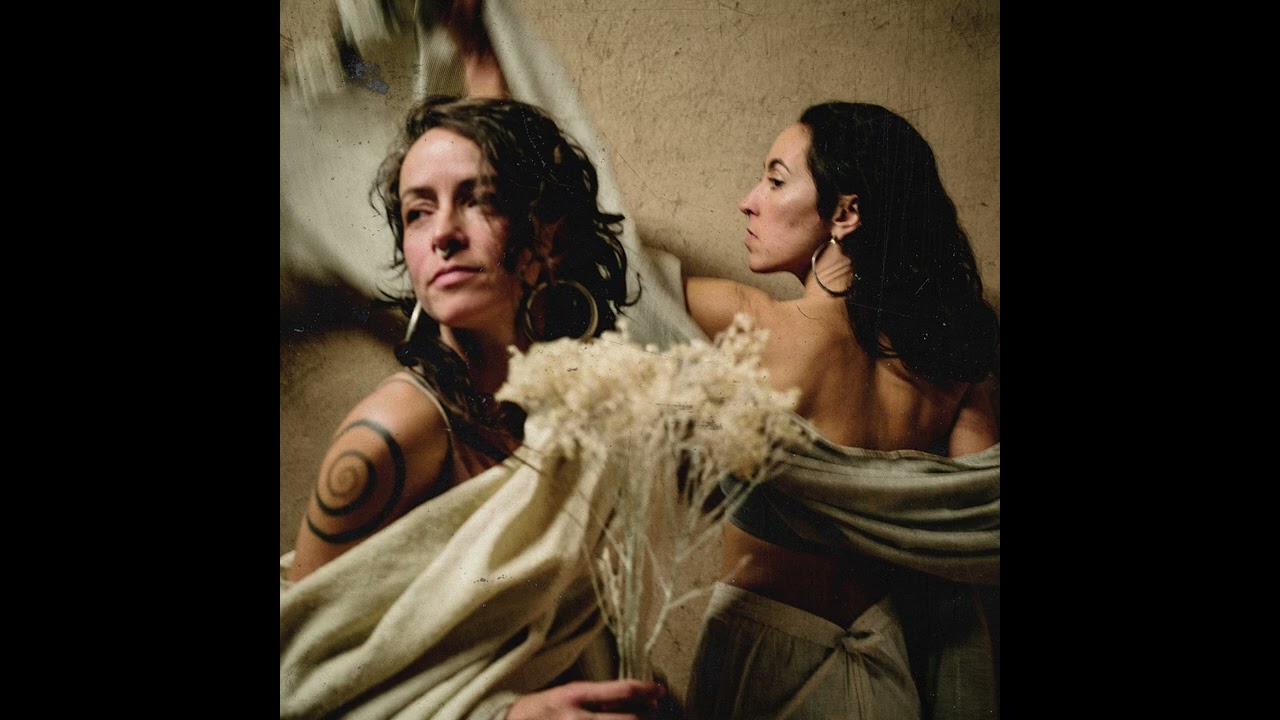
There is a long lilt to the shape of things, southern things, summer things. We cleave to dawn here. Sisters of song gather around the inherited shapes of Appalachia—the oak, the clay sky, the rain that arrives like a lover's return. This is where Rising Appalachia begins, not with preamble but with incantation, the film Trade My Troubles opening into a landscape of voice and longing that has taken years to crystallize into form.

What makes this art film distinct among the recent wave of musician-driven documentary work is its refusal of the salvage narrative. Rising Appalachia—the songwriting and performance partnership of Leah Song and Chloe Smith—do not position themselves as archivists rescuing mountain music from oblivion. Instead, they locate themselves inside a living tradition, one that bends and transforms with each telling, each crisis, each season. Trade My Troubles is less a retrospective of a finished album than a working document of how art functions as "second responder," as the film's creators frame it—not replacing official aid but moving through trauma as witness, as chronicler, as keeper of what was broken and what endures.

読む · 4セクション

The Long Road Through Sound

The film charts a journey that spans geographies and timescales. Leah Song and Chloe Smith move through music and folklore traditions rooted in the Appalachian South, then westward across the Pacific coastlines of Northern California, and back into the devastation Hurricane Helene left in its wake across their homelands. This is not a linear arc. The structure mirrors how grief actually works—circling, returning, finding new pathways through familiar terrain. The songs themselves become way-stations: "I'll trade my troubles for bird songs / Take me back in time," Song sings, her voice carrying the weight of that exchange, the negotiation between past and present that defines so much of Appalachian culture.

The core aesthetic decision in Trade My Troubles is to treat craft—whether musical, choreographic, or textile—with the reverence typically reserved for inherited wisdom. When the film focuses on basket-making, it is not incidental texture. The basketweaver's hands repeat patterns that contain centuries. The blacksmith's forge, the plant-dyer's vat, the bee-tender's relationship with the hive—these become counterpoints to the voice. Duncan Wickel's production and the contributions of David Brown and Biko Casini in the ensemble create a sonic landscape where tradition and contemporary studio work are not opposed but woven together. The songs exist in that conversation, belonging fully to neither the past nor the present moment alone.

Art as Grieving, Art as Return

The film's most urgent segment addresses Hurricane Helene directly. "Water rising down below / Everywhere I look, everywhere I go," the singers intone, the chorus building as documentary footage shows the scale of loss—800,000 trees down across the ground, the river that becomes a force that cannot be reasoned with. What distinguishes Rising Appalachia's response is its refusal to separate the personal from the ecological, the ancestral from the immediate. The masks created by House of Arulu, featuring Jade Sanchez, Leah Song, and others, transform faces into vessels for collective grief. This is not metaphor-making; it is ritual in the post-catastrophe moment, the body becoming a language when words fractured.

The choreography by Jade Sanchez—performed by Quetzal Jordan, Delacey Ault, Rachel Eliza Bennett, Kayla Gupta, Hana Nubia, Deonna Banks, and MaLeah Raymer—embodies this same commitment to grounding emotion in the body's knowledge. The section titled "Come Undone" features dancers moving through the phrase "Don't let me come undone," which functions simultaneously as prayer and warning, as recognition that coherence is fragile and that community holds us together in the fractures. The clothing designed by Wild Verbena carries its own story, textile as protection and adornment, the body cared for even in crisis.

The Naming of Things

One of the film's recurring gestures is its precision with nomenclature. When singers ask "Who at the cradle? Who sing a song? / Who rock the cradle when I'm gone?"—this is not abstraction. It is the question of continuity, of transmission, of what survives our absence. The answer comes not as resolution but as commitment: "I'll rock the cradle when you're gone." The music carries Appalachian tonal patterns—the blues inflection, the modal shifts—but filtered through a distinctly contemporary consciousness. "Decolonize," one voice sings, invoking a word rarely heard in traditional mountain music, yet fitting naturally into the melodic shape because the work of decolonization has always been embedded in the gesture of reclaiming indigenous relationship to land, to water, to the more-than-human world.

The film does not separate its strands neatly. A sequence moves from honey and bees to questions of desire and power, from the economics of survival ("keep stacking dimes in paper packs") to the refusal of confinement ("I don't like that fish bowl structure"). These are not random associations. Rising Appalachia works with the Appalachian tradition's own logic—the ballad's method of accumulating images, the folk sermon's way of moving from the particular to the universal and back again. Kristy Bogart's plant dyes, Tyler Lavenburg's basket-making, Tod Kersaw's blacksmithing are shown not as separate from the music but as parallel utterances, each one answering the same question: how do we continue? How do we make something beautiful from what is at hand?

The Geography of Belonging

The decision to film Appalachian scenes at Lake Eden in Black Mountain, North Carolina—a location steeped in its own history as a center for arts and educational experimentation—grounds the work in a specific terrain while acknowledging that Appalachia is not monolithic. The Pacific Ocean sequences, filmed on the Northern California coast, create productive dissonance. Rising Appalachia is not returning to restore some pure regional identity; they are moving through it, taking what is necessary, leaving room for what comes next. The landscape itself becomes a kind of third voice in the trio of Leah Song, Chloe Smith, and the ensemble. Water appears across the film as both ancestral memory and present-day threat, as the element that connects all the places they sing about.

What Memory Terra's hurricane footage contributes is documentary precision without documentary coldness. The images of storm and flooding are real, specific, undeniable. They do not serve as backdrop to the music; the music serves the images, sits with them, witnesses them. This is the stance the film models throughout: presence without sentimentality, tradition without nostalgia, grief without despair.

Trade My Troubles arrives at a moment when "art as activist practice" has become something of a cliché. What Rising Appalachia accomplishes instead is demonstrating how traditional forms of artistic practice—singing, dancing, making with the hands—already contain within them the resources for response, repair, and reckoning. The film does not argue this case; it enacts it. To watch is to feel that argument take root in your own body, in the memory of songs you have heard, in the knowledge that your hands contain patterns older than your words for them.
Comments

Loading the conversation…

Transcript

[0:01] There is a long lil to the shape of

[0:04] things,

[0:06] southern things,

[0:08] summer things.

[0:10] We cleave to dawn here.

[0:14] Sisters of song, Ren, night and gale,

[0:18] oak, clay sky.

[0:21] We are daughters of the reconciled.

[0:24] My dear, I will wed you to the rain, to

[0:28] the moon.

[0:30] To the thunderstorms we claim as

[0:33] birthright

[0:35] poet wine and wind chime. Bring me

[0:38] fireflies for the mason jars of our

[0:41] hearts. Bring me Jupiter. Let it bellow

[0:46] and strike the ground.

[1:04] >> [music]

[1:08] >> I'll trade my troubles [singing] for

[1:10] bird songs. Take me back in time. And if

[1:14] I watch [music and singing] them

[1:15] closely, they perch along the lines. Cuz

[1:19] [singing] you and I are anient. Grace is

[1:22] our [music] baseline. But the heart's a

[1:25] heavy angel. [singing]

[1:27] If you cannot read the signs, [music]

[1:29] I'll trade my troubles [singing]

[1:32] to hear their call. I'll trade my

[1:35] troubles [singing]

[1:38] right before the fall. I'll trade

[1:40] [music] my trles

[1:42] to hear [singing] their call.

[1:46] Underneath the rubble is the writing on

[1:49] the [music] wall.

[2:04] >> [music]

[2:05] >> Well, I ain't got no use

[2:09] [singing] a no use for your red [music]

[2:12] rock.

[2:14] Got no sugar, [singing]

[2:15] honey, baby.

[2:17] [music] Got no sugar, honey, baby.

[2:21] Well, I [singing] ain't got no use.

[2:23] [music]

[2:25] Well, I ain't got no use for [singing]

[2:27] your red rock.

[2:30] Got no sugar, honey, baby.

[2:33] Got no sugar, [singing] honey, baby.

[2:39] [music]

[2:52] Well, [singing] who at the cradle?

[2:57] Who at the cradle? Who sing a song? Who

[3:01] [singing and music] rock the cradle when

[3:03] I'm gone? Who rock the cradle when I'm

[3:07] [music] gone?

[3:08] Oh, [singing] I'll rock the cradle.

[3:12] I'll rock the cradle. [singing]

[3:15] I'll sing [music] your song. I'll rock

[3:18] the cradle when you're gone.

[3:20] [singing and music]

[3:20] I'll rock the cradle when you're gone.

[3:45] song and girth and harvest and Mary

[3:50] a treasure cove. We

[4:08] Honey, you hold me. Honey, you sc me.

[4:12] Honey, you d me silk threads.

[4:17] Honey, I'm your table. [singing]

[4:19] Come to your table. Your thick and

[4:21] biscuits keep me fed.

[4:25] You love me when [singing] I'm wrestling

[4:28] with my mind. I cannot find the

[4:31] [singing] exit, but you love me every

[4:33] time. And you love me when I'm crazy.

[4:35] I'm drinking too much wine. I'm always

[4:38] hard [singing] to handle. But you love

[4:40] [music] me every time.

[4:43] M

[4:48] [singing]

[5:01] heart of gold you can swim through. So

[5:05] much luster.

[5:07] Singing like a roaring river. [music]

[5:10] The gods the sister

[5:20] fox [music] trot wolf drop. Ain't nobody

[5:24] [singing]

[5:24] look like that. And when we conjure we

[5:27] lean [music] back and sex it claims that

[5:29] [singing] smoke stack buzzards holler

[5:32] [music] under wraps and girls power

[5:35] works like that. You said nothing

[5:37] [singing] just backtrack. Keep stacking

[5:40] dimes in paper packs. Damp grass rock

[5:44] and rolling. I don't like that fish bowl

[5:47] structure [music] left out the back door

[5:50] and [singing] dug herself a fox hole.

[5:53] Wolf cries alibi. [music] The raven eats

[5:56] off that the [singing] d. I'm holy. What

[5:59] a bath. T's just trying to

[6:02] [music and singing] decolonize.

[6:07] Oh,

[6:12] [music]

[6:19] [music]

[6:30] [music] love.

[6:36] >> [music]

[6:41] [music]

[6:41] >> Oh,

[6:46] come on.

[6:53] Don't let [singing and music] me

[6:57] come undone.

[7:03] You don't let me [music]

[7:08] come undone.

[7:14] Don't let [singing] me

[7:17] [music]

[7:18] come undone.

[7:27] [music]

[7:32] [music]

[7:37] >> [music]

[7:38] >> My ghosts are hungry

[7:42] and I feed [singing] them so food. And

[7:46] when we break bread, it'll get me out of

[7:50] any bad mood. And I'll call you baby.

[7:54] [singing and music]

[7:55] If you call me a prison, prison when we

[8:00] love [singing and music] like that, let

[8:02] it never ever

[8:05] Never ever ever

[8:10] [singing]

[8:12] [music]

[8:15] sh

[8:17] [music]

[8:28] [music]

[8:31] I'm going

[8:32] >> [singing]

[8:32] >> A [music]

[8:34] sugar river. Yeah. I want to see

[8:37] [singing and music]

[8:38] what it delivers here. Praise [music]

[8:43] and gratitude at hand.

[8:47] We are [singing] all but [music] at

[8:50] faith command.

[8:53] We are [singing] but at [music]

[8:55] faith command.

[8:58] It's a long, [singing] long road.

[9:00] [music]

[9:03] I hope my burden will light

[9:06] [singing and music] in your love.

[9:09] I'll make my offerings from

[9:12] [singing and music] my mouth. Yeah. Make

[9:14] yours in any way you can

[9:17] [music and singing] out loud.

[9:20] Make yours in any way you can out loud.

[9:25] [music]

[9:29] >> [music]

[9:50] >> And see how the heart grows [music]

[9:52] back, gathering bits of tatter.

[9:55] that had fallen across this world,

[9:58] weaving [music] itself upright.

[10:01] Golden threads making bright the dark

[10:04] spots of old [music] flames that can't

[10:07] hold a candle to you. Perfect basket,

[10:12] rib [music] cage, motel.

[10:16] I hope mine is like a home with all

[10:18] [music] the windows [singing] open. The

[10:21] slanted light of morning that makes

[10:24] [music] everything look new.

[10:27] A welcoming

[10:45] >> [music]

[10:53] [music]

[10:58] [music]

[11:01] >> Water rising down below. [music]

[11:08] Water rising down [singing] below.

[11:14] Everywhere I look,

[11:17] everywhere I go.

[11:21] [singing] Water rise

[11:24] down [music] below.

[11:29] Drove [singing and music] on down to the

[11:31] river side.

[11:35] Hung [singing] my head down and cry.

[11:42] But a minute [singing]

[11:43] a

[11:48] rain [singing]

[11:49] [music] water

[11:52] down.

[11:55] [music]

[11:57] Oh, I thought that storm would pass.

[12:00] [singing]

[12:02] [music]

[12:03] Oh Lord, I thought that storm would

[12:07] pass. [singing]

[12:10] 800,000

[12:12] trees [singing] down

[12:14] all over the ground. [singing and music]

[12:17] Oh,

[12:19] I thought that snow pass. [music]

[12:28] [music]

[12:35] [music]

[12:40] [music]

[12:47] >> [music]

[13:03] [music]

[13:07] [music]

[13:11] >> Come on.

[13:13] >> [music]

[13:22] [music]

[13:24] >> I know why.

[13:30] [music]

[13:34] What [music]

[13:36] the

[13:38] go?

[13:42] [music]

[13:54] [music]

[13:59] >> [music]

[14:06] [music]

Rising Appalachia
ArtistRising Appalachia

Rising Appalachia is a folk duo founded by sisters Leah Song and Chloe Smith, known for blending Southern soul, Appalachian fiddle and banjo traditions, and international roots mus…

プロフィールを見るウェブサイト
トピックを見る
Appalachian-musicArt-as-witnessClimate-griefFolk-traditionEmbodied-practice

ご質問はありますか?

よくある質問

It's a short film documenting Rising Appalachia's journey creating a new album, weaving together Appalachian musical tradition, dance, craft practices like basket-making and blacksmithing, and the band's response to Hurricane Helene's devastation across the American South. The film positions art as both witness and second responder to trauma.
The film includes documentary footage of the hurricane's impact—800,000 trees down across the region—and pairs it with songs like 'Water Rising Down Below.' The artists created masks and choreography that transform collective grief into ritual performance, refusing to separate personal loss from environmental catastrophe.
Basket-making, plant-dyeing, blacksmithing, and bee-tending are woven throughout the film as parallel utterances to the music, showing how traditional skills embody the same ancestral knowledge as song. The crafts are not decorative but central to how the film explores continuity, transmission, and making something meaningful from what is at hand.
Rising Appalachia draws from Appalachian folk, ballad traditions, and blues tonality, but filters this through contemporary consciousness. The songs incorporate modern concepts like decolonization while maintaining the modal shifts and storytelling methods characteristic of mountain music.
The Pacific Ocean sequences create productive dissonance, showing that Rising Appalachia is not returning to restore a static regional identity but rather moving through tradition, taking what is necessary, and remaining open to what comes next. The landscape itself becomes a third voice alongside the singers.
Rather than replacing official disaster aid, art functions as witness to trauma and a means of processing collective grief through ritual, music, and embodied practice. It moves through crisis as chronicler and keeper of what was broken and what endures.
Jade Sanchez created the choreography, performed by seven dancers including Quetzal Jordan, Delacey Ault, and Rachel Eliza Bennett. Wild Verbena designed clothing, and House of Arulu created masks for the Hurricane Helene sequences, making the body a vessel for collective expression.

読みつづける

More from Rising

すべて表示
Trade Troubles for Birdsong: Meaning of 'Trade My Troubles'
Inspire

Trade Troubles for Birdsong: Meaning of 'Trade My Troubles'

A close reading of the 'Trade My Troubles' lyrics, built around its central birdsong bargain. It traces how grief and gratitude become siste…

1 min read
Love in a Million Colors: Motherhood Rewires a Folk Soul
Inspire

Love in a Million Colors: Motherhood Rewires a Folk Soul

Rising Appalachia harnesses motherhood's transformative love as the engine of a jubilant dance-floor anthem that calls listeners to let devo…

1 min read
Embodied Metta: How a Smile Awakens Loving-Kindness
Inspire

Embodied Metta: How a Smile Awakens Loving-Kindness

Tara Brach's embodied metta meditation uses a smile to awaken loving-kindness throughout the body, creating a pathway to nervous system heal…

1 min read
Acoustic Yoga Music: Creating Twilight Soundscapes
Inspire

Acoustic Yoga Music: Creating Twilight Soundscapes

Todd Boston's "Twilight" blends acoustic instrumentation with yoga practice, offering a contemplative musical foundation for movement and me…

1 min read

探索を続ける

旅をつづける

BrightStarのディレクトリから、さらなる智慧と集いを。

もっと記事を読む

教え、インタビュー、ガイドのライブラリ全体をご覧ください。

すべての記事に戻る →

講師とアーティスト

コンシャスな世界の系譜、音楽家、導き手を探しましょう。

アーティストを探す →

イベントを見つける

キルタン、リトリート、サウンドバス、ブレスワーク、フェスティバル — まもなく開かれます。

イベントを見る →