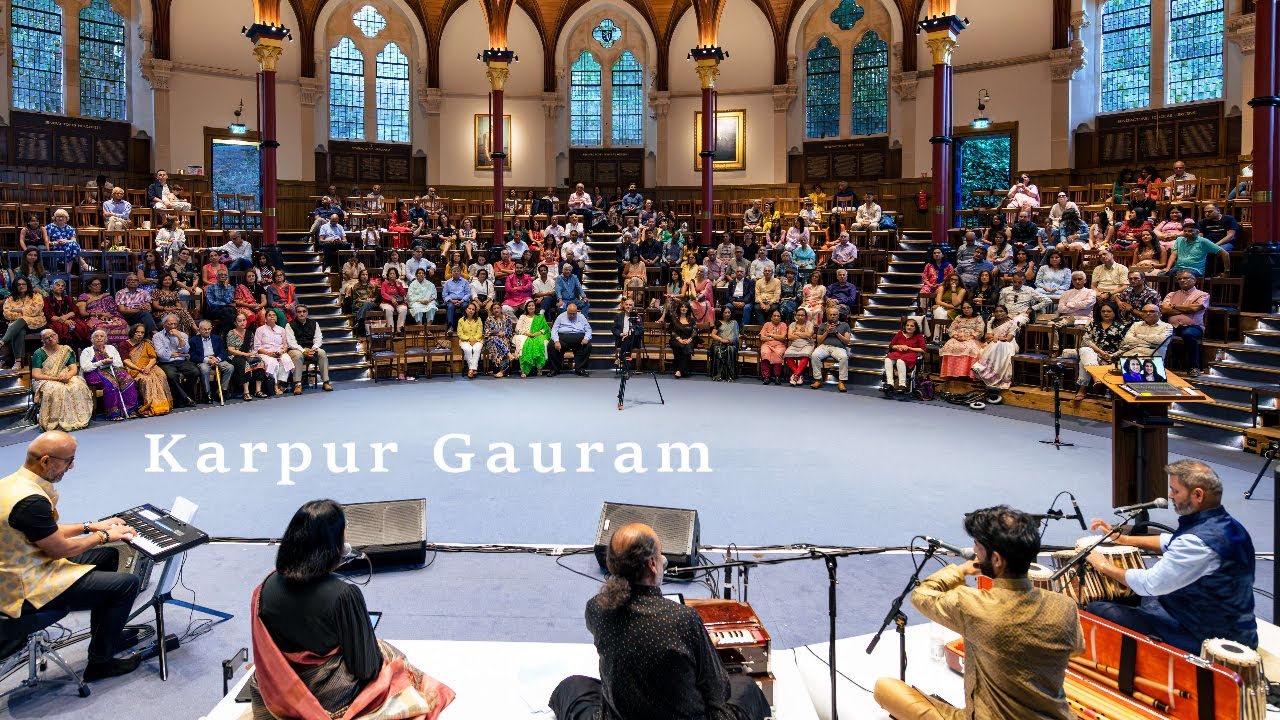
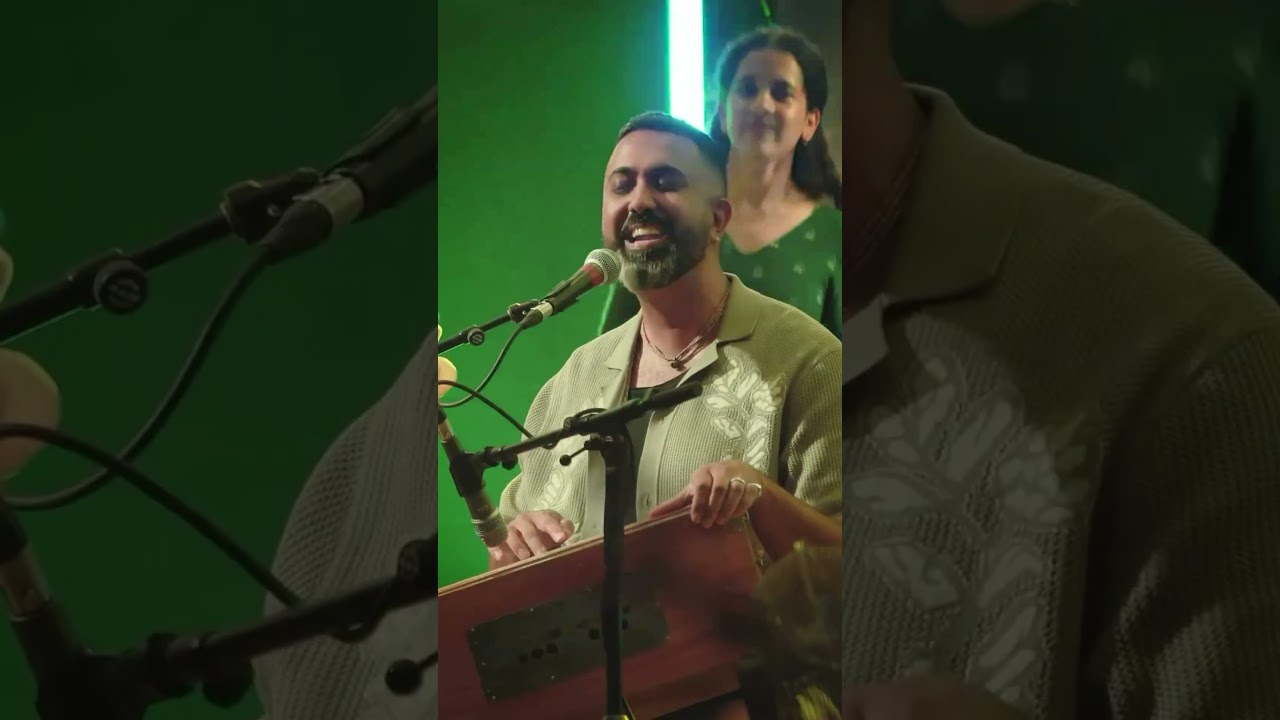
Four voices, one keyboard, and a little under four and a half minutes of Sanskrit: that is the whole architecture of "Vedic Chanting," the track from Manish Vyas's album Atma Bhakti that he released as a video in October 2023 and that has since drawn more than 400,000 views. It is a morning piece in the most literal sense. Its text moves from a chain of epithets for Shiva into a short prayer for release from death, then into the five-verse Panchakshara hymn, where each stanza closes on one syllable of the name Shiva's devotees chant most often. Understanding that structure is the difference between hearing the track as background and hearing it as a devotional map.
The credits are the best place to start, because they tell you who is in the room. The video description lists Manish Vyas as composer and keyboardist, with Krishna Jani and Jay Dave alongside him on vocals. The singers seen in the film are Rajesh Vyas, Rishikesh Pandya, Vishwajeet Vaghela and Manish Vyas himself. The footage was shot in Varanasi and Rajkot by Lashkari Films and Manish Vyas. Varanasi matters here in a plain way: it is one of the oldest continuously inhabited cities in India and a long-standing center of Shaiva worship, and the choice of location signals the devotional register the track wants to occupy.
The first line, sung after an opening Om, is a salutation: Vande deva Umapatim, suragurum vande jagat karanam (the printed text reads Vande Shambhu Umapatim). In the transcript the sung form is "Vande deva Umapatim," the lord of Uma, and the verse continues with the guru of the gods and the cause of the world. The verse does not tell a story. It stacks titles, and that stacking is the first thing a listener should learn to hear. Each epithet is a small lens on Shiva: as consort of Uma, as teacher of the gods, as the source from which the universe arises, as wearer of serpents as ornaments, as the bearer of the moon, as lord of animals, and, in the line that follows, as the one whose eyes are the sun, the moon and fire.
That is a lot of imagery to compress into thirty seconds, and it is deliberate. Mantra in this tradition works partly through repetition and partly through sheer accumulation of sound. A listener does not need to parse each word on first hearing. They need to let the names settle.
The middle section of the track, beginning around the one-minute mark, shifts from praise to address. Here the text uses the direct form: Mrityunjayaya Rudraya Nilakanthaya Shambhave, followed by Amriteshaya Sharvaya Mahadevaya te namah. At 65 seconds the track opens this run of names, and the words are a recognizable litany: Mrityunjaya, the conqueror of death; Rudra; Nilakantha, the blue-throated one; Shambhu, the source of well-being; Amritesha, lord of immortality; Sharva; Mahadeva, the great god.
Two things are happening. First, the names are doing theology. Nilakantha and Mrityunjaya point at a myth of the cosmos and a claim about death; the text does not explain either, it simply addresses Shiva through them. Second, the litany gives a singer a rhythm to hold. The phrases are short and balanced, which makes the chanting easy to join. That is part of why this kind of track works as a practice rather than a performance you watch.
The text then widens the list with Namaste astu Bhagavan, and runs through Vishveshvaraya, Tryambakaya, Tripurantakaya, and Trikalagnikalaya, closing on Srimad Mahadevaya namah. Tryambaka is the three-eyed one, and Tripurantaka refers to the destroyer of three cities, a figure from the mythic tradition that the text names without retelling. You do not need that backstory to chant; you do need to notice that the litany keeps returning to the three-eyed, the fire-eyed, the destroyer, and the one who holds death within his grasp.
At 105 seconds the track shifts gears. The sung line Om Tryambakam yajamahe, sugandhim pushti-vardhanam is one of the most widely known verses in Shaiva practice, and the text includes its second line: urvarukam iva bandhanan mrityor mukshiya mamritat. The image is of the cucumber that loosens from its vine when ripe, and the prayer asks to be released from death into immortality. The verse is short, but it changes the emotional logic of the piece. Up to this point the track has been praising Shiva in his many forms. Here it asks for something, and the request is specific: freedom from the bond of death.
For a listener starting the day, this is the hinge. A morning practice that only praises can feel like a list. A morning practice that asks, even in four lines, reframes the list as a plea. That is also why the track fits the description's own language about energy; the video's text presents it as a way to "energise your day," a phrase that is far more practical than devotional, and the Tryambakam verse is where the practical frame gets its devotional spine.
The heart of the track is the Panchakshara, the five-syllable hymn. The Sanskrit word means five syllables, and the five are Na, Ma, Shi, Va, Ya, which together form the name Namah Shivaya. Each of the five stanzas in the text is built on the same pattern: a descriptive phrase about Shiva, a refrain that names the syllable, and a closing namah shivaya. Once you hear the pattern, the verses become a clock you can follow.
- Na (around 1:55): Nagendrahraya, Trilochanaya, Bhasmangaragaya, Maheshvaraya. The first stanza praises Shiva wearing serpents as a garland, three-eyed, smeared with sacred ash, and then closes on the refrain tasmai nakaraya namah shivaya: to him who is the syllable Na, salutation to Shiva.
- Ma (around 2:07): the stanza describes sandal paste from the Mandakini river and flowers offered in worship. It closes on tasmai makaraya, to the syllable Ma.
- Shi (around 2:20): praise of Shiva as the one with Gauri's face at his side, destroyer of Daksha's sacrifice, bearer of the bull banner. It closes on tasmai shikaraya.
- Va (around 2:32): the sage Vashishtha, the sage born of the pot, and the moon, sun and fire as eyes. It closes on tasmai vakaraya.
- Ya (around 2:49): the sacrifice-form of Shiva, the matted-haired one, the holder of the pinaka bow, the eternal one, the divine, the sky-clad. It closes on tasmai yakaraya.
This is the piece of the track that rewards close listening most. The Panchakshara is not an arbitrary list. Each stanza is a bead on a string whose knot is the name itself. By the end, the listener has heard Shiva addressed through each syllable of the name they have been chanting, and the stanza that closes on Ya is the last one before the verse of fruit.
"Energise your day just by listening to these powerful energetic chants which can be a purifying process."
That line from the description is a claim about effect, and it is the speaker's own. What the track demonstrably offers is structure: a litany that opens the ear, a request that turns praise into prayer, and a five-part hymn that gives the chant a clear arc.
The track ends, around the three-minute mark, with the phalashruti, the traditional statement of what the recitation brings. The printed text reads: Panchakshara-midam punyam yah pathechchhiva-samnidhau. Shiva-lokam avapnoti shivena saha modate. Roughly, whoever recites this sacred five-syllable hymn in the presence of Shiva attains the world of Shiva and rejoices with him. The text makes the promise plainly and does not hedge it.
Notice where the promise sits. It is not at the start, as a hook, and it is not in the middle, as an argument. It comes after the full cycle of the five syllables, so the listener has already done the work of chanting the name before being told what that work is worth. For a morning practice, that sequencing is sensible. The reward is the last thing you hear, after the effort.
The simplest use is to play it through once with the text in front of you. Follow the opening invocation, then the Mrityunjaya litany, then the Tryambakam verse, then the five Panchakshara stanzas. You will hear that the track moves from many names to one request to one name in five parts. That is a complete devotional shape in a little over four minutes.
After that, chanting along works best in the Panchakshara section, where the refrain returns and the syllable is easy to find. Pick one stanza, Na or Ma, and chant only that refrain for a few breaths. Then add the next syllable. The track is built to teach you the name in this way. You do not need to know every epithet to take part.
A caution, grounded in the material itself: the video description describes the track as a purifying practice and as a source of positive energy. Those are the speaker's descriptions of intent. Judge the practice by whether it gives your morning a steady shape, not by promises the video does not make on its own.
Listen to "Vedic Chanting" from Atma Bhakti by Manish Vyas on YouTube, and keep the printed text beside you for one pass. Note the five refrains and count them as they arrive. If the Panchakshara speaks to you, the same structure appears throughout the Shiva tradition, so it is worth learning the five syllables by ear before looking for other settings. The album and further information about the work are at www.manishvyas.com/atma-bhakti. Come back to the track in the morning, and let the names do the setting-up before the day begins.