BrightStar

すべてのEventsを見る

意識ある集いに出会う

events

Yoga
Meditation
Breathwork
Qigong
Tai Chi
Sacred Music
World Music
Medicine Music
Sound Healing
Ecstatic Dance
人気の目的地
BaliSedonaLos AngelesCosta RicaNew YorkSan FranciscoAustinMiamiJoshua TreeTulum
すべてのカテゴリを見るすべての目的地を見る

すべての機能を探索

イベントを成長させる強力なツール

プラットフォーム機能

スマートダイナミックプライシング
チケットカテゴリ
座席指定
カート放棄リカバリー
訪問者リカバリー
寄付とスライディングスケール
アフィリエイトシステム
チケットスキャナー
クーポンコード
カスタム質問
チケット共有
アップセルとアドオン
分析とレポート
メールシーケンス
ウェイトリスト / 通知 / リマインダー
人と場所
Artists & TeachersEvent OrganizersVenues & StudiosKnowledge BaseGlossaryInspiration
すべての機能を見る私たちについて
料金ブログ
Language
Saved events
すべてのイベントを見る

events

YogaMeditationBreathworkQigongTai ChiSacred MusicWorld MusicMedicine Music

人気の目的地

BaliSedonaLos AngelesCosta RicaNew YorkSan Francisco

人と場所

Artists & TeachersEvent OrganizersVenues & StudiosKnowledge BaseGlossaryInspiration

プラットフォーム機能

スマートダイナミックプライシングチケットカテゴリ座席指定カート放棄リカバリー訪問者リカバリー寄付とスライディングスケールアフィリエイトシステムチケットスキャナークーポンコードカスタム質問チケット共有アップセルとアドオン分析とレポートメールシーケンスウェイトリスト / 通知 / リマインダー
すべての機能を見る私たちについて
料金ブログ
ログイン探求者クリエイター
  • すべてのイベントを見る
  • 探求者向け
  • ヨガ
  • 瞑想
  • ブレスワーク
  • 気功
  • 太極拳
  • 聖なる音楽
  • ワールドミュージック
  • メディスンミュージック
  • サウンドヒーリング
  • エクスタティックダンス
  • リトリート
  • ワークショップ
  • すべてのカテゴリ →
  • Bali
  • Sedona
  • Los Angeles
  • Costa Rica
  • Tulum
  • Byron Bay
  • San Francisco
  • Austin
  • New York
  • San Diego
  • Denver
  • Seattle
  • Portland
  • Miami
  • すべての都市 →
  • Join the Movement
  • Why we list
  • Sell Globally
  • クリエイター向け
  • チーム向け
  • ライター向け
  • 講師向け
  • キルタンアーティスト向け
  • スタジオ向け
  • フェスティバル向け
  • リトリートセンター向け
  • 非営利団体向け
  • ブランドアンバサダー
  • 無料チケット販売
  • Elevate
  • Amplify
  • 50万人以上のバイヤーネットワーク
  • カート放棄リカバリー
  • スマートダイナミックプライシング
  • チケットカテゴリ
  • 定期イベント
  • 座席指定
  • アフィリエイトシステム
  • ウェイトリスト / 通知
  • チケットスキャナー
  • 埋め込みウィジェット
  • イベント配信
  • メッセージセンター
  • インテグレーション
  • レポート
  • すべての機能 →
  • 概要
  • エコシステム
  • ブログ
  • 用語集
  • インスピレーション
  • ヘルプセンター
  • お問い合わせ
  • APIドキュメント
  • ブランドアセット
  • 採用
  • プレス
  • 利用規約
  • プライバシーポリシー

イベント

  • すべてのイベントを見る
  • 探求者向け
  • ヨガ
  • 瞑想
  • ブレスワーク
  • 気功
  • 太極拳
  • 聖なる音楽
  • ワールドミュージック
  • メディスンミュージック
  • サウンドヒーリング
  • エクスタティックダンス
  • リトリート
  • ワークショップ
  • すべてのカテゴリ →

目的地

  • Bali
  • Sedona
  • Los Angeles
  • Costa Rica
  • Tulum
  • Byron Bay
  • San Francisco
  • Austin
  • New York
  • San Diego
  • Denver
  • Seattle
  • Portland
  • Miami
  • すべての都市 →

クリエイター向け

  • Join the Movement
  • Why we list
  • Sell Globally
  • クリエイター向け
  • チーム向け
  • ライター向け
  • 講師向け
  • キルタンアーティスト向け
  • スタジオ向け
  • フェスティバル向け
  • リトリートセンター向け
  • 非営利団体向け
  • ブランドアンバサダー
  • 無料チケット販売
  • Elevate
  • Amplify

機能

  • 50万人以上のバイヤーネットワーク
  • カート放棄リカバリー
  • スマートダイナミックプライシング
  • チケットカテゴリ
  • 定期イベント
  • 座席指定
  • アフィリエイトシステム
  • ウェイトリスト / 通知
  • チケットスキャナー
  • 埋め込みウィジェット
  • イベント配信
  • メッセージセンター
  • インテグレーション
  • レポート
  • すべての機能 →

会社

  • 概要
  • エコシステム
  • ブログ
  • 用語集
  • インスピレーション
  • ヘルプセンター
  • お問い合わせ
  • APIドキュメント
  • ブランドアセット
  • 採用
  • プレス
  • 利用規約
  • プライバシーポリシー
BrightStar
アプリを入手
App StoreからApp StoreGoogle Playで手に入れようGoogle Play
© 2026 BrightStar. 全著作権所有.
Inspire

I Am Enough Meditation: The Ten-Minute Script, Line by Line

Amanda Sellers
Amanda Sellers
Sep 21, 2020
読了 約8分
視聴 · 8

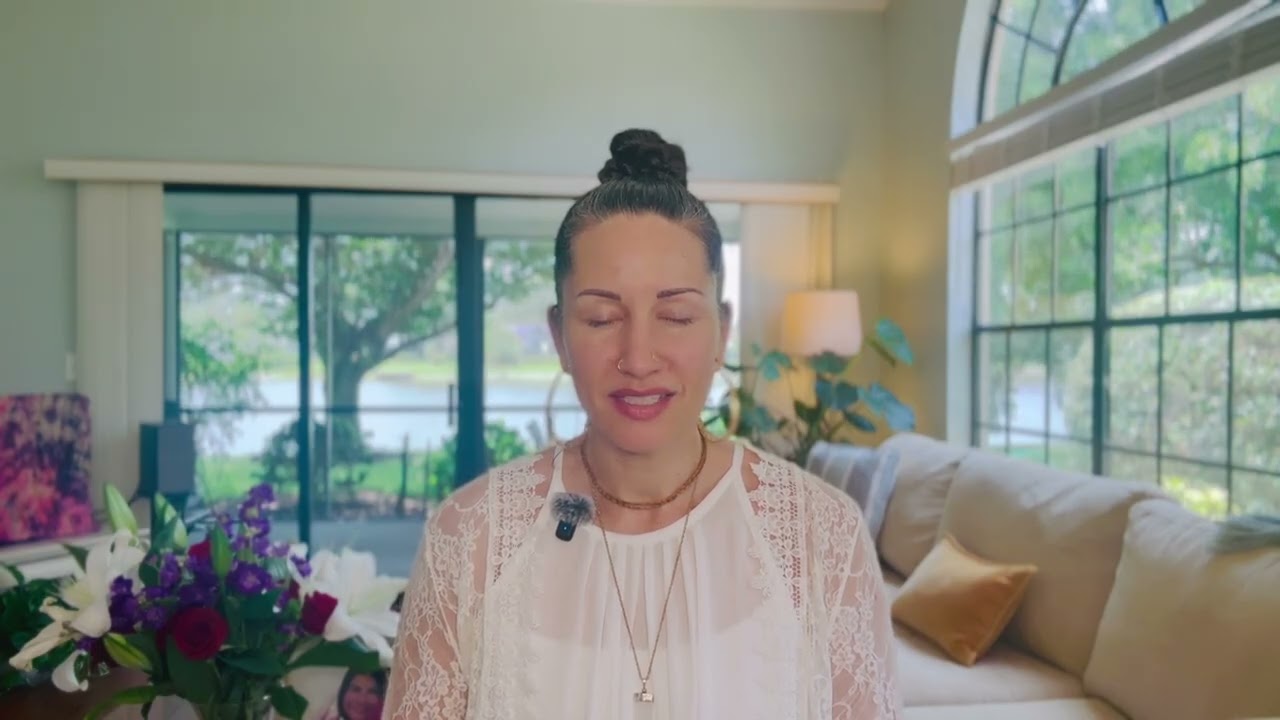
Close your eyes. A calm voice asks you to fall into your breath, then to feel gratitude for the air, the day and the life you are living. Over the next ten minutes, a single guided meditation moves through joy, survival, worthiness, forgiveness and courage, and it keeps returning to one sentence: "I am enough, and I always have been." The recording, published by Amanda Sellers in September 2020, runs just under ten minutes and is built to be done almost anywhere, with no props and no special posture. What makes it worth a closer listen is not any single affirmation but the order in which they arrive. The script is a sequence, and the sequence is the practice.

The recording itself offers no biography, so what follows stays with the words, which are the only thing the video gives us.

読む · 8セクション

How does an "I am enough" meditation begin?

It begins with instructions, not claims. Before a single affirmation is spoken, the listener is given three ways to take part: "you can either repeat them out loud after me, repeat them in your mind, or just relax and fully absorb every word I say" (0:11–0:21). That flexibility matters. A guided practice that demands recitation can turn into a performance, and one that only asks you to listen can drift into passive background noise. Offering all three lets the listener pick the register that suits a noisy train platform, a shared bedroom or a quiet kitchen.

Then comes the body. "Start to fall into your breath" (0:29) is the first real direction, and the words that follow, "Feeling present. Feeling gratitude," are offered as states to enter rather than beliefs to adopt. The breath is the anchor for everything that comes after. If you are still breathing, you are already in the present tense, and the script uses that fact as its foundation.

Why does the script open with gratitude instead of self-worth?

The gratitude section is more deliberate than it first sounds. It is not aimed at the self at all. It moves outward: gratitude for the breath, then "for your life," then "for this day." Only after the listener has been asked to notice that air is being breathed and a day is being lived does the script turn inward with "I am so grateful for this life I am living" (1:15) and "I am waking up" (1:22).

This ordering works as a kind of warm-up. Worth is a heavy subject to walk into cold. Starting with things that are plainly, concretely present, the breath and the morning, gives the listener solid ground before the harder lines arrive. By the time the recording says "I am seeing the light I shine in this life" (1:26), the mind has already been asked to rest on something real.

What does it mean to admit pain inside an affirmation?

Many affirmation scripts avoid the past entirely. This one does not. At around 2:22 the speaker says, "I have survived painful moments. And I am still here looking for the light." The line does two things at once. It names hardship without dwelling on it, and it reframes survival as evidence of strength rather than as a wound to be hidden. The sentence "I am so grateful for my strength" (2:15) comes just before it, so the acknowledgement of pain is framed as a source of capacity.

The pattern repeats in the safety lines. "I know I am safe" appears more than once, and "I can feel freedom now. I am free" follows a passage about light. The script keeps moving from what has been endured toward what is now available, and it does so without asking the listener to pretend the endurance did not happen.

How do forgiveness lines fit into a self-worth practice?

The middle of the recording is where it becomes most specific. Around 4:35 the script moves into forgiveness: "I forgive. I forgive all that hurt me. And I forgive myself." The order is notable. Forgiveness of others comes first, then of the self, a sequence that many people will recognize as harder than it reads on the page.

The script then gives resentment a physical description: "This life is too short to hold on to resentment. Resentment is heavy. I let it go" (4:51–5:03). Calling resentment heavy turns an abstract emotion into something the body can recognize. The listener is not asked to decide that resentment is wrong, only to notice its weight and set it down. That small shift from judgment to sensation is one of the more practical things the recording does.

"I can see that holding on to the past isn't serving me any more." (4:24, in the recording)

Notice the phrase "isn't serving me." It asks the listener to evaluate a grievance by its usefulness rather than by its justice. A grudge can be entirely justified and still not be doing anything for you. The script leaves that distinction to the person listening.

Why does the power section come after letting go?

Once the listener has been asked to release the past, the recording turns toward capacity. "I am in control of my life. I am brave. I am capable of anything. I am worthy of my desires" (5:24–5:39). These are strong claims, and the sequencing is what makes them land. Claiming power while still carrying resentment can feel hollow; claiming it after the weight has been set down feels more like a stance than a slogan.

The language grows more expansive from there: "I feel courageous. I feel energized. I feel renewal," followed by "I know the universe is fully supporting my desires" (6:08). The recording does not explain what it means by the universe, and it does not need to. It is a phrase for a feeling of being held, offered here as one option among many.

The section also contains a line about visibility: "I see that when I let my light shine, I can light up others" (6:56). The script connects self-acceptance to the way a person enters a room, a practical image that moves the practice out of the head and into ordinary social life.

What is the repeated line "I am enough" doing?

The phrase "I am enough and I always have been" returns at roughly 3:07, 3:14, 5:08, 8:56 and in the closing minutes. Repetition is the mechanism here, and the exact wording matters. "I always have been" is a claim about the past. It suggests that worth is not something accumulated through achievement or earned through healing. It was already present, and the practice is about noticing it rather than acquiring it.

Listeners who have heard other affirmation tracks may recognize the value of this kind of return. The same sentence, heard after forgiveness, after courage, and after peace, sounds different each time. By the final pass it has absorbed everything that came before it.

How can you practice this meditation in ten minutes?

The recording is designed for flexibility, and a few simple approaches follow naturally from its structure:

  • Choose your mode before you begin. Decide whether you will speak the lines aloud, say them silently, or simply listen. The script permits all three, so there is no wrong choice.
  • Stay with the breath section. The first two minutes are not a warm-up to be rushed. The script spends real time on presence and gratitude, and the rest of the practice rests on it.
  • Pause on the lines that catch. Forgiveness, safety and worthiness are the parts most listeners will find hardest. Let the words repeat in your mind rather than pushing past them.
  • Let the closing return do its work. The final "I am enough and I always have been" is the anchor. Finish there rather than rushing to the next task.

Because the meditation is roughly ten minutes long, it fits between other obligations. The recording's own framing, "In just 10 minutes you can reset your day in a positive way," is a modest promise, and it is one the structure can keep: it asks for a small, bounded commitment and gives back a clear shape.

Where to go from here

If the script works for you, the most natural next step is to return to it on a regular schedule and notice which lines change over time. The recording's description also points to a ten-day meditation course on Amanda Sellers' website, along with her Instagram account, for listeners who want more structured practice. Whatever you choose, the central idea of this piece is simple to test: sit with the breath, name what is real, set down what is heavy, and then say the sentence once more, and listen for what has changed.

Comments

Loading the conversation…

Transcript

[0:02] Welcome to this I am enough meditation.

[0:09] Close your eyes.

[0:11] When you hear me speak these words and affirmations

[0:15] you can either repeat them out loud after me, repeat them in your mind,

[0:21] or just relax and fully absorb every word I say.

[0:29] Start to fall into your breath.

[0:37] Feeling present.

[0:41] Feeling gratitude.

[0:44] Fratitude for your breath.

[0:47] For your life.

[0:52] Feeling gratitude for this day.

[0:57] I am so grateful for today.

[1:04] I am so grateful

[1:07] to breathe this air.

[1:13] I am so grateful

[1:15] for this life I am living.

[1:22] I am waking up.

[1:26] I am seeing the light I shine in this life.

[1:34] It's OK for me to be happy.

[1:40] It's good to feel joy.

[1:46] I let myself feel joy.

[1:53] I seek the good.

[1:59] I love to smile.

[2:04] I love to make people smile.

[2:11] I love myself.

[2:15] I am so grateful for my strength.

[2:22] I have survived painful moments.

[2:29] And I am still here looking for the light.

[2:36] I see the light.

[2:41] I know I am safe.

[2:46] I can feel freedom now.

[2:52] I am free.

[2:57] I am enough, and I always have been.

[3:06] I am enough

[3:09] and I always have been.

[3:16] I am worthy.

[3:19] I am worthy of love.

[3:25] I am loving.

[3:29] It is safe for me to open my heart.

[3:36] I can openly love.

[3:44] I live in the present.

[3:50] I let go of the past.

[3:56] I lean into the unknown.

[4:01] I know I am safe.

[4:08] I'm learning to let go.

[4:14] I look inside and see that I am enough.

[4:24] I can see that holding on to the past

[4:29] isn't serving me any more.

[4:35] I forgive.

[4:39] I forgive all that hurt me.

[4:46] And I forgive myself.

[4:51] This life is too short to hold on to resentment.

[4:59] Resentment is heavy.

[5:03] I let it go.

[5:08] I am enough and I always have been.

[5:14] I am enough and I always have been.

[5:24] I am in control of my life.

[5:29] I am brave.

[5:33] I am capable of anything.

[5:39] I am worthy of my desires.

[5:45] I deserve all the good in my life.

[5:52] I feel courageous.

[5:57] I feel energized.

[6:03] I feel renewal.

[6:08] I know the universe is fully supporting my desires.

[6:16] I am waking up.

[6:20] I want to be all that I am capable of.

[6:27] I am awakening to my potential.

[6:34] I see now all that I am capable of.

[6:41] I'm excited to step in to my greatness.

[6:49] I feel my light shining brighter.

[6:56] I see that when I let my light shine, I can light up others.

[7:05] I love to light up others.

[7:11] When I enter a room, I let my light shine bright.

[7:19] I stand tall and brave.

[7:25] I can handle anything.

[7:31] I feel such gratitude for this life.

[7:37] I am so grateful to breathe this air.

[7:44] I am grateful for this life I am living.

[7:52] I make the most of this moment because this moment is all I have.

[8:04] I make the most of this moment because this moment is all I have.

[8:17] I am love.

[8:23] I am joy.

[8:29] I am happiness.

[8:34] I am peace.

[8:39] I feel peace.

[8:45] I am waking up.

[8:50] I love myself.

[8:56] I am enough and I always have been.

[9:06] Letting my light shine.

[9:12] I love myself.

[9:16] I let myself feel joy.

[9:23] I seek the good.

[9:29] I open my heart to the goodness around me.

[9:37] I am enough and I always have been.

Amanda Sellers
ArtistAmanda Sellers

Full-time voice actor and meditation teacher, three-time Voice Arts Awards nominee, and self-described light seeker and "possibilitarian" who helps others break free from limiting…

プロフィールを見るウェブサイト
トピックを見る
I-am-enough-meditationGuided-meditationSelf-worthForgiveness-practiceAffirmations

ご質問はありますか?

よくある質問

It is a roughly ten-minute guided meditation published by Amanda Sellers in September 2020 that moves through breath, gratitude, joy, forgiveness and courage while repeating the line "I am enough and I always have been." The listener can speak the lines aloud, repeat them silently, or simply listen.
The video runs 9 minutes and 57 seconds, which is why it is marketed as a ten-minute practice. Its short length makes it easy to fit into a morning, a break or any other part of the day.
No. The recording explicitly offers three options: repeat the words out loud after the speaker, repeat them silently in your mind, or just relax and absorb them. Each one is presented as a valid way to take part.
The script moves from "I forgive all that hurt me" to "And I forgive myself," then describes resentment as heavy and invites the listener to let it go. The sequence treats self-worth as connected to releasing grudges, not only to positive self-talk.
Yes. The meditation asks only that you close your eyes and follow the breath, with no props or special setting required. That is why it is described as something you can do anywhere, whether at home, at work or while commuting, provided you can listen safely.
The phrase suggests that self-worth is not something earned or achieved but something already present. The meditation repeats it several times, so the listener hears it after gratitude, forgiveness and courage, which changes how it lands each time.

読みつづける

More from Amanda

すべて表示
Race Day Meditation: A Visualization Practice for Runners
Inspire

Race Day Meditation: A Visualization Practice for Runners

A nine-minute guided meditation walks runners through breath, race-day visualization, affirmations, and a countdown back into the body. Here…

1 min read
Happiness as a Daily Choice: A Morning Meditation Guide
Inspire

Happiness as a Daily Choice: A Morning Meditation Guide

An eight-minute morning meditation built on one idea: happiness is decided, not found. Here is how its visualization, reframing, and closing…

1 min read
Yoga Nidra for Wholeness: Sankalpa and Body Scan Guide
Inspire

Yoga Nidra for Wholeness: Sankalpa and Body Scan Guide

A 35-minute guided Yoga Nidra rest that moves from breath to sankalpa to a full body scan and back to waking. Here is how its structure work…

1 min read
This Belongs: The Ocean Meditation for Meeting Every Wave
Inspire

This Belongs: The Ocean Meditation for Meeting Every Wave

Tara Brach's guided meditation "Everything Belongs" turns a body scan into an ocean metaphor and a two-word practice. Here is how "This belo…

1 min read

探索を続ける

旅をつづける

BrightStarのディレクトリから、さらなる智慧と集いを。

もっと記事を読む

教え、インタビュー、ガイドのライブラリ全体をご覧ください。

すべての記事に戻る →

講師とアーティスト

コンシャスな世界の系譜、音楽家、導き手を探しましょう。

アーティストを探す →

イベントを見つける

キルタン、リトリート、サウンドバス、ブレスワーク、フェスティバル — まもなく開かれます。

イベントを見る →