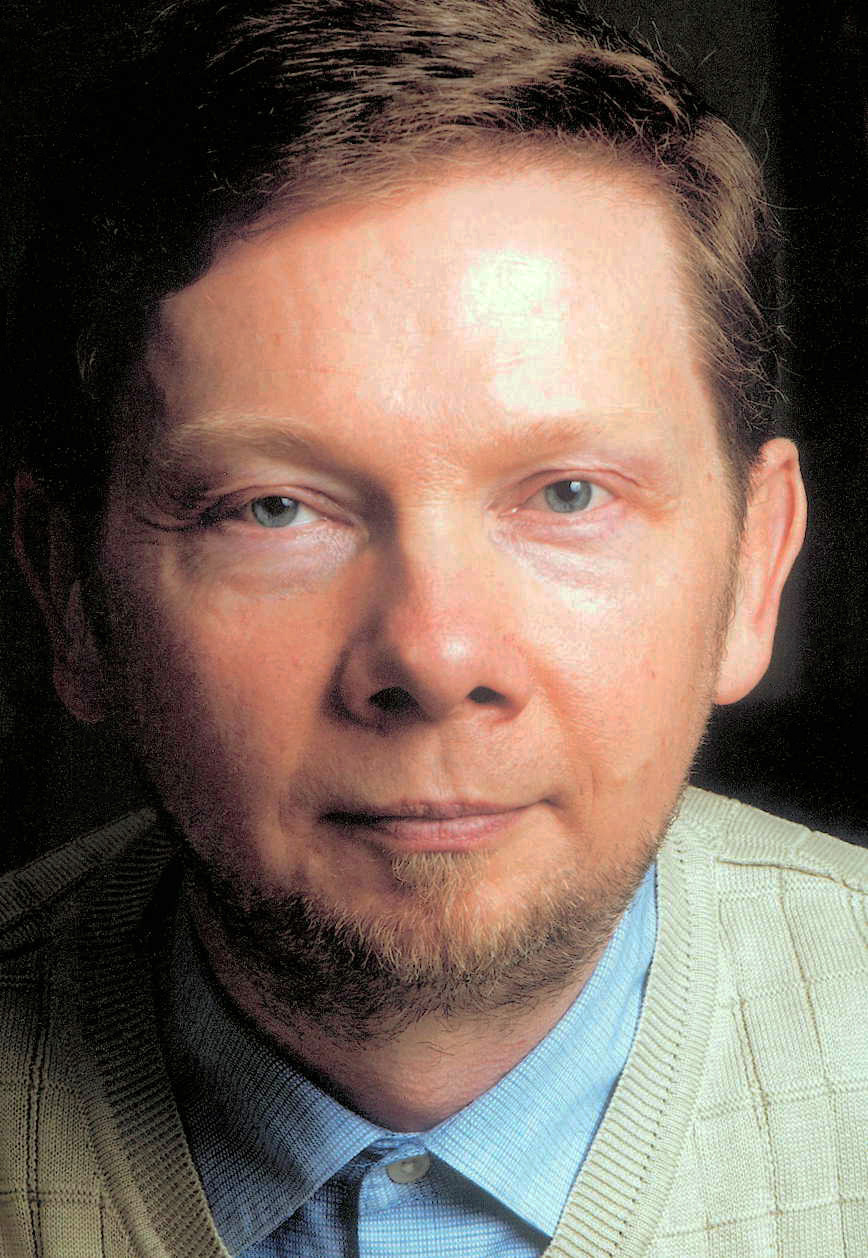
The inner voice—the constant mental commentary that narrates your life—is often uninvited, repetitive, and the primary source of suffering. Eckhart Tolle teaches that this voice is not who you are, but a conditioned pattern of thought you can observe and gradually release by becoming aware of it in real time.
The inner commentator is the voice in your head that talks to you all day. It narrates events, judges experiences, rehearses conversations, worries about the future, and replays the past. For most people, this voice runs continuously and without permission—it is what Tolle calls "uninvited and often torturous blathering." The commentator doesn't pause; it comments on nearly everything you do, say, think, or perceive.
This is not the same as thinking itself. Rather, it is compulsive thinking—thought that arises mechanically and habitually, without conscious direction. The inner voice often speaks in the second person ("you should," "you'll never," "why did you") or describes you from the outside ("you're so stupid," "you're not good enough"). It creates a sense that there is a separate, observing self that is constantly evaluating the "you" it perceives.
The inner commentator generates suffering in several ways. First, it constantly judges and compares. When something happens, the voice immediately labels it as good or bad, better or worse than something else. This endless evaluation creates mental friction and emotional reactivity. You are not simply having an experience; you are having an experience while simultaneously being told what to think about it.
Second, the voice feeds anxiety and rumination. It projects into the future, generating "what if" scenarios, most of which are negative or fearful. Simultaneously, it dwells in the past, replaying moments of embarrassment, regret, or failure. This prevents you from being present to your actual life, which is only ever happening now.
Third, the inner commentator reinforces the sense of separation and isolation. By constantly narrating a separate "self" that is distinct from the rest of experience, it perpetuates the ego structure. This creates a felt sense of being alone, isolated within your own skull, forever separate from others and from the flow of life itself.
Most people assume they can and should simply stop the inner voice through willpower or positive thinking. But trying to force the voice to be quiet doesn't work, because the one trying is often the voice itself. You cannot defeat the commentator by using more commentary. Attempting to suppress or control it only reinforces its existence and power.
The inner voice also feels like the real you. From childhood, you have been conditioned to identify with this narration. Your parents, teachers, and culture reinforced the voice by constantly commenting on your behavior and appearance. Over time, you came to believe that the voice is the real thinking mind, the real "I," the seat of identity. This identification is so complete that most people do not realize they are not the voice—they believe they are the voice.
Additionally, the voice serves a function. It helps you navigate practical, analytical tasks. It allows you to make plans, remember things, and communicate with language. Because it is useful in some contexts, you have not learned to question whether you need it to be running all the time, or whether it should be the primary lens through which you experience reality.
Tolle's core teaching on this subject is that the solution is not to destroy or silence the inner voice, but to observe it without identifying with it. This is a subtle but profound shift. Instead of being the voice, or being at war with the voice, you become the awareness that hears the voice.
This begins with noticing. Simply pay attention to the voice when it speaks. Listen to what it says. Notice its tone, its habits, its patterns. Do you hear judgment? Do you notice fear? Does it speak quickly or slowly? Is it harsh or anxious or resentful? This simple act of observation creates a gap between you and the voice. You are no longer lost in the commentary; you are aware that commentary is happening.
When you observe the voice, you begin to see that it is repetitive and mechanical. The same themes return again and again. The same self-criticisms, the same fears, the same regrets. This repetition reveals that the voice is not a fresh, intelligent response to the present moment—it is a conditioned pattern. It is old content being recycled through habit.
As you continue to observe, something shifts. You recognize that the voice is something that happens to you, not something that is you. Your awareness—the witnessing consciousness that can watch the voice—is not generated by the voice. Your awareness is prior to the voice. It is the ground from which the voice emerges. This recognition is the beginning of freedom.
As you practice observing the inner voice without identification, several changes occur. First, the voice begins to lose its power. Its judgments and criticisms continue, but they no longer feel personally true. You hear them the way you might hear a stranger talking on a bus—information passing through the field of awareness, but not defining who you are.
Second, you develop a gentler relationship with yourself. When the voice says harsh things, you can notice it with compassion rather than belief. You might even begin to see the voice as a part of you that was once protective—perhaps it learned to be self-critical as a way of preventing failure or rejection. Instead of warring with it, you can acknowledge its purpose while no longer obeying its directives.
Third, more spaciousness opens up in your mind. When you are not lost in the voice, there are gaps of silence. In these gaps, you are simply aware. You perceive clearly. You respond to what is happening rather than reacting to what your inner commentator is saying about what is happening. This is the state Tolle calls presence, and it is remarkably different from the constant mental chatter most people experience as normal consciousness.
Finally, creativity and intelligence increase. The voice is often repetitive and conditioned, drawing from past patterns and learned responses. But your deeper intelligence—what you might call intuition, wisdom, or authentic thinking—has space to emerge only when the compulsive voice quiets down. In silence, you have access to solutions, insights, and responses that the repetitive commentary would never generate.
Tolle's teaching does not promise the complete elimination of the inner voice. Rather, it points to a shift in relationship. The voice may continue to produce thoughts, but you are no longer run by those thoughts. You are no longer identified with them. The voice becomes a tool you use when needed—for planning, problem-solving, or communication—rather than a tyrant that controls your entire inner life.
This is subtle but crucial. Many spiritual traditions have the fantasy of "ego death" or permanent silence. What Tolle points to is something different: the ego and the voice may continue to operate, but they no longer constitute your sense of identity or worth. You know yourself as the awareness that witnesses all of this, including the voice. From that place of witnessing, suffering significantly diminishes, even if the voice itself does not disappear entirely.
Tolle's teaching is not abstract philosophy—it is a direct practice. The first step is simply to remember to listen. Throughout your day, pause occasionally and pay attention to the voice. What is it saying right now? Is there judgment? Is there worry? Can you hear it without belief, the way you might hear a song playing in the background?
Second, notice when the voice intensifies. Often, the inner commentator speaks most loudly when you are anxious, threatened, or in conflict. These moments are valuable teaching moments. Instead of reacting to what the voice is saying, you can observe that the voice is activated. What triggered it? What pattern is running?
Third, practice presence in small moments. When eating, just eat—notice the flavors and sensations without the voice narrating "this is good" or "I shouldn't be eating this." When listening to someone speak, actually listen—hear their words without the voice immediately agreeing, disagreeing, or planning what you will say next. In these small islands of non-identification, you taste what it is like to exist without the constant commentary.
Finally, be patient with yourself. The habit of identifying with the inner voice is very deep. It has been reinforced since childhood. You will forget to observe; you will lose yourself in the commentary again. This is normal. Each time you notice that you have been lost in the voice, you have already succeeded. The noticing itself is the practice. There is no final arrival where the voice never speaks; there is only the gradual shift from being the voice to being aware of the voice.
If you resonate with Tolle's teaching on the inner commentator, the next steps are to deepen your practice of presence. Read or listen to his book The Power of Now, which explores these themes in greater depth, or his later work A New Earth, which contextualizes the ego voice within a broader understanding of spiritual awakening. Join contemplative practice groups or find a meditation tradition that trains the witnessing awareness Tolle describes. The goal is not to become perfect or to silence your mind perfectly, but to gradually shift from being unconsciously identified with the voice to being consciously aware of it. In that shift lies freedom, peace, and a more authentic way of being in the world.


